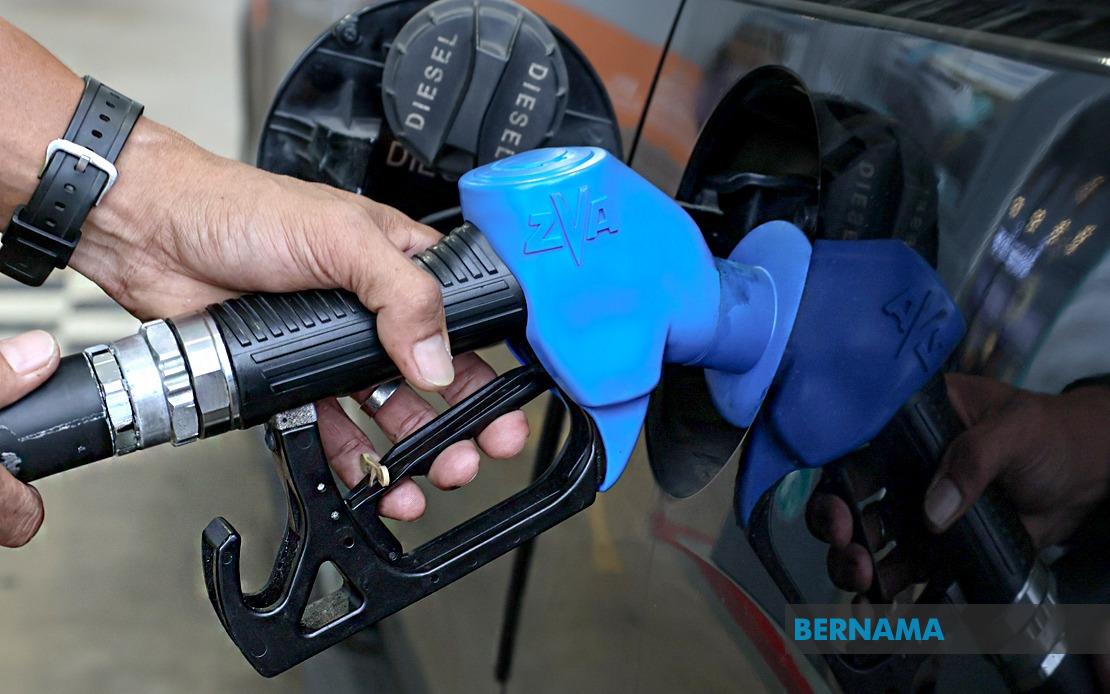
Prime Minister Datok Seri Anwar Ibrahim's announcement to reduce subsidised diesel to RM2.10 per litre beginning in July signals a significant shift in Malaysia's fuel subsidy framework, with economists expecting ripple effects throughout the economy. The new pricing, to be administered through the BUDI95 programme using MyKad verification, represents a meaningful adjustment from the current RM2.15 per litre in Sabah and Sarawak, while maintaining substantial support compared to the unsubsidised Peninsular Malaysia rate of RM4.37 per litre. This harmonisation of fuel pricing across regions aims to streamline subsidy delivery while addressing longstanding regional disparities that have complicated national economic planning.
Dr Nanthakumar Loganathan, an economics professor at Universiti Teknologi Malaysia's Faculty of Management, emphasises that transportation expenses fundamentally shape pricing throughout Malaysia's food distribution networks. He notes that operators across the supply chain—from smallholder farmers to urban retailers—have consistently cited fuel costs as justification for passing increases to consumers. The diesel price reduction therefore creates an opportunity for genuine cost savings to materialise at consumer level, particularly for perishable goods transported by pickup trucks and light commercial vehicles that dominate Malaysia's agricultural distribution system. Whether traders and logistics providers will translate these savings into lower retail prices remains contingent on competitive market dynamics and the transparency with which businesses communicate their reduced operating expenses.
The sustainability of the RM2.10 pricing floor hinges on Malaysia's capacity to manage international crude oil volatility. Dr Loganathan cautions that protecting the subsidy level during periods of global price escalation would require either expanded government budgetary allocation or alternative supply security arrangements. He suggests that Malaysia might need to explore unconventional sourcing partnerships, potentially involving non-traditional suppliers such as Russia or producers outside the Organisation of Petroleum Exporting Countries sphere, to guarantee stable fuel availability without overwhelming fiscal commitments. This strategic consideration underscores how regional geopolitical considerations increasingly shape domestic energy policy in Southeast Asia.
Beyond immediate price mechanics, the nationwide standardisation of diesel subsidies reflects a fundamental recalibration of how Malaysia distributes fuel support. Dr Novel Lyndon, a political sociology professor at Universiti Kebangsaan Malaysia's Centre for Development, Social and Environmental Studies, interprets the move as recognition that previous regional pricing variations created operational inefficiencies and consumer resentment. Sabah and Sarawak historically enjoyed preferential diesel rates owing to geographical challenges and freight logistics, but this created perception gaps between regions and inconsistent policy implementation. The new unified approach signals governmental movement toward rational, needs-based subsidy architecture rather than geographically fragmented support systems.
However, Lyndon raises critical concerns about differential economic impacts within the harmonised framework. Rural communities throughout Sabah, Sarawak, and Peninsular Malaysia depend on diesel-powered transport for agricultural operations, fishing enterprises, and goods movement in ways that differ fundamentally from urban centres. Without carefully calibrated targeted assistance mechanisms, rural smallholders and remote businesses could experience cost pressures that counteract intended savings benefits. The transition to uniform pricing therefore demands sensitivity to regional economic structures, particularly where land and river transport remain essential infrastructure for survival-level economic activities.
The government faces a crucial credibility test in communicating how subsidy rationalisation translates into broader public benefit. Lyndon emphasises that citizens will evaluate diesel price reductions not merely against fuel pump costs but against perceived improvements in public services, infrastructure quality, healthcare provision, and general cost-of-living trajectories. If consumers observe diesel savings without corresponding improvements in roads, schools, clinics, or transportation access, public confidence in government economic management may deteriorate. Successfully framing subsidy efficiency as contributing to comprehensive national development—rather than simply reducing government expenditure—becomes essential for political legitimacy and public acceptance.
The MyKad-based verification mechanism introduced with this diesel subsidy expansion builds upon earlier RON95 fuel programme experience, according to Dr Mohd Afzanizam Abdul Rashid, chief economist at Bank Muamalat Malaysia. This digital identity verification system strengthens subsidy targeting by limiting access to eligible Malaysian citizens and generating comprehensive consumption data. Beyond economic efficiency, MyKad-enabled distribution helps disrupt fuel smuggling operations and prevents leakage to unintended beneficiaries—persistent problems in previous subsidy regimes. The system's proven performance during RON95 implementation suggests potential for expanded application across multiple fuel categories and potentially other government support programmes requiring identity verification.
The data collection capabilities embedded within MyKad-based fuel purchasing create opportunities for sophisticated economic analysis and policy refinement. Government agencies can now monitor geographic consumption patterns, identify anomalies suggesting diversion or smuggling, and adjust subsidy structures based on actual usage evidence rather than demographic assumptions. This informational advantage enables more precise calibration of subsidy policy, potentially reducing wasteful spending while improving targeting accuracy. For Malaysia's economic technocrats, the system represents modernisation of an administratively challenging subsidy programme through technological infrastructure already available to most citizens.
Diesel price structures in Malaysia operate at the intersection of macroeconomic policy, regional equity, and consumer welfare—making the July reduction a test case for sophisticated subsidy administration. The immediate expectation that transportation cost reductions will cascade into lower consumer prices for goods depends on competitive market conditions and merchant willingness to moderate markups. In concentrated supply chains or markets with inelastic demand, savings may accumulate as business profits rather than consumer benefits. Monitoring retail price movements in subsequent months will reveal whether the policy achieves its stated objective of improving purchasing power for ordinary Malaysians, or whether structural market features prevent efficient transmission of cost reductions.
The policy also reflects Malaysia's continuing reliance on fiscal transfers to manage fuel prices in a regional and global energy market increasingly defined by volatility and supply disruption. Unlike neighbouring economies that have liberalised fuel pricing or adopted sliding-scale mechanisms, Malaysia maintains direct price controls through subsidy programmes. This approach protects consumers from sharp price swings but creates budgetary liabilities and requires careful management of international commodity exposure. The government's readiness to adjust subsidy levels—moving from RM2.15 to RM2.10—suggests recognition that previous thresholds became unsustainable or politically urgent, potentially signalling deeper constraints on future subsidy expansion.
For Malaysian businesses managing supply chains and logistics operations, the diesel pricing change presents immediate opportunities for cost reassessment and competitive positioning. Companies unable to capture meaningful savings risk competitive disadvantage, while those successfully translating lower fuel costs into service improvements or price reductions may expand market share. Particularly for small and medium enterprises in transportation and agriculture, where fuel represents substantial operating expense, the RM0.05 reduction per litre compounds across high-volume consumption patterns. Industry associations and logistics chambers will likely use the subsidy reduction as benchmark for negotiating service agreements and adjusting pricing structures throughout 2024 and beyond.
The longer-term implications of harmonised diesel pricing extend beyond immediate economic adjustment to questions about Malaysia's fiscal sustainability and energy policy direction. As government expenditure on fuel subsidies competes with education, healthcare, and infrastructure investment priorities, controlling subsidy costs becomes increasingly important for economic stability. The MyKad-enabled targeting system and unified pricing framework suggest incremental movement toward more efficient, technology-enabled subsidy administration—potentially positioning Malaysia for eventual price liberalisation or hybrid models combining subsidised baseline consumption with market-rate pricing for excess usage. Whether policymakers possess sufficient political capital to implement such transitions remains uncertain, but the July diesel reduction demonstrates willingness to adjust subsidy parameters in response to fiscal and equity considerations.

