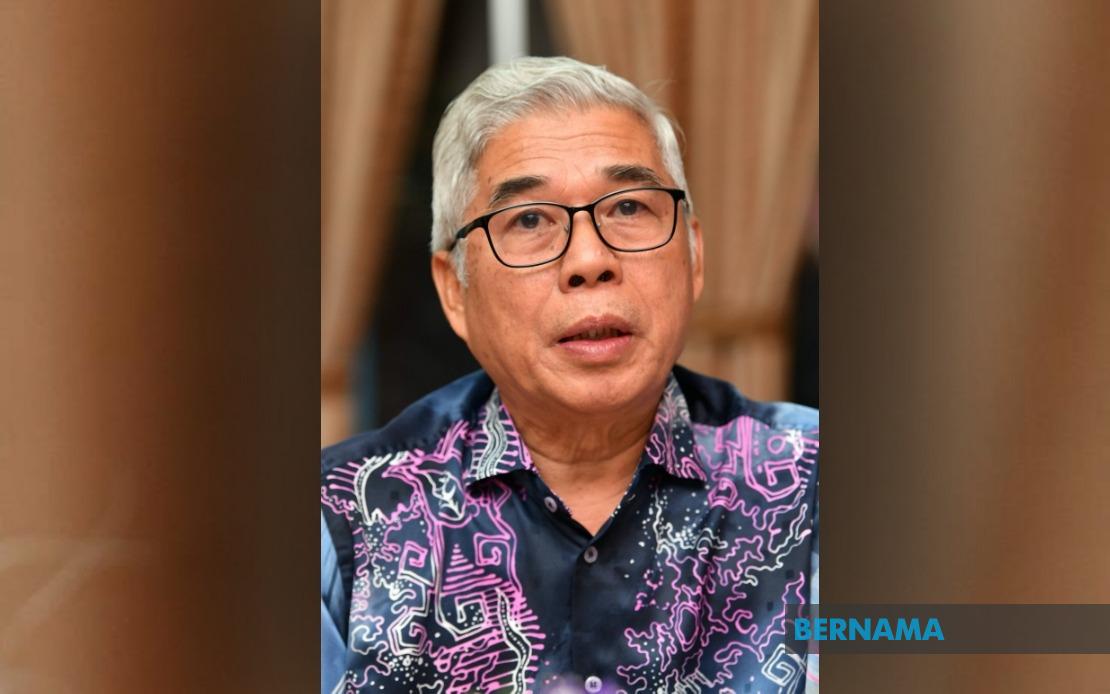
Pasir Gudang Member of Parliament Hassan Abdul Karim has counselled the MADANI Government against moving hastily toward the 16th General Election, advocating instead that it fulfil its existing constitutional mandate and allow its policy initiatives sufficient time to demonstrate tangible outcomes for ordinary Malaysians.
Speaking against the backdrop of Pakatan Harapan's mixed electoral performance across recent state contests, Hassan said Prime Minister Datuk Seri Anwar Ibrahim should resist the temptation to dissolve Parliament prematurely in response to PKR's setbacks. Rather than interpret recent electoral disappointments as a signal to accelerate the national polls, he urged the ruling coalition to draw breath, consolidate its governing agenda, and stay the course.
In a Facebook message released on August 2, Hassan framed his argument around the principle of political endurance, encouraging PKR to reflect strategically on its recent state-level contests in Sabah, Johor, and Negeri Sembilan before charting a fresh course toward GE16. He positioned this moment as an opportunity for introspection and repositioning rather than reactive decision-making driven by momentary electoral disappointment. The MP's message carried an implicit warning that emotional or political panic following losses could cloud the judgment of the ruling coalition's leadership.
Hassan's core thesis rests on a straightforward economic argument: the MADANI Government's macroeconomic programme—encompassing industrial policy, foreign direct investment attraction, and fiscal management—requires a runway of twelve to eighteen additional months to produce measurable improvements in living standards and economic activity that voters can directly perceive. Should Parliament be dissolved prematurely, he reasoned, these benefits would remain unrealised, depriving the government of a crucial strategic asset during campaigning.
For Malaysian readers accustomed to fractious coalition politics and the constant speculation surrounding early dissolution, Hassan's intervention represents a relatively uncommon plea for strategic patience. The timing is noteworthy: recent state elections have indeed yielded results that might ordinarily trigger calls for a confidence vote or snap national polls, yet Hassan's argument inverts this logic. He suggests that surrendering the government's remaining constitutional time would represent a capitulation to short-term electoral anxiety rather than a prudent deployment of incumbency advantages.
The MP explicitly called upon the Prime Minister to resist what he characterised as hasty action, framing such restraint not as weakness but as political maturity. By pressing on toward the government's natural dissolution date in late 2027 or early 2028, Hassan contended that Anwar Ibrahim would demonstrate the confidence necessary to govern on a longer policy horizon. This framing carries psychological weight within coalition dynamics, where perceptions of wavering leadership frequently accelerate political instability.
Crucially, Hassan's argument hinges on a premise central to Malaysian economic policy discourse: that structural economic improvements—increased FDI flows, wage growth, business confidence, infrastructure productivity—require time to compound and become visible to ordinary households. By his logic, a government that holds course risks nothing by waiting, since the passage of months will either validate its economic stewardship or render its electoral prospects moot regardless. Conversely, a government that dissolves Parliament while economic indicators remain soft squanders its opportunity to demonstrate competence through measurable improvement.
Hassan also directed remarks toward PKR's base, acknowledging the emotional toll of electoral reversal while reframing defeat as temporary and recoverable through disciplined preparation. His evocation of PKR's identity as a reform movement sought to reconnect the party's membership with a narrative of long-term transformation rather than immediate vindication. This rhetorical move serves a secondary purpose within coalition management: reminding restless PKR cadres that their movement's legitimacy rests on principled governance, not purely on electoral cycling.
The political context surrounding Hassan's intervention deserves emphasis for Malaysian observers. Speculation concerning early dissolution frequently becomes self-fulfilling as coalition partners begin positioning themselves defensively, signalling their readiness for an early contest. By deliberately arguing the opposite case—that the government should use every month available to strengthen its record—Hassan may be attempting to dampen destabilising expectations and reassert focus on governing performance. His intervention reflects a strand of thought within the coalition that equates political stability with policy efficacy.
However, Hassan's advice confronts a fundamental tension in Malaysian politics: the perpetual calculation of electoral advantage and the pressure on ruling coalitions to move while their positioning appears optimal. The recent state elections have demonstrated volatility in voter behaviour, and some within the coalition may view delayed elections as a risk rather than a benefit. Hassan's counter-argument—that waiting allows economic policy to strengthen the government's hand—rests on a forecast that cannot be guaranteed.
For observers of Southeast Asian governance more broadly, Hassan's intervention highlights how electoral pressures in developing democracies often pull governing coalitions toward shorter planning horizons than long-term development might require. Malaysia's periodic cycles of speculation around snap elections reflect a pattern common across the region, where political uncertainty creates friction against sustained policy implementation. Hassan's case for patience, therefore, extends beyond immediate Malaysian party politics to engage with recurring questions about how governing coalitions manage the tension between electoral cycles and policy maturity.
The substance of Hassan's economic argument also warrants scrutiny. The trajectory of Malaysian economic growth, foreign direct investment patterns, and household income distribution over the next 12 to 18 months will largely determine whether his patience-based strategy pays dividends for the coalition. Should economic conditions deteriorate or stagnate, his call for delayed elections could come to appear misguided. Conversely, should material improvement become apparent to voters, his argument will have proven prescient.
Ultimately, Hassan's message to the MADANI Government amounts to a calculated plea for strategic self-discipline: that the coalition's best interest lies in completing its mandate, allowing economic policies to mature, and approaching GE16 with demonstrated achievements rather than promises. Whether the Prime Minister and his coalition partners heed this counsel will depend on their assessment of both economic trajectories and internal coalition dynamics—factors that remain distinctly uncertain as Malaysia enters the latter half of 2024.

