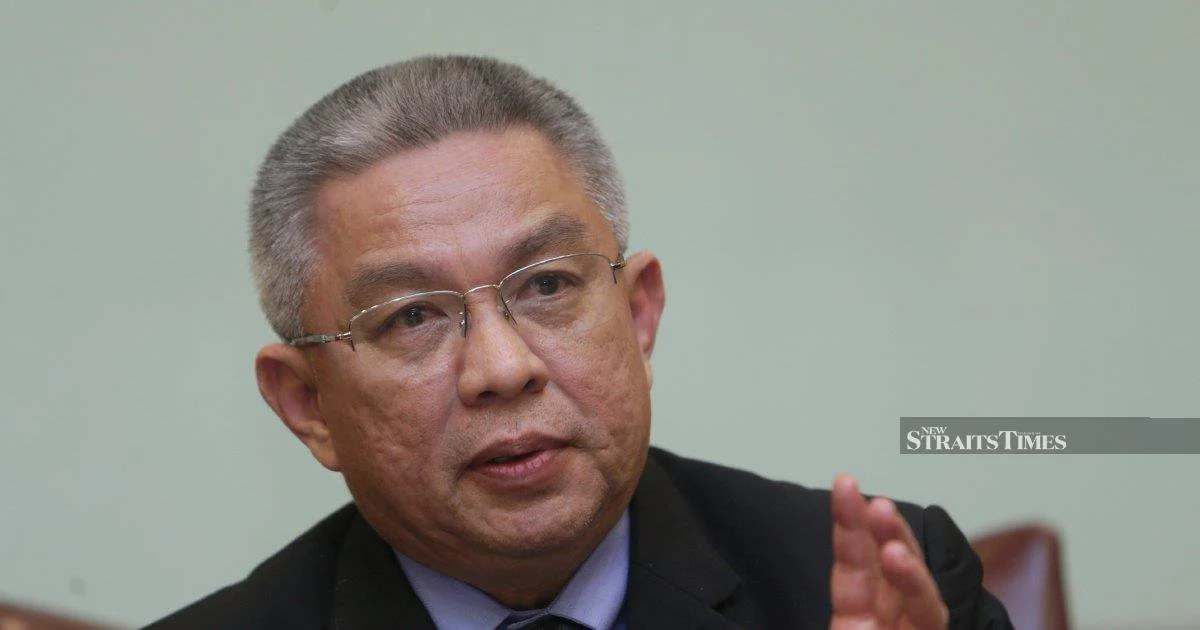
Barisan Nasional has fielded a slate of 56 candidates across Johor for the upcoming state election, a lineup that features several politically seasoned names alongside fresh contenders vying to retain the ruling coalition's grip on the state. Among the prominent personalities taking to the campaign trail is Datuk Seri Dr Adham Baba, who previously served as Malaysia's health minister during the critical initial phases of the country's COVID-19 response, when his ministry faced intense scrutiny over vaccination rollouts and pandemic management protocols.
Also named to the BN ticket is Alwiyah Talib, a former assemblyman representing the Endau state constituency, indicating that Barisan is banking on candidates with established ground presence and legislative experience to reinforce its electoral machinery in the southern state. The composition of the candidate list reflects how Malaysian political coalitions typically blend ministerial heavyweights with returning incumbents and emerging political figures in efforts to maximize appeal across diverse voter demographics.
Dr Adham Baba's inclusion in the BN slate carries particular weight given his previous affiliation with Bersatu, the political party founded by former Prime Minister Mahathir Mohamad that had fractured the traditional BN alliance during the 2022 general elections. His transition back into the mainstream BN framework signals a realignment within federal politics, where post-election maneuvers have repeatedly reshuffled coalitional arrangements. The former health minister's presence suggests BN views his experience and profile as valuable assets despite—or perhaps because of—his party-switching trajectory.
Johor's political significance cannot be overstated within Malaysian federalism. The state has long served as a crucial electoral battleground, and its outcome typically influences perceptions of which coalition commands momentum heading into the next national general election cycle. With 56 candidates deployed across the state's parliamentary and state assembly constituencies, BN is signaling serious intent to consolidate support among Johor's 3.2 million residents, who represent substantial voting power when aggregated across the peninsula and Sabah-Sarawak.
The strategic deployment of candidates with prior ministerial experience reflects how Barisan continues to leverage federal-level visibility to strengthen state-level campaigns. Dr Adham Baba's previous portfolio in health matters provides potential tactical advantages, particularly if the campaign debates center on pandemic recovery, healthcare provision, or public health infrastructure—policy domains where ministerial incumbency carries weight with electorate perceptions. Similarly, returning assemblypersons such as Alwiyah Talib carry institutional knowledge of local grievances and community networks that newly minted candidates typically lack.
Johor's electoral dynamics have grown increasingly unpredictable in recent years. The state witnessed the departure of former Chief Minister Hasni Mohamad in 2022, a watershed moment that underlined how even longstanding political fixtures face vulnerability in Malaysia's fragmented contemporary landscape. The inclusion of experienced figures alongside fresh blood in the current candidate roster appears designed to project stability while signaling renewal—a messaging approach common across Southeast Asian political contexts where legitimacy hinges on balancing continuity with change narratives.
The naming of 56 BN candidates simultaneously represents both organizational preparedness and acknowledgment that the coalition cannot assume voter compliance. Malaysia's electoral history demonstrates that incumbency alone guarantees no protection against swing voting, coalition fragmentation, or regional protest movements. Johor, in particular, has witnessed defections to PKR and PAS in recent cycles, requiring BN to rebuild bridges with constituencies that abandoned the coalition during periods of internal federal instability.
For Malaysian business interests and foreign observers, Johor's outcome carries implications extending beyond state administration. The state functions as a commercial and logistics hub for the entire southern corridor, hosting port facilities, manufacturing zones, and growing digital economy sectors. Electoral outcomes directly influence policy priorities around infrastructure spending, investment regulations, and governance capacity—considerations that ripple through regional supply chains and investment calculations.
Dr Adham Baba's candidacy specifically introduces questions about how former Bersatu figures navigate reintegration within traditional BN structures at state level. His path illustrates the opportunistic nature of Malaysian coalition politics, where figures shift allegiances in pursuit of political viability. Whether voters reward or punish such flexibility remains a central dynamic shaping campaign messaging in coming weeks.
The announcement of the candidate list launches what analysts expect to be a vigorously contested election period. Barisan's assertion that it has fielded competitive candidates across geographic and demographic lines will be tested against rival PKR and PAS campaigns, each mobilizing their own networks and narratives. For Johor citizens, the 56 BN candidates represent the coalition's answer to demands for responsive governance, economic growth, and service delivery quality that increasingly determine electoral outcomes across Malaysia's states.

