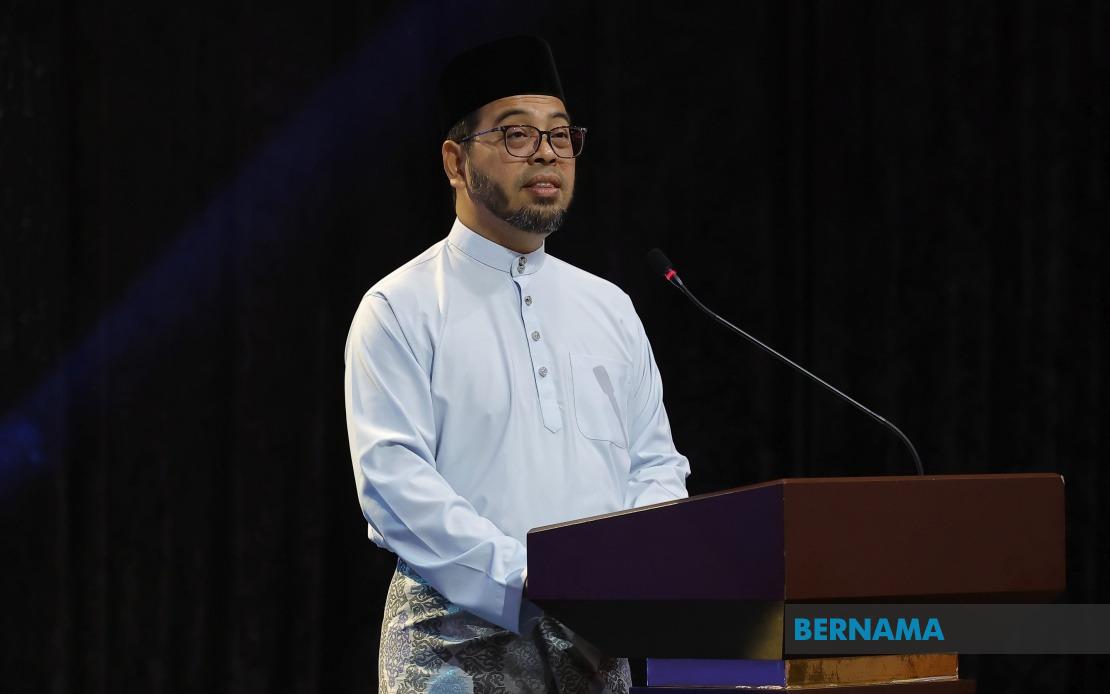
Dr Zulkifli Hasan, Minister in the Prime Minister's Department (Religious Affairs), has called on Malaysia's Muslim population to transcend existing divisions and eliminate residual antagonisms as a critical step towards consolidating the strength of the ummah. Speaking at the national celebration of Maal Hijrah 1448H/2026M held at Putra Mosque in Putrajaya on June 17, the minister emphasised that genuine advancement within the Muslim community depends fundamentally on individuals pursuing comprehensive personal transformation that encompasses intellectual growth, spiritual deepening, and moral refinement.
The significance of unity within a faith community extends beyond spiritual dimensions into the practical realm of national resilience. Dr Zulkifli articulated this perspective clearly, noting that cohesion among community members generates collective prosperity and resilience, while fracture and discord inevitably create vulnerability and diminish national strength. This observation carries particular relevance for Malaysia, a multi-religious nation where Muslim-majority society plays a foundational role in the country's social and political architecture. The minister's remarks were delivered at a ceremony themed "MADANI Dihayati, Ummah Diberkati," which drew distinguished attendees including Sultan Nazrin Shah of Perak and Deputy Prime Minister Datuk Seri Fadillah Yusof.
The contemporary global environment presents mounting pressures that render internal cohesion increasingly indispensable for Malaysia's advancement. Beyond sectarian concerns, the country faces interconnected international challenges including disrupted supply chains and pervasive economic uncertainty that have reverberated across regions. Dr Zulkifli positioned the strengthening of societal bonds as directly connected to Malaysia's capacity to withstand and navigate these external pressures. His framing suggests that internal fragmentation could amplify the nation's vulnerability to international economic and logistical shocks, making community solidarity not merely a religious aspiration but an economic and strategic imperative.
Central to Dr Zulkifli's message was a reframing of the Islamic concept of hijrah in contemporary terms. Rather than interpreting this foundational Islamic principle solely through its historical lens—the Prophet Muhammad's migration from Mecca to Medina—the minister encouraged understanding hijrah as an ongoing personal and collective journey characterised by the abandonment of destructive behaviours and the deliberate cultivation of character traits that reinforce social bonds. This reimagining makes the concept immediately applicable to modern challenges facing Muslim-majority societies, transforming an ancient principle into a framework for addressing contemporary social fragmentation.
The minister further contended that meaningful implementation of initiatives designed to elevate Islamic values and enhance Muslim dignity becomes substantially more effective when pursued within a framework of strengthened community unity. This observation highlights an important strategic principle: institutional efforts by government to support religious and cultural objectives will achieve greater impact when supported by grassroots solidarity and shared commitment among community members. Without such underlying unity, even well-intentioned policy measures risk remaining superficial or encountering significant resistance.
Dr Zulkifli's remarks also encompassed a broader vision of national responsibility that transcends religious identity. He stressed that while citizens hold diverse beliefs and cultural backgrounds, all share fundamental obligations to preserve the nation's peace, stability, and economic prosperity. This inclusive framing reflects an understanding of the ummah concept that acknowledges both the particular concerns of the Muslim community and the necessity of contributing positively to Malaysia's multi-religious social contract. The approach suggests that strengthening Muslim unity need not be pursued at the expense of inter-faith relations but rather as a prerequisite for more constructive participation in the wider national project.
Recognition of exemplary Islamic leadership featured prominently within the ceremony's proceedings. The International Islamic University Malaysia (IIUM) Rector Prof Emeritus Datuk Dr Osman Bakar received the National Tokoh Maal Hijrah award in recognition of his contributions to Islamic scholarship and institutional leadership in Malaysia. Simultaneously, the International Tokoh Maal Hijrah award was conferred upon Dr Ahmad Al-Raysuni, a prominent Moroccan Islamic scholar, acknowledging significant contributions to Islamic thought and leadership beyond Malaysia's borders. These honours underscore the event's positioning as a platform for celebrating figures who embody the principles of moral leadership and Islamic intellectual advancement.
The emphasis on internal spiritual and moral transformation addresses a persistent challenge within contemporary Muslim societies worldwide. Beyond theological debates or institutional restructuring, Dr Zulkifli identified individual character development as the foundational requirement for community advancement. This perspective aligns with classical Islamic teaching emphasising personal accountability and spiritual development as prerequisites for societal progress. For Malaysian policymakers and religious leaders, this framing redirects attention from blame and recrimination toward constructive self-examination and positive change at the individual level.
The timing of these remarks, delivered during Malaysia's observance of the Islamic new year, carries symbolic significance. Maal Hijrah traditionally represents an occasion for reflection, spiritual renewal, and commitment to positive change. Dr Zulkifli's utilisation of this platform to address contemporary divisions and call for unity capitalises on this cultural and religious resonance, connecting historical Islamic tradition with present-day national challenges. The choice to frame urgently needed social cohesion within the context of a sacred Islamic calendar event may enhance receptiveness to his message within Muslim communities.
Looking forward, Dr Zulkifli's articulation of the government's commitment to supporting both Islamic values and Muslim dignity, coupled with his call for community participation in these efforts, establishes an implicit social contract. Government initiatives ostensibly aimed at elevating Muslim interests require reciprocal commitment from communities themselves to move beyond division toward constructive engagement. This mutual responsibility framework suggests an expectation that religious and social progress in Malaysia will be measured not solely by policy announcements or institutional actions, but by demonstrated changes in community attitudes and inter-personal relations among Muslims themselves, ultimately strengthening the nation's capacity to confront shared challenges.