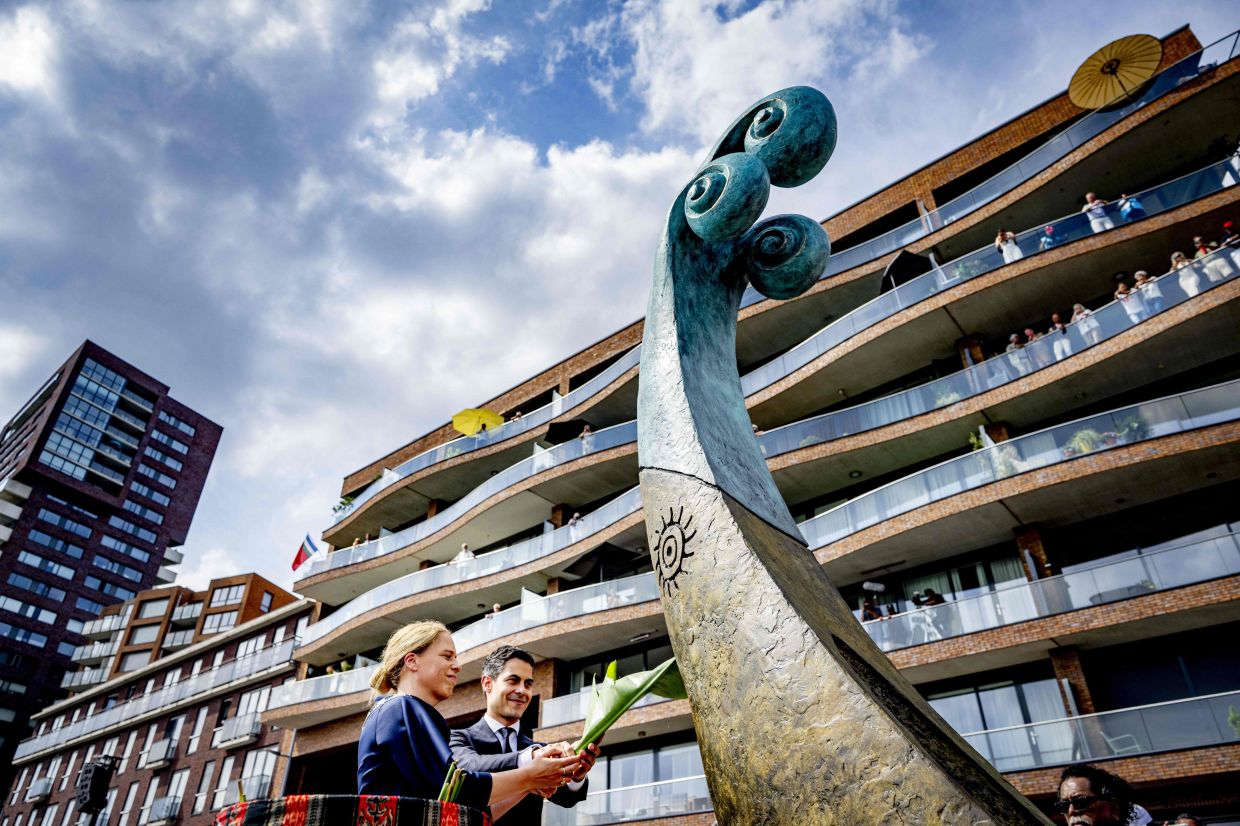
Dutch Prime Minister Rob Jetten delivered a formal state apology on Sunday to members of the Moluccan community, marking a significant moment of reckoning with the Netherlands' troubled post-colonial history. The gesture came at a ceremony in Rotterdam unveiling the Ulu Kora monument, a memorial honouring the plight of thousands of people from Indonesia's eastern spice islands who were transported to the Dutch homeland over seven decades ago and subsequently abandoned by their government.
The historical context underlying this apology stretches back to the turbulent years immediately following World War II, when Indonesia sought to secure independence from Dutch colonial rule. The Moluccans, who inhabit a strategically important archipelago in the eastern reaches of the Indonesian archipelago, found themselves caught between competing loyalties during this period of upheaval. Thousands served in the Royal Netherlands East Indies Army, fighting alongside Dutch forces during the independence struggle that lasted from 1945 until Indonesia's formal sovereignty in 1949. Their service to the colonial power would ultimately prove a costly choice.
Following Indonesia's independence, approximately 12,500 Moluccans—a significant portion of the community's population—faced the prospect of violent reprisals from Indonesian nationalists who viewed them as collaborators with the colonial occupier. The Dutch government, responding to this humanitarian emergency, initiated what was framed as a temporary relocation programme. These individuals were transported to the Netherlands in a state-organised transfer intended as a protective measure, with the understanding that they would remain only briefly before returning to their homeland once stability could be established in post-independence Indonesia. This promise would become the first of many broken commitments.
The reality that unfolded proved starkly different from the stated intentions. Rather than facilitating repatriation as negotiations between The Hague and Jakarta had stipulated, Dutch authorities systematically failed to honour their obligations. The Moluccans who arrived in the Dutch port of Rotterdam, where the Lloydkade now stands as witness to their arrival, were subjected to prolonged displacement that would stretch across generations. Upon arrival, those with military service were immediately discharged from their positions, stripped of their employment status and professional identity. Many were subsequently housed in facilities that represented the depths of inadequacy—former concentration camps that had been used during the Nazi occupation to gather Jewish prisoners before their deportation to death camps.
The conditions endured by the Moluccan community reflected a troubling absence of genuine integration efforts or meaningful support from Dutch society. They were warehoused in substandard accommodation, denied systematic access to employment opportunities, and essentially left to navigate their displacement with minimal official assistance or social welcome. For a population that had sided with the colonial power and sacrificed their place in Indonesian society, the outcome represented a profound betrayal. First-generation Moluccans spent decades in limbo, caught between the Netherlands where they had been forced to settle and an Indonesia where they could no longer safely return, their longing for home becoming a defining characteristic of their diaspora experience.
The consequences of this abandonment reverberated through subsequent decades, particularly as a second generation came of age in the Netherlands without the homeland their parents had lost. The 1970s witnessed a series of violent actions undertaken by frustrated young Moluccans who had grown to manhood in exile, their sense of betrayal crystallising into direct confrontation with Dutch state institutions. These dramatic incidents served as a grim reminder of the human cost of governmental failure to honour commitments and the intergenerational trauma produced by prolonged injustice.
Jetten's apology acknowledged this painful legacy with visible emotional weight. Standing before hundreds of Moluccans gathered in Rotterdam, many carrying photographs of deceased relatives from the first generation of displaced persons, the Prime Minister explicitly enumerated the specific failures for which the Dutch state bears responsibility. He named the inadequate reception and housing conditions, the systematic exclusion and abandonment experienced by the community, the unfulfilled hope of return that haunted families for decades, and the profound grief that had accumulated across generations. His words represented a formal recognition that the Netherlands had fundamentally failed its obligations to a vulnerable population.
Yet Jetten was notably candid in his acknowledgement that words alone cannot repair historical injustice. He articulated the sobering reality that an apology, however sincerely offered and formally presented, cannot retroactively undo the decades of suffering, the lost opportunities, the fractured families, or the interrupted lives. The ceremony and monument serve primarily as recognition—a belated acknowledgement that the Moluccan experience constitutes a significant stain on Dutch post-war history that has warranted obscurity far too long. For Malaysian readers, this moment reflects broader questions about how nations reckon with colonial legacies and their aftermath, issues that remain deeply relevant across Southeast Asia as countries continue processing the complex inheritance of imperial rule and decolonisation struggles.
The significance of this formal apology extends beyond symbolic gestures of contrition. It establishes a precedent within Dutch political discourse that the state accepts responsibility for specific historical failures, setting a standard for how wealthy democracies should address systemic injustices perpetrated against vulnerable communities. The Ulu Kora monument, unveiled on the very Lloydkade where Moluccan ships first arrived in 1951, transforms a site of arrival and abandonment into a place of remembrance and, potentially, partial reconciliation. For the surviving members of the first generation and their descendants, the apology represents validation of their experience and suffering, though the material and emotional damages inflicted across generations cannot be reversed by formal acknowledgement alone.

