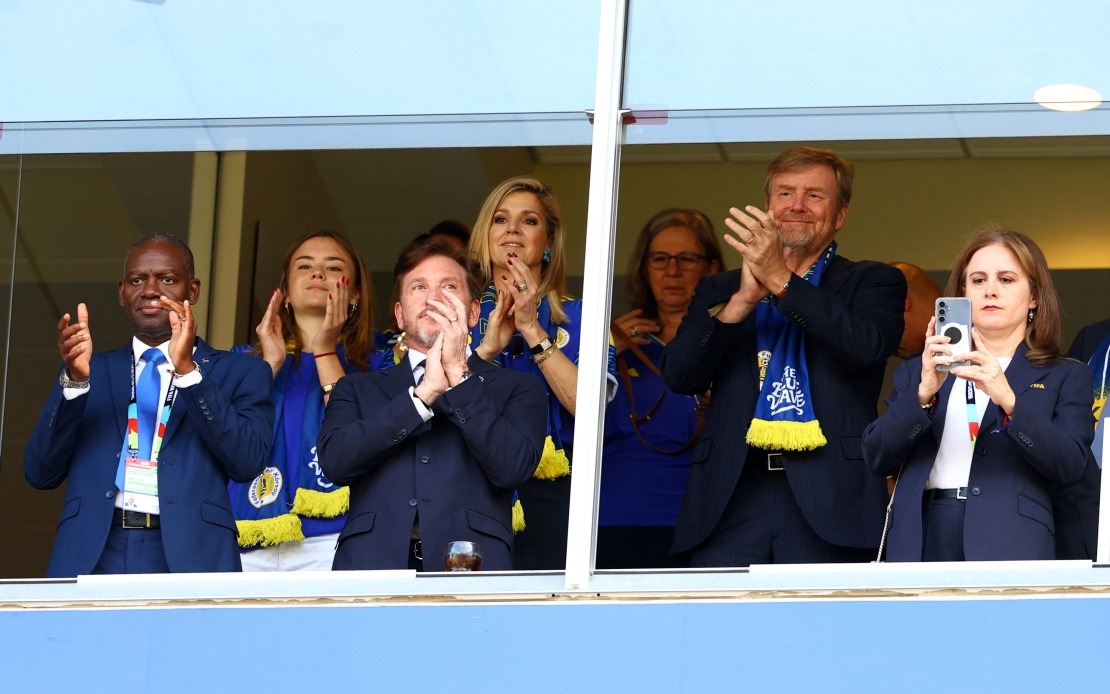
The Dutch monarchy demonstrated remarkable dedication to sporting protocol by attending a World Cup double-header across two American cities on Saturday, supporting both the Netherlands and Curaçao in their respective tournament matches. King Willem-Alexander and Queen Máxima began their day in Houston, where they witnessed the Netherlands deliver a dominant 5-1 performance against Sweden before immediately travelling to Kansas City to support Curaçao in their match against Ecuador. The rapid-fire itinerary showcased the unique constitutional arrangements of the Dutch kingdom, where Willem-Alexander's sovereignty extends beyond the European mainland to encompass Caribbean territories with their own footballing aspirations.
The king's dual role as monarch of both nations created an unusual but logical scenario for World Cup engagement. As head of state for the Kingdom of the Netherlands—a framework that includes constituent countries such as Curaçao, Aruba, and Sint Maarten—Willem-Alexander found himself in the privileged yet demanding position of representing two competing teams within the same tournament. This constitutional reality transformed what might ordinarily be a straightforward diplomatic attendance into a logistical and ceremonial balancing act, requiring the royal couple to physically traverse the American heartland while maintaining appropriate support and presence for each national team.
The Netherlands' commanding victory over Sweden represented a substantial stride toward the knockout stages of the competition. By securing five goals against their Scandinavian opponents, the Dutch team positioned themselves favourably ahead of their final group-stage encounter with Tunisia. Such a dominant margin provided confidence and momentum as they navigated the tournament's early phases, while simultaneously illustrating the quality that had made them among the tournament favourites. For King Willem-Alexander, witnessing this performance would have been particularly gratifying given the Netherlands' historical pedigree in international football and the weight of expectation surrounding their campaign.
Curaçao's performance later that evening presented a strikingly different narrative. The Caribbean nation's goalless stalemate against Ecuador demonstrated resilience and defensive organisation, particularly impressive given Curaçao's relative lack of experience at the World Cup's highest level. The draw represented a point toward their own qualification hopes, though their path forward remained considerably narrower than that of their Dutch counterparts. To advance beyond the group stage, Curaçao would require victory over Ivory Coast, representing a significant challenge against an African powerhouse, yet the point accumulated in Kansas City provided a foundation for such ambitions.
The royal couple's wardrobe choices reflected their commitment to symbolic unity with both nations. At Houston's NRG Stadium, Willem-Alexander and Máxima wore the Netherlands' traditional orange, the colour intrinsically associated with Dutch national identity and monarchy. Hours later in Kansas City, they switched to Curaçao's blue, demonstrating their willingness to adopt local colours and openly signal their support for the island nation. Such sartorial flexibility, while seemingly minor, carried significant cultural weight within each community, visibly confirming royal recognition and affection for both constituencies within their realm.
The scenes from Curaçao's dressing room after their Ecuador match captured the emotional significance of the royal presence. Video footage released by the Curaçao Football Association showed Willem-Alexander and Máxima dancing and celebrating alongside team members, transcending the typical formality associated with constitutional monarchy. This spontaneous display of joy and camaraderie suggested that the occasion held genuine personal meaning beyond ceremonial obligation, with the royals embracing the celebratory atmosphere and connecting directly with players who represented their wider kingdom.
In public remarks, the king articulated the distinctly fortuitous nature of their position. Willem-Alexander observed that the World Cup presented a rare opportunity for the monarchy to support twice as many teams competing at football's premier global stage. His comment reflected both the novelty and the privilege of their circumstances—few monarchs worldwide could claim the constitutional capacity to support two separate national teams simultaneously at the tournament. His expressed hope that both nations could progress deep into the competition revealed a genuine investment in their respective campaigns, moving beyond ceremonial attendance to express authentic sporting aspiration.
The royal couple's attendance at earlier matches had already established their commitment to World Cup engagement. They had previously watched the Netherlands' opening group game together with Japanese imperial guests, Emperor Naruhito and Empress Masako, during the latter's state visit to the Netherlands. This diplomatic attendance had combined sporting interest with state protocol, underlining how international football tournaments increasingly intersect with high-level governmental engagement and ceremonial occasions. The repetition of such attendance patterns across multiple matches demonstrated that the monarchy's World Cup involvement represented no casual interest but rather a deliberate and sustained commitment.
The logistics of coordinating appearances across Houston and Kansas City within a single day presented considerable operational complexity. The approximately 500-kilometre distance between the two venues required careful timing and coordination, yet the royal household executed the itinerary apparently without significant complication. This seamless execution reflected the resources and planning capabilities available to a major European monarchy, while simultaneously underscoring the importance they placed upon fair representation and support for both components of their realm. The ability to physically embody sovereignty over dispersed territories through simultaneous sporting engagement represented a contemporary expression of constitutional monarchy adapted to a globalised sporting calendar.
For Southeast Asian observers, the Dutch monarchy's World Cup activities offer interesting perspectives on how constitutional arrangements between metropolitan and island nations can evolve. Malaysia's own experience with federalism and the integration of various states within a unified constitutional framework finds parallels in the Dutch kingdom structure, albeit with notable differences in historical development and contemporary governance arrangements. The Dutch approach to maintaining royal visibility across geographically separated territories through high-profile sporting attendance demonstrates how monarchical institutions adapt to serve diverse constituent populations in the modern era.
The broader implications extend beyond ceremonial symbolism into questions of national identity and belonging within plural monarchies. For Curaçao residents, the presence of their constitutional monarch at the World Cup carries significance that transcends football, representing acknowledgement and inclusion within a wider political community. Conversely, the Netherlands' comfortable victory and Curaçao's respectable draw meant that both communities could derive satisfaction from the day's proceedings, regardless of the competitive disparity between their respective performances. The royal couple's physical presence at both venues served as a unifying gesture, suggesting that success for either team constituted success for the kingdom as a whole.

