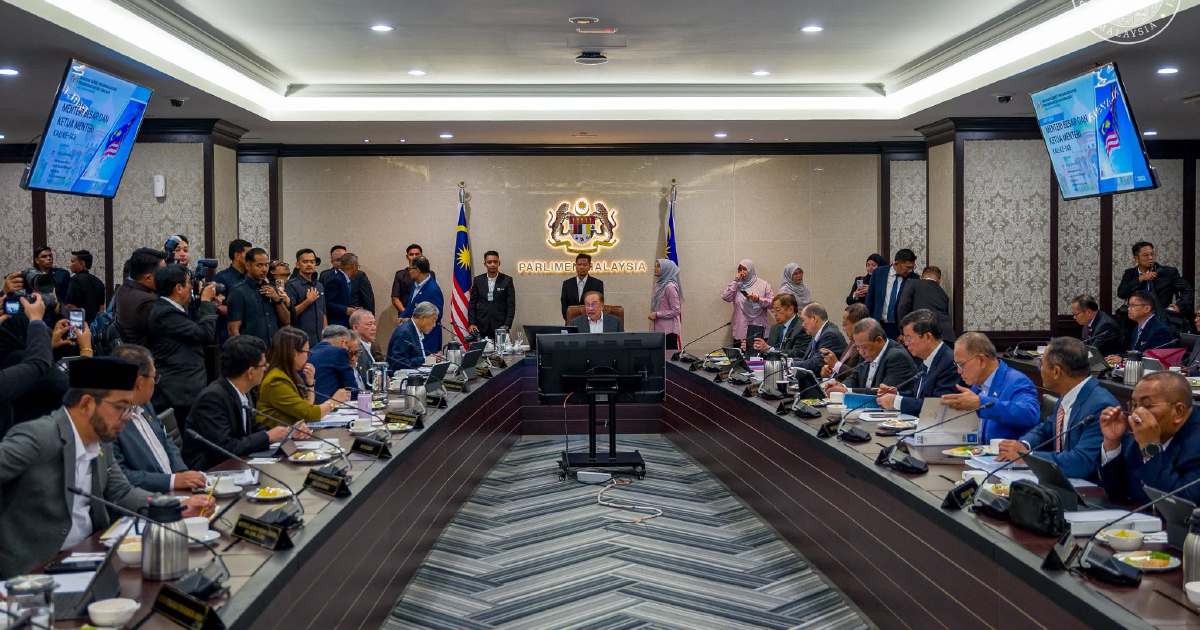
Prime Minister Datuk Seri Anwar Ibrahim presided over the 149th gathering of Menteris Besar and Chief Ministers at Parliament today, directing the assembled state leadership toward a shared agenda centred on revitalising Malaysia's economic prospects. The high-level convocation reflects growing recognition within government circles that coordinated action between federal and state authorities remains essential as external pressures threaten regional stability and investment flows.
The timing of this meeting underscores deepening concerns about how geopolitical turbulence, particularly the escalating conflicts in the Middle East, may reverberate through Southeast Asian economies. Malaysia's positioning as a major trade hub and financial centre means that disruptions to global commerce, shipping routes, and investor sentiment can swiftly translate into domestic challenges. State leaders gathered to examine how their respective jurisdictions can collectively mitigate these risks whilst positioning the nation to capitalise on potential opportunities arising from supply chain diversifications.
Economic revival has emerged as the dominant theme across multiple policy forums in recent months, reflecting the government's assessment that growth momentum faces headwinds. The state leaders' meeting represents a critical juncture for aligning regional development priorities with overarching national objectives. By bringing together the chief executives of all 13 states plus the Federal Territories, the Prime Minister signalled the interconnectedness of local prosperity and national resilience.
Malaysia's economy remains sensitive to external shocks given its openness to international trade and reliance on foreign direct investment. The deliberations among state leaders likely encompassed strategies for attracting reinvestment into manufacturing, technology, and digital sectors, particularly as multinational corporations reassess their regional footprints. States compete vigorously for enterprise and capital, making coordinated communication from the highest levels crucial to projecting stability and opportunity.
The involvement of state administrations in economic planning reflects Malaysia's federal structure, wherein substantial responsibility for local development, land management, and infrastructure expansion rests with state governments. Without their buy-in and coordinated action, national economic strategies risk implementation gaps. The parliamentary setting for these discussions also symbolises the constitutional oversight expected of state leaders in advancing government priorities.
Global uncertainty stemming from Middle Eastern tensions carries multiple transmission channels into the Malaysian economy. Insurance and logistics costs rise when maritime security concerns escalate. Investor caution increases amid geopolitical risk. Tourism and hospitality sectors face potential demand shocks. Manufacturing supply chains become more vulnerable to disruption. These cascading effects make economic resilience and diversification paramount concerns for policymakers at every governmental level.
The 149th meeting format, whilst routine, takes on heightened significance during periods of external pressure. These platforms allow the Prime Minister to communicate policy direction whilst receiving feedback from state administrators who occupy frontline positions in observing ground-level economic conditions. Chief executives of Selangor, Johor, Sabah, and Sarawak—which collectively generate substantial portions of national GDP—carry particular influence in shaping these discussions.
State-level initiatives in attracting foreign investment, developing special economic zones, and upgrading infrastructure competitiveness directly influence Malaysia's capacity to weather global headwinds. The meeting provided opportunity for federal authorities to coordinate expectations regarding resource allocation, policy harmonisation, and mutual support mechanisms. Such alignment becomes especially valuable when external shocks demand rapid, nationally-orchestrated responses.
The emphasis on economic revival also reflects recognition that pandemic aftereffects continue influencing business confidence and employment patterns across sectors. Labour force participation rates, manufacturing output, and consumer spending remain focal points requiring sustained attention. State leaders bring insights into their respective labour markets, sectoral strengths, and demographic challenges that should inform federal policy formulation.
Looking forward, the outcomes of this parliamentary gathering will likely shape the government's next phase of economic announcements and budget allocations. Decisions regarding infrastructure investment priorities, sectoral support measures, and incentive structures for enterprise development may hinge partly on feedback and consensus generated during these state-level consultations. The collaborative framework signals the administration's commitment to inclusive governance spanning the federal-state divide.
For Malaysian citizens and businesses, the substantive outcomes of such high-level coordination ultimately determine whether growth accelerates, employment expands, and prosperity becomes more widely distributed. The 149th meeting thus represents more than procedural governance; it constitutes a critical mechanism through which the nation's leadership attempts to preserve economic momentum and social stability amid turbulent external conditions that remain largely beyond domestic control.

