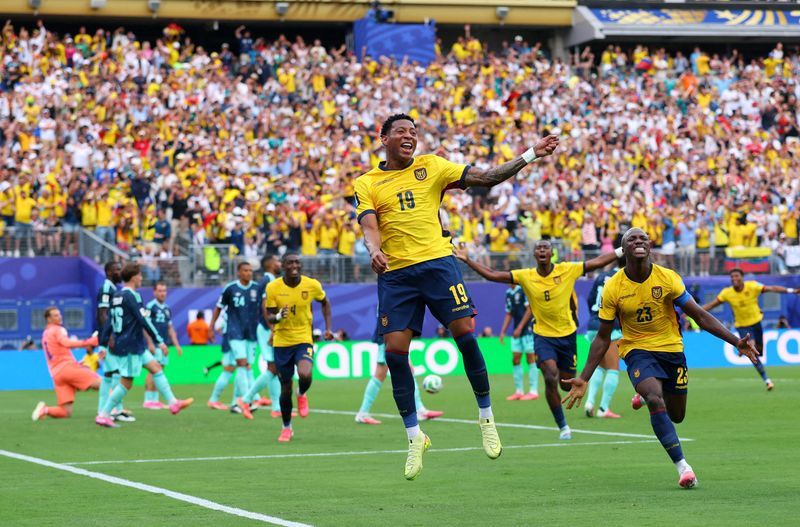
Ecuador's World Cup campaign appeared headed for the exit door until they produced a remarkable turnaround at East Rutherford, New Jersey, defeating an already-qualified Germany 2-1 on Thursday to claim a spot in the knockout round. The South American side, facing elimination after disappointing results against Ivory Coast and a draw with Curacao, mounted a stirring comeback that defied their earlier offensive struggles in the tournament and rewarded their persistence with a place among the best eight third-placed teams.
The match began badly for Ecuador's ambitions when Germany, needing only to avoid defeat to secure top spot in Group E, struck with ruthless efficiency just 120 seconds into play. Leroy Sane opened his account at a major international tournament with a left-footed finish from inside the penalty area after Florian Wirtz's clever assist following a quick throw-in. The early setback appeared to validate Ecuador's desperation, but the goal proved controversial as Aleksandar Pavlovic appeared to catch opponent Pedro Vite with a raised foot during the buildup. Despite Ecuador's protests, referee Tori Penso allowed the strike to stand, handing Germany an ideal start to their group finale.
The decisive moment came when Ecuador finally ended their goal drought that had persisted throughout the tournament. After 39 consecutive shots without finding the net, Nilson Angulo curled a finish beyond goalkeeper Manuel Neuer from the edge of the box in the ninth minute, sparking wild celebrations among Ecuador's supporters who filled the MetLife Stadium in yellow. Neuer appeared slow to react to Angulo's effort, giving Ecuador the equaliser they desperately needed and suggesting that Germany's vaunted defence possessed vulnerabilities that could be exploited.
Germany's passage to the knockout stage remained assured given their superior goal difference, but their inability to extend their unbeaten streak became increasingly apparent as the match progressed. The European side sought a third consecutive group victory and their 12th successive win across all competitions, yet Ecuador's defensive resolve prevented Germany from building on their opening advantage. A contentious penalty award in the second half, when Felix Nmecha played in Kai Havertz to face Joel Ordonez, was overturned following a VAR review that determined a German foul in the buildup had occurred first.
The breakthrough that ultimately secured Ecuador's passage came in the 78th minute when substitute Gonzalo Plata reacted quickest to a corner kick. After Kevin Rodriguez flicked the ball on at the near post, Plata finished decisively past Neuer to send the New Jersey stadium into eruption. The goal completed Ecuador's comeback and demonstrated that their Group E rivals, despite enjoying superior pedigree and tournament experience, could be overwhelmed by determined opponents capitalising on defensive lapses.
For Malaysia and other Southeast Asian nations watching from afar, Ecuador's comeback serves as a reminder that World Cup football contains dramatic possibility until the final whistle. The South American side's transformation from potential elimination to knockout qualification occurred across barely an hour of football, illustrating how momentum and defensive brittleness can determine tournament outcomes. Ecuador's success also underscores how teams arriving at crucial matches under pressure can sometimes draw additional motivation from desperation.
Germany's performance raised questions about their defensive stability despite topping the group with six points. The European champions conceded in all three Group E matches, a vulnerability that opposing teams would certainly target in the knockout stages. Ivory Coast's 2-0 victory over Curacao secured second place in the group, with Ecuador's third-place finish coming via superior goal difference among the tournament's best third-placed teams.
From a broader perspective, Ecuador's qualification demonstrates that World Cup group stages remain genuinely competitive despite seeding and conventional power hierarchies. The South American nation's emergence from Group E as one of the eight best third-placed teams came after arriving at their final match knowing only victory would suffice. This pressure environment, rather than inducing paralysis, instead seemed to unlock Ecuador's attacking potential after their previous offensive sterility.
The match highlighted how refereeing decisions and VAR interventions continue shaping World Cup outcomes. Penso's initial decisions, though allowing Germany's opening goal and initially awarding a penalty that was subsequently overturned, ultimately did not determine the result. Instead, Ecuador's superior execution at critical moments and Germany's defensive frailties proved decisive as the South Americans secured their knockout passage.

