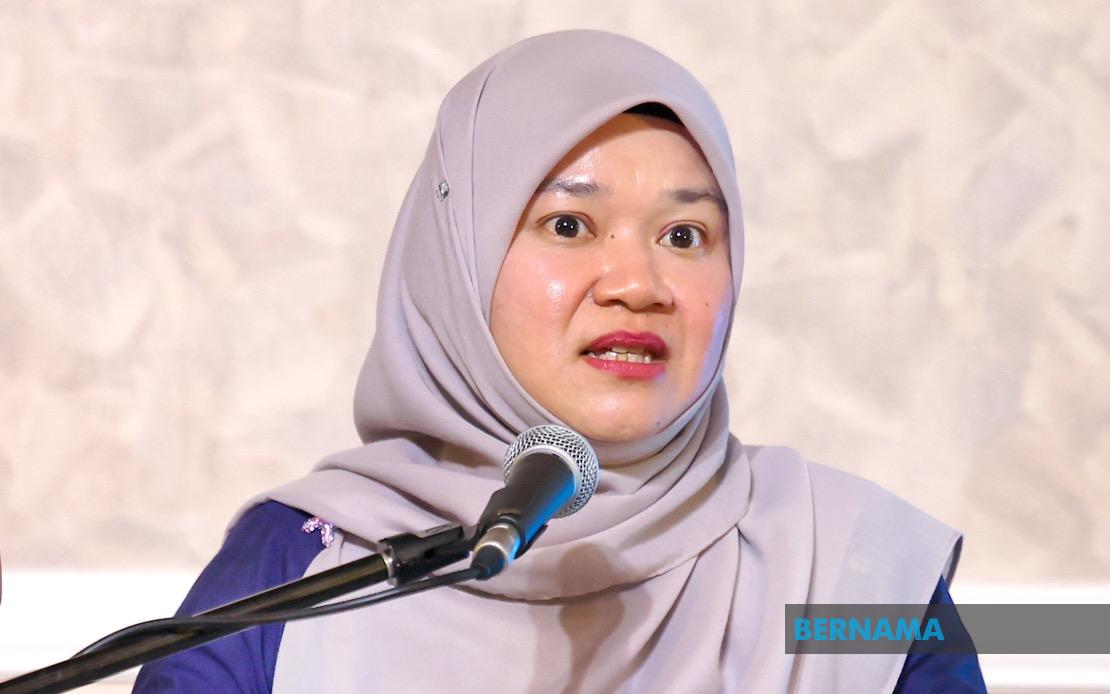
Education Minister Fadhlina Sidek, who also leads PKR Wanita, has lodged a police report in response to the circulation of an artificially generated video that spreads unfounded allegations against her, marking a significant escalation in Malaysia's ongoing struggle with deepfake content targeting political figures.
The PKR politician expressed deep dismay over the nature and intent behind the video's dissemination, characterizing the campaign as fundamentally malicious and designed to undermine both her professional standing and personal character. In a statement issued on June 24, she emphasised that the deliberate spreading of such content represents a calculated attempt to damage her reputation through false and defamatory material.
Fadhlina's decision to involve law enforcement reflects growing concern within Malaysia's political establishment about the weaponisation of artificial intelligence technology for character assassination. The emergence of deepfakes—synthetic media created using machine learning techniques—has introduced a new dimension to political harassment, one that is proving increasingly difficult for victims to counter through conventional means. Unlike traditional rumours or false statements, AI-generated videos carry an illusory veneer of authenticity that can deceive casual observers and spread rapidly across social media platforms before fact-checks become widespread.
The incident underscores the particular vulnerability of women in Malaysian politics to this form of digital abuse. Fadhlina has used her platform to draw attention to a broader pattern of defamation, character assassination, and sexual harassment directed at female politicians, urging all stakeholders to adopt a unified and uncompromising stance against such conduct. This framing positions the individual complaint within a systemic challenge affecting women's participation in public life across the country.
By filing the police report, Fadhlina has invoked Malaysia's legal framework to address the matter. The action signals her expectation that law enforcement authorities will conduct a thorough investigation and apply relevant statutes to hold those responsible accountable. Malaysia's existing laws, including provisions on defamation and cybercrime legislation, technically provide recourse for victims of such abuse, though enforcement and prosecution have historically been inconsistent and slow-moving.
The case highlights the practical limitations of current Malaysian legislation in addressing technologically sophisticated forms of harassment. Deepfakes operate in a grey zone where traditional defamation law, designed for older media environments, may struggle to provide effective remedies. Investigators must identify not only the individuals who shared the content but potentially also those who created or commissioned the synthetic media in the first place—a significantly more complex undertaking requiring specialist technical expertise.
For Malaysia's political landscape, this incident represents another data point in a troubling trend. As artificial intelligence tools become more accessible and user-friendly, the barrier to creating convincing false videos has dropped dramatically. What once required sophisticated Hollywood-level production capabilities can now be accomplished by individuals with basic technical knowledge and modest computational resources. This democratisation of deepfake technology poses a structural threat to political discourse and public trust.
The timing and content of Fadhlina's case also reflects broader regional patterns. Southeast Asian countries, including Malaysia, have witnessed an uptick in AI-generated disinformation, particularly during political campaigns and periods of heightened political tension. The region's high social media penetration rates mean that such content can reach vast audiences rapidly, making damage control exceptionally challenging.
Beyond the immediate legal proceedings, Fadhlina's public response carries important signalling value. By refusing to remain silent and by framing the issue as a collective problem affecting women in politics, she has positioned her experience as illustrative of systemic vulnerabilities. This approach may prompt broader policy discussions about strengthening digital literacy, improving content moderation standards, and considering legislative updates to address deepfakes specifically.
The police investigation that Fadhlina has requested will face substantial technical and procedural hurdles. Tracing the origins of synthetic media across encrypted messaging platforms, social media networks, and international servers requires coordination between agencies and potential international cooperation. Attribution in such cases is rarely straightforward, and securing evidence admissible in court demands rigorous chain-of-custody documentation.
Looking ahead, this case will likely influence how Malaysia's regulatory and law enforcement bodies approach digital manipulation and AI-generated content. As such incidents accumulate, pressure will mount for clearer legal definitions, specialized investigative units, and rapid response protocols. The government may also face calls to engage technology companies on content policies and to fund public education initiatives promoting awareness of deepfakes and digital literacy.
For Malaysian women in politics, the incident serves as a stark reminder of the multifaceted harassment they face in an increasingly digital public sphere. Fadhlina's decision to pursue legal recourse demonstrates resistance to intimidation, though it also highlights how female politicians must expend significant personal and institutional resources simply to defend their reputations against technologically enabled attacks. Addressing this challenge comprehensively will require coordinated action across legal, technological, educational, and cultural domains.

