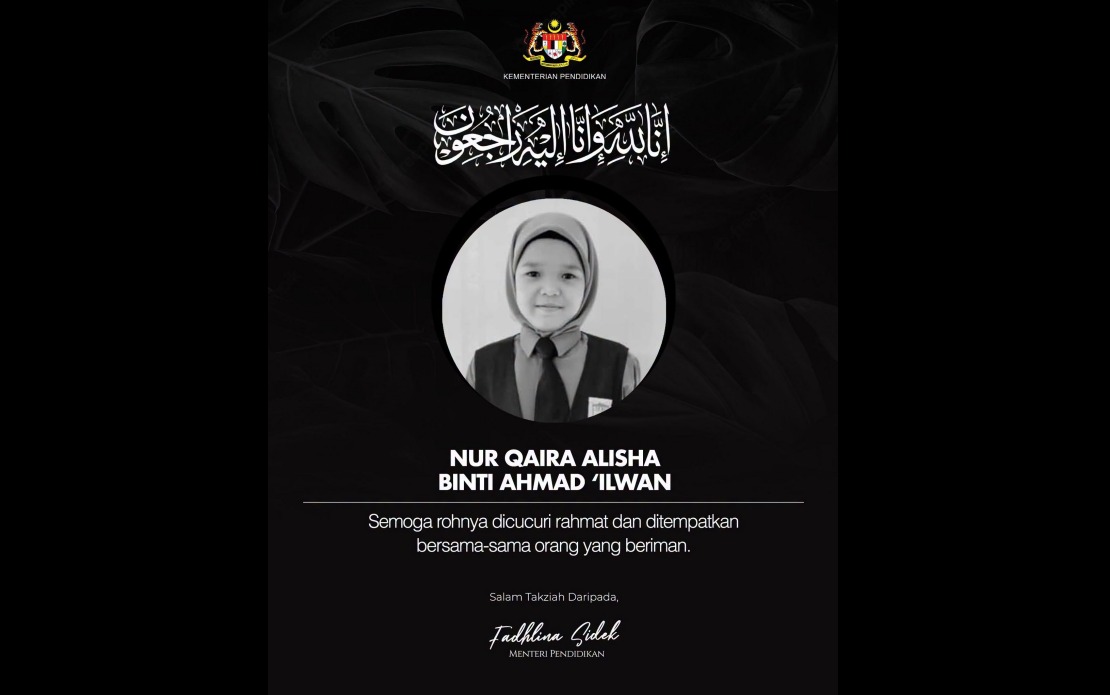
Education Minister Datuk Seri Fadhlina Sidek has directed the Ministry of Education's Integrity Unit to pursue an investigation into a formal complaint submitted by the family of Year Four pupil Nur Qaira Alisha Ahmad Ilwan, who passed away earlier this year. The decision comes as the ministry faces heightened scrutiny over student safety protocols and the circumstances surrounding the child's death in April. Fadhlina emphasised that the investigation will adhere strictly to established procedures and be guided by principles ensuring impartial treatment of all stakeholders involved in the matter.
The ministry has already received documentation from Kedah State Education Department confirming that preliminary enquiries were undertaken into the family's concerns. This preliminary phase sets the stage for the Integrity Unit to conduct a more comprehensive review with broader investigative authority. Fadhlina reiterated in a statement posted to social media that the Ministry of Education regards all complaints pertaining to student safety and wellbeing as matters of paramount importance. She underscored the ministry's immediate priority remains extending compassionate support to the grieving family during this profoundly difficult period.
The circumstances surrounding Nur Qaira's death have sparked significant concern within educational circles and among parents nationwide. Medical records indicate that the child had contended with a cardiac condition from early infancy, diagnosed when she was merely three months old. Given the severity and long-term nature of this health condition, the school had received formal medical documentation exempting her from participation in competitive sports and strenuous physical activities. This exemption represented a critical safeguard intended to protect her from exertion that could precipitate cardiac complications.
However, the family has alleged that during school sports house selection activities held on April 15, a teacher directed Nur Qaira to participate in a running competition notwithstanding the school's documented awareness of her medical restrictions. This instruction to participate despite the known health exemption forms the crux of the family's complaint and raises serious questions about adherence to safeguarding protocols within Malaysian schools. The decision to override established medical guidance represents the focal point of scrutiny in the investigation ahead.
Nur Qaira's condition deteriorated significantly over the following week. By April 24, she required emergency hospitalisation at Sultanah Bahiyah Hospital after developing severe vomiting and pronounced swelling around her eyes. Medical specialists subsequently diagnosed her with acute heart failure stemming from decompensated dilated cardiomyopathy, a condition that represents a critical deterioration in cardiac function. The timing of these symptoms' emergence following her participation in the sports event has prompted the family to draw a causal connection between her forced exercise participation and the subsequent medical crisis.
The child's death represents a tragedy that raises uncomfortable questions about institutional accountability and the effectiveness of safeguarding mechanisms within Malaysia's schools. For many Malaysian parents, particularly those with children managing chronic health conditions, the case underscores anxieties about whether medical accommodations are genuinely respected within educational settings. The alleged disregard for documented health restrictions suggests potential gaps in communication protocols between medical advisors, school administration, and individual teachers regarding student health vulnerabilities.
Educational institutions across Malaysia operate within a framework that mandates adherence to medical restrictions and health accommodations provided by parents and health professionals. These protocols exist explicitly to prevent precisely the type of incident that occurred in this case. The investigation by the Integrity Unit will necessarily examine whether established procedures were followed, whether individual staff members received appropriate training regarding health accommodations, and whether systemic failures enabled this incident.
For the broader education sector, this investigation carries significant implications. Schools nationwide may face increased pressure to strengthen verification systems ensuring that medical exemptions and health restrictions are prominently communicated to all relevant staff members and consistently observed during school activities. The case may also prompt renewed discussion about teacher training programmes and whether educators receive sufficient guidance on recognising and responding to health-related vulnerabilities among their pupils.
Fadhlina's decision to direct the Integrity Unit signals the ministry's recognition that the matter demands investigation extending beyond routine departmental inquiries. The Integrity Unit possesses broader authority to examine systemic issues and individual conduct, potentially resulting in recommendations for procedural reforms or personnel actions if findings warrant such measures. This escalation demonstrates acknowledgment that accountability mechanisms must be rigorously applied to protect public confidence in institutional safeguarding practices.
The investigation's conclusions and subsequent recommendations will resonate throughout Malaysia's educational community, potentially influencing how schools nationwide implement health accommodations and communicate medical restrictions to staff. For the family, the formal investigation represents a necessary step toward understanding the chain of decisions and actions that contributed to their daughter's death. As the Integrity Unit undertakes this sensitive investigation, the ministry's commitment to transparent findings and substantive accountability will be closely observed by parents, educators, and policymakers alike.

