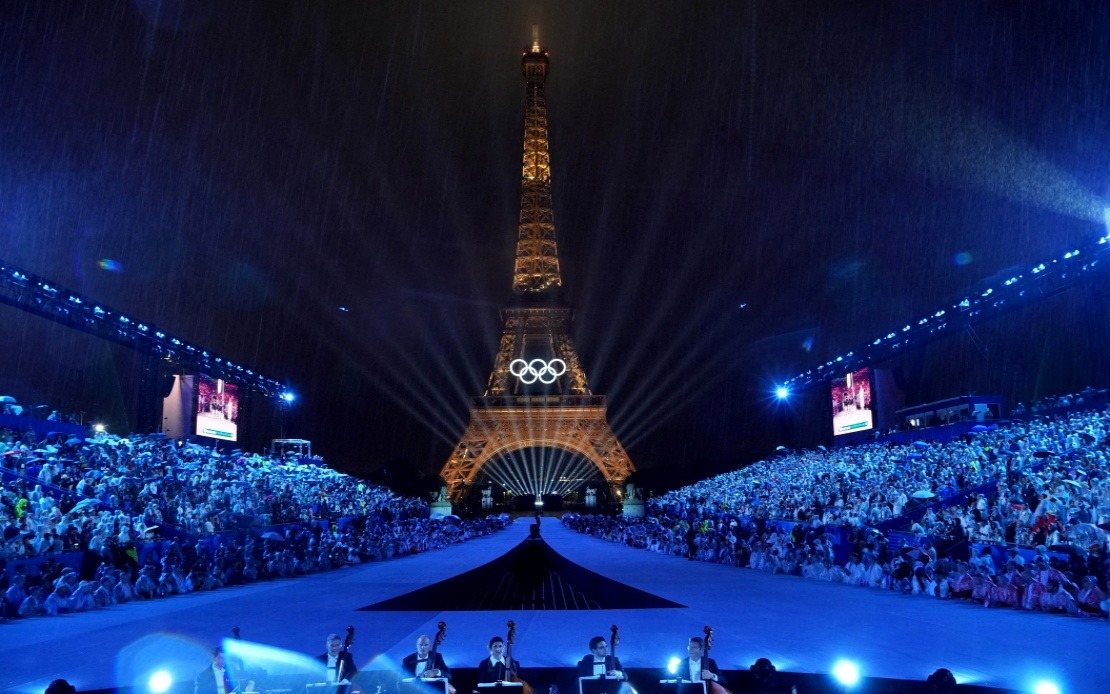
Paris's two most internationally recognizable cultural attractions have taken the extraordinary step of shutting their doors earlier than usual, a measure underscoring the severity of the extreme weather event gripping much of continental Europe. The Eiffel Tower management announced it would cease operations at 4:00 pm local time on Tuesday, with the final visitors admitted at 12:15 pm, while the Louvre Museum followed suit by declaring its own abbreviated operating hours from June 24 through June 27, closing at 4:00 pm instead of the customary 6:00 pm. These closures represent an exceptional response to meteorological conditions that have placed unprecedented strain on public infrastructure and visitor services throughout the French capital.
The operating entity responsible for the Eiffel Tower, Societe d'Exploitation de la tour Eiffel (Sete), explicitly cited the well-being of both workforce and guests as the rationale behind the decision. Management emphasized that safeguarding personnel and visitors ranked as the paramount consideration, acknowledging that maintaining normal operations during such extreme conditions posed unacceptable risks. Those holding advance reservations for stairway access from 11:30 am onward or lift access from noon were automatically entitled to full monetary reimbursement, ensuring that tourists were not financially penalized by circumstances entirely beyond their control.
The meteorological situation affecting France has developed into one of the nation's most significant heat events in recent memory. The national weather authority Meteo-France reported that the Paris metropolitan area experienced ambient temperatures of 36 degrees Celsius by mid-afternoon on Tuesday, with forecasts indicating a further escalation to approximately 38 degrees Celsius by the following day. These figures considerably exceed the historical norms for late June and represent conditions that pose genuine physiological risks, particularly for vulnerable populations including the elderly, very young children, and those with pre-existing medical conditions.
The geographic scope of this temperature crisis extends far beyond the capital. Meteo-France classified 54 departments across mainland France as being under red alert status—the highest designation in the national alert system—as of Tuesday, signifying that conditions had reached critically dangerous levels. A further 35 departments received orange alert classifications, indicating serious but marginally less acute circumstances. This dual-tier alert distribution demonstrates that the phenomenon encompasses a substantial portion of French territory rather than constituting a localized event.
For Malaysian and Southeast Asian travelers, this development carries immediate practical implications. During high season for European tourism, many visitors from the region may find themselves in Paris encountering unexpectedly modified hours at major attractions. The automatic refund provisions implemented by both institutions provide a degree of financial protection, though visitors should proactively check official websites prior to visiting and adjust itineraries accordingly. Travel insurance policies and flexible booking arrangements become particularly valuable when navigating such weather-driven disruptions.
The broader context of these closures reflects evolving patterns of extreme weather events that increasingly demand adaptive management strategies. Tourist venues across the world have traditionally operated according to fixed schedules regardless of meteorological conditions, but climate fluctuations are compelling facility operators to develop more dynamic operational protocols. The willingness of marquee attractions to shut down entirely rather than compromise safety standards represents a significant shift in institutional priorities, elevating public welfare considerations above revenue generation imperatives.
From a labor perspective, these closures acknowledge growing awareness of occupational heat stress risks. Museum staff, tour guides, and attraction employees face prolonged exposure to ambient conditions and often wear uniforms or period costumes unsuitable for extreme temperatures. The decision to reduce operating hours provides these workers with relief from eight-hour shifts conducted in dangerously hot environments, representing recognition that employee well-being cannot be sacrificed for operational continuity.
The incident also raises questions about long-term resilience of Europe's cultural infrastructure. The continent's most famous monuments were designed and constructed during eras when contemporary temperature extremes would have been regarded as meteorologically anomalous. Aging building systems including ventilation, cooling, and water supply mechanisms may lack capacity to function optimally under sustained heat conditions that modern climate models suggest will become increasingly routine rather than exceptional. Institutional planning may increasingly need to incorporate investments in climate adaptation rather than relying upon historical weather patterns as reliable guides for operational capacity.
Tourists currently in France or planning imminent visits should anticipate similar precautionary measures at other major attractions and public facilities throughout affected regions. Official municipal authorities and cultural institutions are likely to issue updated guidance as conditions evolve. The situation also underscores the importance of obtaining comprehensive travel insurance and maintaining flexibility in European itineraries during summer months, particularly as climate patterns shift and extreme weather events become more frequent and intense across the continent.

