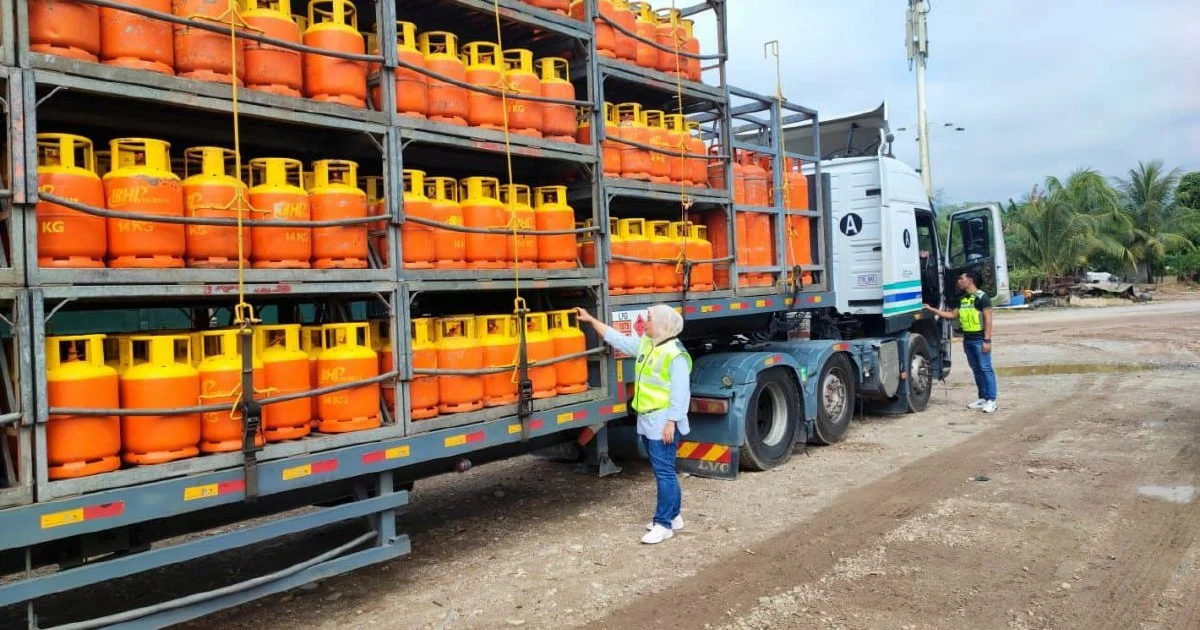
Authorities conducting enforcement operations in Bentong made a significant discovery when they raided a secured storage facility and uncovered a substantial cache of liquefied petroleum gas (LPG) cylinders valued at RM405,000. The cylinders, which were positioned on a trailer within the fenced compound, represent one of the larger seizures of its kind in the region and have raised fresh questions about illegal storage practices and regulatory compliance in the petroleum and gas distribution sector.
The operation highlights the ongoing challenges that Malaysian enforcement authorities face in monitoring illicit storage facilities, particularly those concealed behind physical barriers. The decision to secure the storage area with fencing suggests awareness among those responsible that the stockpile required protection from scrutiny, a detail that likely prompted investigative attention. Such precautions are typical of operations that circumvent standard licensing requirements and safety protocols designed to protect communities and the environment.
LPG, a crucial fuel source for residential, commercial, and industrial users throughout Malaysia, is subject to stringent regulations governing its storage, handling, and distribution. Licensed operators must comply with fire safety standards, proper ventilation requirements, and regular safety inspections to prevent accidents. The discovery of such a large quantity stored in what appears to be an unauthorised facility raises serious public safety concerns, as improper storage of LPG cylinders can create significant fire and explosion hazards affecting surrounding areas and residents.
For Malaysian consumers, incidents like this underscore the importance of sourcing LPG from legitimate, certified suppliers and distributors. The price differential between legally supplied and potentially black-market cylinders may seem attractive, but it conceals genuine risks associated with unsafe storage conditions, inadequate maintenance standards, and absence of proper insurance coverage. Purchasing from unverified sources also removes the consumer protection mechanisms that formal distribution networks provide.
The Bentong seizure reflects a broader pattern of enforcement activities across Pahang and neighbouring states aimed at disrupting shadow economy operations in the fuel and energy sector. Authorities have intensified efforts in recent years to identify storage facilities operating without proper permits and to dismantle supply chains that divert products intended for legitimate commercial channels. Such operations typically involve either stolen merchandise or products purchased at heavily discounted rates through corrupt distribution networks.
Investigators will now examine how such a substantial quantity of cylinders accumulated within the facility and where they originated. The logistics of maintaining 405,000 ringgit worth of inventory suggest either a long-standing operation or connection to larger regional smuggling networks. Understanding the source of supply becomes critical for disrupting the upstream networks that feed illicit storage and distribution chains throughout the peninsula.
The seizure also points to potential gaps in supply chain monitoring and physical surveillance systems that commercial enforcement bodies rely upon. While authorities clearly identified and successfully targeted this facility, the existence of such stockpiles indicates that many similar operations may remain undetected across the country. Enhanced information-sharing protocols between local authorities, federal enforcement agencies, and industry regulators could improve the likelihood of identifying suspicious facilities before they accumulate substantial quantities of hazardous materials.
For communities in Bentong and surrounding areas, the discovery provides reassurance that enforcement agencies are actively pursuing leads related to hazardous material storage. However, residents concerned about similar facilities operating near residential zones should report suspicious activity to relevant authorities immediately. The combination of barbed fencing, restricted access, and large quantities of inflammable materials in unexpected locations warrants immediate investigation, particularly if facilities lack the normal markings and signage associated with legitimate commercial operations.
Stakeholders within the legitimate LPG distribution sector view such crackdowns as necessary for market stability and consumer safety. Unregulated competition from illicit suppliers undermines pricing for licensed operators who invest significantly in compliance infrastructure and employee training. Each enforcement action that reduces available supply through illicit channels strengthens the position of legitimate businesses and encourages consumers to prioritise safety and regulatory compliance over marginal cost savings.
The investigation into the Bentong facility will likely proceed methodically as authorities seek to establish which individuals or organisations controlled the operation and identify downstream recipients who obtained cylinders through this channel. Potential charges could include operating without requisite permits, storing hazardous materials in breach of safety regulations, and potentially trafficking in controlled substances if the cylinders were destined for illegal purposes beyond normal domestic or commercial use.
Looking forward, this incident underscores the need for enhanced community awareness regarding the dangers of unregulated LPG storage and the importance of maintaining vigilant reporting systems. Malaysia's enforcement community depends significantly on public cooperation to identify facilities that pose environmental and safety risks. Residents observing unusual activity at commercial properties or evidence of large-scale storage operations should contact local authorities or dedicated enforcement hotlines rather than assuming that others have already reported suspicious activity.

