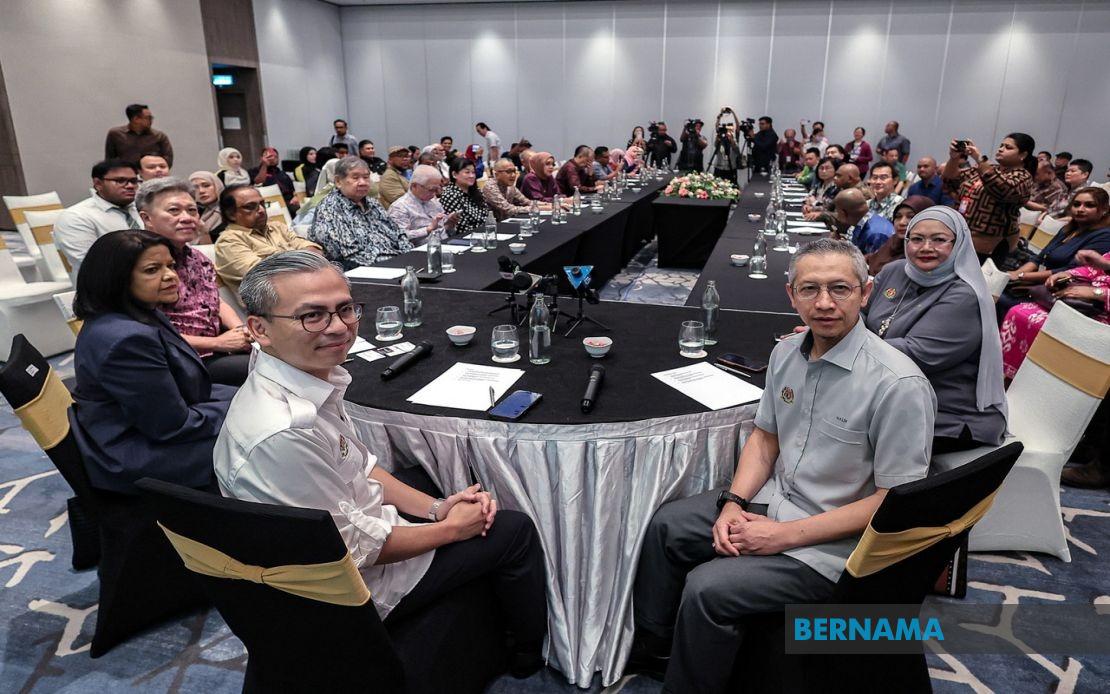
Communications Minister Datuk Fahmi Fadzil unveiled a proposal during HAWANA 2026 celebrations in Butterworth to institutionalise media retreat sessions as a permanent fixture at future National Journalists' Day events, positioning the gatherings as structured forums for dialogue between government and industry stakeholders.
The retreat concept emerged from an extended two-hour dialogue session held in conjunction with HAWANA 2026, where Fahmi engaged directly with representatives from Malaysia's media landscape. The proposal marks an attempt to create ongoing channels of communication beyond one-off press conferences, establishing a systematic mechanism for the Communications Ministry to receive substantive input from media practitioners on matters spanning regulatory frameworks, legislative amendments, and industry sustainability concerns.
Fahmi indicated that the Communications Ministry intends to formally request the Malaysian Media Council to assume responsibility for coordinating these retreat sessions, outsourcing logistical and organisational elements to the MMC while maintaining the government's role as recipient of industry feedback and dialogue participant. This delegation reflects a broader strategy of leveraging existing industry bodies to facilitate structured engagement rather than direct ministerial coordination of such forums.
The retreat sessions would function as dedicated platforms for the media industry to articulate concerns, submit policy proposals, and propose amendments to legislation affecting press operations and journalistic practice. According to Fahmi's remarks, the agenda encompasses both immediate industry challenges and longer-term structural questions affecting the viability and sustainability of media organisations operating within Malaysia's complex media ecosystem.
A particular emphasis emerged during the dialogue on the economic pressures confronting mainstream media outlets in the digital age. Fahmi identified content distribution through social media platforms as a critical pain point, noting that while media organisations invest significant resources producing journalism that circulates widely across platforms such as Facebook, TikTok, and Instagram, these platforms generate minimal direct financial returns or profit for content creators. This represents a fundamental asymmetry in the digital content economy that has accelerated revenue erosion across traditional and digital-native newsrooms throughout Southeast Asia.
The minister signalled governmental receptiveness to assisting the industry in negotiations with major social media platforms, positioning the state as a potential facilitator of discussions between Malaysian media organisations and technology companies regarding content monetisation frameworks. Such involvement reflects recognition that individual media companies lack sufficient bargaining power to negotiate equitable revenue-sharing arrangements with global technology platforms, potentially creating space for government-brokered collective negotiations.
The HAWANA 2026 dialogue brought together a comprehensive array of stakeholder representatives, including Communications Ministry secretary-general Datuk Abdul Halim Hamzah and deputy secretary-general for Strategic Communications and Creative Industry Datuk Bahria Mohd Tamil. The media contingent encompassed Malaysian National News Agency (Bernama) leadership, including chairman Datuk Seri Wong Chun Wai, CEO and HAWANA 2026 working committee chair Datin Paduka Nur-ul Afida Kamaludin, and editor-in-chief Arul Rajoo Durar Raj, alongside Malaysian Media Council chairman Tan Sri Nallini Pathmanathan and senior management from various local media organisations.
The proposal reflects broader regional trends wherein Southeast Asian governments seek to maintain closer engagement with media industries navigating technological disruption and economic pressures. By institutionalising retreat sessions within HAWANA celebrations, Malaysia positions journalism practitioners and government officials within recurring dialogue frameworks, potentially strengthening relationships between policymakers and media leaders while creating structured opportunities for industry grievance articulation.
For Malaysian media organisations, the proposal offers a formal mechanism to collectively present sustainability concerns to government, potentially influencing regulatory or fiscal policy affecting the sector. The emphasis on policy amendments and legislative reform suggests openness to revisiting existing media regulations in light of contemporary challenges, though the concrete outcomes remain dependent on subsequent MMC-led coordination efforts and ministerial responsiveness to industry proposals.
The initiative arrives amid heightened scrutiny of digital platform responsibilities across Asia-Pacific, where governments increasingly investigate whether technology companies should contribute proportionally to news ecosystem funding. Malaysia's approach—facilitating industry-platform dialogue with potential government participation—reflects a middle-ground position between regulatory intervention and market-driven solutions, positioning state actors as honest brokers rather than legislators imposing content monetisation mandates.
Implementing the retreat sessions systematically will require clarifying funding mechanisms, determining retreat frequency and duration, and establishing protocols for translating industry feedback into policy consideration. The Malaysian Media Council's coordinating role assumes institutional capacity and stakeholder trust sufficient to convene meaningful dialogue, a prerequisite that may determine whether these retreats emerge as substantive forums or ceremonial gestures within HAWANA celebrations.

