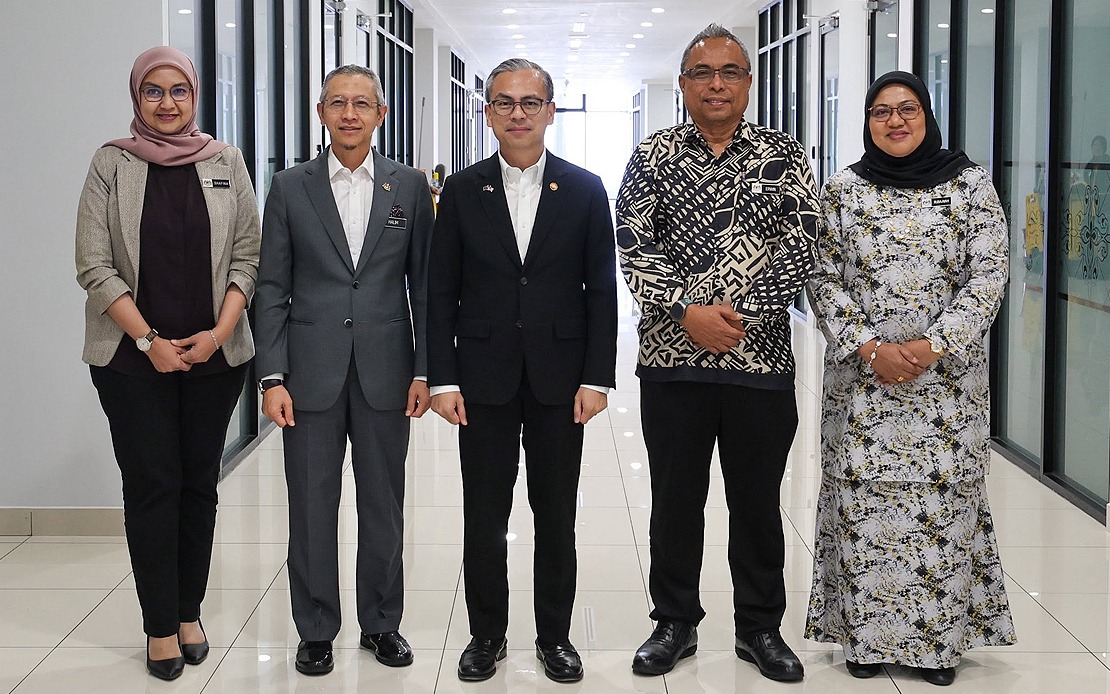
Communications Minister Datuk Fahmi Fadzil has officially welcomed two new appointments to Malaysia's Information Department (JaPen), signalling continuity and renewed focus on the government's information dissemination apparatus. Erwin Khairul Ahmad now leads the department as director-general, while Wan Saidatul Shafina Mohd Amin steps into the deputy director-general position with responsibility for digital content initiatives. The appointments underscore the administration's commitment to strengthening institutional capacity within JaPen during a period of significant digital transformation across the public sector.
In his statement issued on June 22, Fahmi emphasised the importance of the leadership transition, calling upon both appointees to bring dedication and wisdom to their respective roles. His remarks reflected the weight placed on JaPen as a critical channel for government communication with the Malaysian public, particularly as the nation navigates increasingly complex information landscapes shaped by social media, digital platforms, and evolving public expectations around transparency and accessibility. The minister's blessing of the appointments carries symbolic significance, highlighting ministerial confidence in the new leadership team's ability to navigate these challenges effectively.
The formal presentation of appointment letters came through the Public Service Department (JPA), with Tan Sri Wan Ahmad Dahlan Abdul Aziz, the director-general of Public Service, officiating the ceremony. This procedural formality reflects the structured nature of senior civil service transitions in Malaysia, where appointments at the director-general level require coordination across multiple government entities. The involvement of the JPA in formalising these placements underscores the systematic approach the Malaysian civil service maintains when positioning leaders in roles that influence national communications strategy and information policy implementation.
Erwin Khairul Ahmad's elevation to the top position comes at a moment when government information departments across Southeast Asia face mounting pressure to adapt to digital-first audiences and combat misinformation effectively. As director-general, he will oversee JaPen's operations during a period when the department's role extends beyond traditional media relations into social media management, fact-checking initiatives, and coordinated responses to disinformation campaigns. His appointment thus carries implications for how Malaysia positions itself in the regional information ecosystem and manages public discourse on matters of national importance.
The assignment of Wan Saidatul Shafina Mohd Amin specifically to digital content oversight signals JaPen's recognition that government communication has fundamentally shifted. Digital content production and distribution now constitute the department's frontline interaction with citizens, particularly younger demographics who consume news and government updates primarily through online channels. Her appointment acknowledges that traditional media relations, while still important, can no longer be the sole focus of a modern information department seeking to maintain government credibility and public engagement.
Fahmi's expression of gratitude towards outgoing director-general Julina Johan provides institutional recognition of her tenure and contributions to the department's development. Leadership transitions in government agencies often receive limited public acknowledgment, yet Fahmi's explicit appreciation demonstrates respect for continuity of institutional knowledge and the challenges inherent in leading a department tasked with managing government messaging across multiple stakeholders and media environments. This gesture also sets a precedent for professional transitions within JaPen, reinforcing values of institutional loyalty and acknowledging individual contributions to collective mission accomplishment.
The timing of these appointments comes as Malaysian government agencies increasingly grapple with communication challenges spanning political transitions, economic developments, and international relations. JaPen's role as the primary official information conduit means the department's effectiveness directly impacts public perception of government initiatives, policy announcements, and response mechanisms to crises or controversies. Strong leadership becomes essential when government information strategy must balance transparency with strategic messaging, and when the department must coordinate communications across multiple agencies pursuing sometimes divergent narrative priorities.
The emphasis on the Information Department strengthening its role as "an effective medium for delivering information to the people" encapsulates a broader strategic focus within the Malaysian government to reclaim narrative authority in an increasingly fragmented media landscape. As traditional gatekeepers of information lose influence, government information departments must develop capabilities to reach audiences directly while maintaining credibility and institutional integrity. JaPen's challenge involves producing content that competes for attention with entertainment, lifestyle, and commercial messaging while adhering to standards of accuracy and neutrality expected of public institutions.
Wan Saidatul Shafina's specific portfolio covering digital content suggests JaPen is restructuring internally to match organisational priorities with audience consumption patterns. The creation or formalisation of a dedicated digital content deputy position reflects lessons learned globally, where government communicators discovered that simply posting traditional press releases on social media platforms fails to engage digital-native audiences effectively. Her role likely encompasses video production, infographic design, social media strategy, and coordination with other digital platforms that now serve as primary news sources for many Malaysians.
These appointments arrive during a period when Southeast Asian governments collectively face questions about information authenticity, the spread of false narratives, and the role of public institutions in maintaining informed citizenry. Malaysia's government, through JaPen and its information apparatus, operates within this regional context, where competitors for influence include both state and non-state actors promoting alternative narratives about regional developments, economic cooperation, and geopolitical alignments. Strong institutional leadership at JaPen thus carries implications extending beyond domestic information management into Malaysia's positioning within broader regional information flows.

