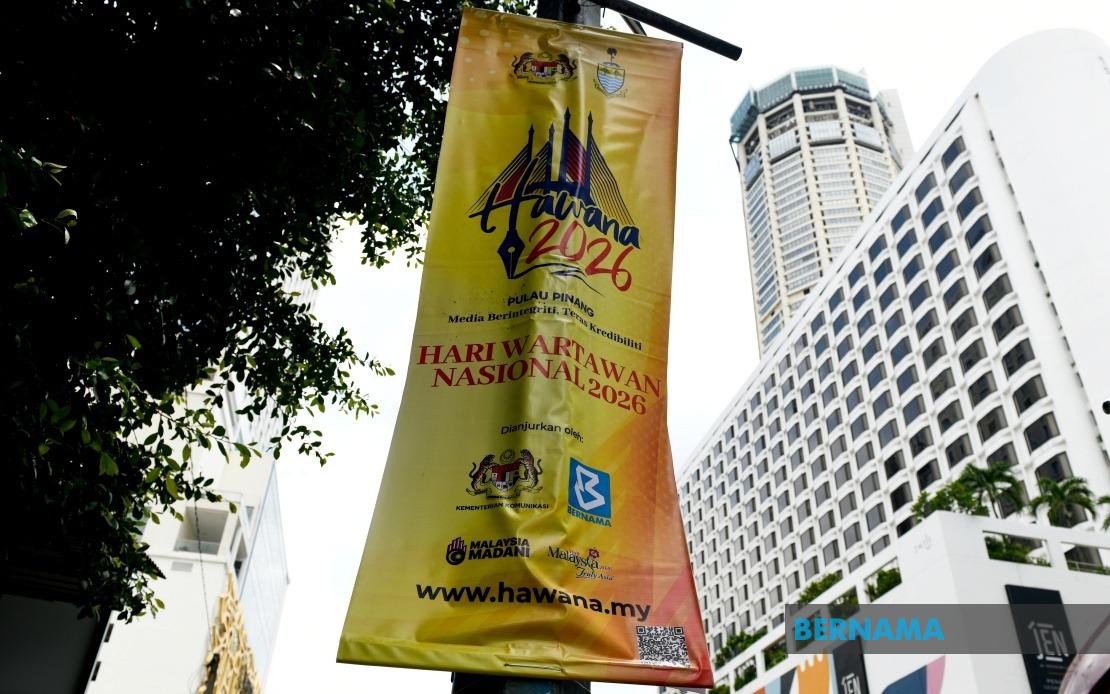
Communications Minister Datuk Fahmi Fadzil has embarked on a two-day working visit to Penang to participate in events surrounding the National Journalists' Day celebration, culminating in the HAWANA 2026 grand finale. The visit underscores the federal government's commitment to recognising the media's contribution to national development whilst fostering closer engagement between government officials and journalism practitioners across the country.
Fahmi's itinerary demonstrates the significance attached to this year's commemoration. He began with attendance at the Malaysia Media Retreat Programme 2.0 in Seberang Jaya, a gathering designed to facilitate substantive conversations among media leaders and executives from both domestic and international news organisations. The retreat represents one of several platforms being activated to bring senior editorial figures into direct dialogue with government and industry stakeholders about the evolving landscape of journalism in Malaysia.
The minister's engagement extended to a formal dinner with Penang Yang Dipertua Negeri Tun Ramli Ngah Talib, reflecting the state's active role in supporting media development initiatives. Such high-level interactions between government representatives and media leaders serve to reinforce mutual understanding and collaborative approaches to pressing communications challenges facing the region.
Beyond formal ministerial engagements, Fahmi participated in the RIUH Pi HAWANA Carnival at PICCA Convention Centre in Butterworth, a three-day celebration blending creative industry showcases with community participation. The carnival's programming reflects a broader recognition that contemporary media ecosystems intersect with creative entrepreneurship and local cultural expression. The event features more than twenty local creative product brands alongside sixteen stage performances by established Malaysian artists, creating a vibrant cultural space that extends HAWANA's reach beyond journalism practitioners to encompass the wider creative economy.
The carnival's workshop offerings—including cyanotype printmaking, albumen printing, and stone-carving—reveal an intentional strategy to position the media sector within a larger cultural narrative. Free admission and diverse programming ensure accessibility to the general public, democratising participation and elevating the visibility of creative and journalistic work in Penang's community consciousness. The inclusion of food and beverage vendors alongside performance artists demonstrates recognition that meaningful engagement with media and creative sectors requires creating holistic, community-oriented experiences.
Fahmi's second day maintained this dual focus on professional development and public engagement. His participation in the Jiwa@Sembang Santai programme at Seberang Jaya Public Market extended the minister's presence into neighbourhood spaces where ordinary Malaysians congregate, signalling that journalistic integrity and media excellence matter to everyday citizens, not merely industry insiders. This approach resonates particularly in Southeast Asia, where public trust in institutions remains contested and requires constant reinforcement through visible, accessible engagement.
The centrepiece of the visit is the HAWANA 2026 Grand Finale, to be officiated by Prime Minister Datuk Seri Anwar Ibrahim. Themed "Media Integrity Strengthens Credibility," the event's title itself articulates a core concern facing democracies regionally and globally: the erosion of institutional credibility in information environments saturated with competing narratives and misinformation. By convening approximately 1,000 media practitioners from Malaysia and abroad, the forum creates space for substantive examination of how journalism can maintain professional standards whilst navigating technological disruption, economic pressures, and polarised public discourse.
The Prime Minister's direct participation signals that media integrity occupies a position of strategic importance within Malaysia's governance framework. This positioning reflects growing international recognition that healthy democracies depend upon functioning information ecosystems—a principle gaining urgency across Southeast Asia, where media landscapes face pressures from government interference, commercial consolidation, and transnational disinformation campaigns. Malaysia's investment in convening journalists to discuss credibility mechanisms demonstrates commitment to these principles at the highest political level.
The Ministry of Communications, with Bernama as implementing agency, has positioned HAWANA as the premier recognition platform for media practitioners' contributions to national development. This institutional framing transforms the annual commemoration from a celebratory exercise into a deliberate instrument of professional culture-building. By systematically recognising journalism's role in development outcomes, Malaysia's media governance structures establish normative expectations about journalism's public value—an important corrective in contexts where media institutions increasingly face public scepticism and resource constraints.
The international dimension of the grand finale—drawing journalists from outside Malaysia—reflects recognition that contemporary media challenges transcend national boundaries. Misinformation about financial markets, climate change, and geopolitical developments flows across borders seamlessly, as do professional best practices and emerging technological solutions. By convening regional and international participants alongside domestic practitioners, HAWANA positions Malaysian journalism within broader professional ecosystems, enabling knowledge-sharing and establishing common standards for integrity and credibility.
For Malaysian readers, the HAWANA 2026 proceedings offer insight into the profession's self-assessment at a crucial moment. Digital disruption has transformed journalism's economics and production processes fundamentally over the past decade, creating simultaneous opportunities and existential threats. Conversations among 1,000 practitioners about maintaining integrity whilst navigating these transformations will likely illuminate both challenges facing the news industry and emerging solutions being tested in Malaysian newsrooms and across the region.
The breadth of Fahmi's two-day itinerary—encompassing ministerial meetings, carnival participation, and professional forums—reflects a holistic approach to media governance that acknowledges journalism's multiple social roles. Media organisations function simultaneously as businesses, cultural institutions, and democratic infrastructure. Recognition events like HAWANA therefore serve important legitimating functions, affirming publicly that journalism merits investment, respect, and professional development support even as technological and economic disruptions reshape the industry fundamentally. For Southeast Asian democracies confronting unprecedented information environment challenges, such affirmation of journalism's value assumes heightened significance.

