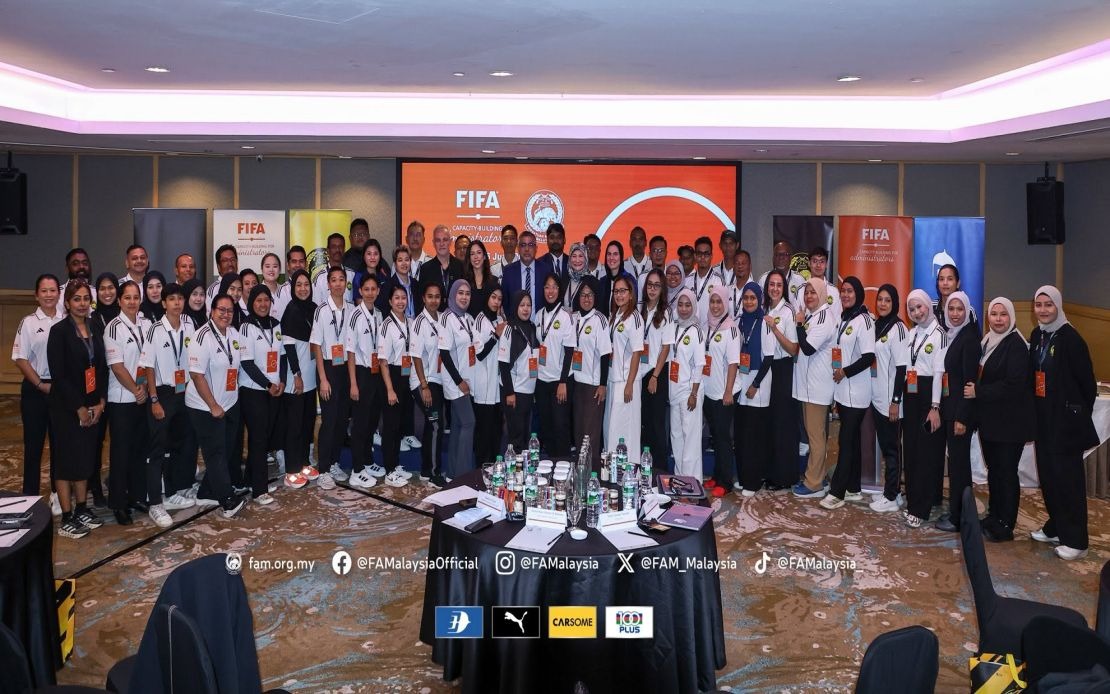
The Football Association of Malaysia has embarked on a comprehensive capacity-building initiative designed to elevate the professional standards of women's football administration across the country. Beginning in June, the FIFA Capacity-Building For Administrators 2026 programme represents a deliberate investment in strengthening the infrastructure supporting Malaysia's women's game beyond the technical expertise visible on the pitch.
This four-day training scheme, conducted in collaboration with FIFA, brings together two international specialists in women's football development: Safia Abdeldayem and Pema Choden Tshering. Their presence underscores FIFA's commitment to spreading best practices throughout the Asian region, with Malaysia serving as a focal point for this developmental push. The programme's timing reflects a global momentum in women's football, where administrative competence increasingly determines competitive success at both club and national levels.
The curriculum addresses critical operational gaps that frequently constrain women's football programmes in developing markets. Participants will engage with modules spanning Women's Leadership, structured competition management, the complex terrain of player and club rights protection, and strategic planning frameworks. These components collectively form a holistic approach to governance rather than isolated technical training. Women's Leadership focuses on cultivating decision-makers capable of navigating complex football ecosystems, while the competition module ensures administrators understand fixture scheduling, tournament logistics, and regulatory compliance. The players' and clubs' rights component addresses contractual protections and dispute resolution, areas where women's football has historically lagged behind men's structures in many countries.
FAM's strategic positioning of this initiative reflects recognition that sustainable development requires simultaneous advancement across multiple domains. Women's football in Malaysia faces not merely on-field challenges but systemic obstacles rooted in inadequate administrative capacity. Many clubs and teams operate without professional management structures, creating vulnerabilities in player welfare, financial stability, and competitive consistency. By targeting team managers and administrative officers directly, FAM addresses this bottleneck at its source.
The initiative carries particular significance for Southeast Asian football development. While regional rivals have invested heavily in women's infrastructure over the past decade, Malaysia's women's game has developed unevenly, with pockets of excellence surrounded by weaker administrative frameworks. This programme creates standardised capability benchmarks across participating clubs and associations, potentially establishing Malaysia as a regional hub for women's football professionalism. The presence of Datuk Suraya Yaacob, who sits on both FIFA's Women's National Team Competitions Committee and the AFC Women's Football Committee, signals high-level institutional commitment and ensures that Malaysian learnings feed into broader continental development discussions.
The emphasis on creating a sustainable ecosystem distinguishes this approach from purely technical coaching initiatives. FAM's stated belief that expanding the pool of skilled administrators and women leaders will strengthen football's institutional foundations acknowledges the reality that competitions thrive when governed professionally. This reasoning aligns with contemporary sports management philosophy, which increasingly recognises that championship success depends on organisational maturity alongside player talent. Women's football globally has demonstrated that clubs investing in administrative professionalism achieve better retention rates, safer environments, and more predictable revenue models than those focused exclusively on competitive performance.
The programme's compatibility with FIFA's global women's football development strategy ensures that Malaysian participants learn methodologies already proven effective elsewhere. FIFA's expansion of women's football now extends beyond tournament organisation to systematic capability development. By positioning the Capacity-Building programme as integral to the 2026 development agenda, FIFA signals that the next phase of women's football growth requires structural maturity rather than just increased investment or media attention. Malaysian administrators graduating from this programme will return to their organisations equipped with international best practices, potentially catalysing improvements across multiple clubs simultaneously.
Participant selection for the programme will likely target individuals already holding administrative responsibilities, allowing immediate implementation of learning. This approach maximises return on investment since beneficiaries can implement new frameworks directly within existing organisations. Team managers attending will gain exposure to governance concepts often absent from coaching education, bridging a gap that frequently creates friction between technical and administrative functions. The four-day format, while intensive, enables working professionals to attend without extended commitments, increasing accessibility for practitioners throughout Malaysia.
The programme's focus on women's football specifically acknowledges that gender dynamics in sports administration require tailored approaches. Women administrators often face distinct institutional challenges, including underrepresentation in decision-making positions and discrimination within traditional male-dominated football structures. By explicitly emphasising women's leadership development, FAM creates space for participants to address these systemic issues alongside functional management skills. The presence of international female experts reinforces the message that women occupy legitimate authority positions in global football governance, providing role models and mentorship within the training environment.
Longer-term implications for Malaysian women's football depend on effective knowledge transfer beyond the initial training cohort. FAM's commitment to expanding opportunities suggests investment in cascading training or peer-learning networks where initial participants mentor others. Such multiplier effects transform single programmes into systemic change engines. For Malaysian football to compete regionally, women's clubs must develop administrative maturity comparable to international standards, particularly as AFC competitions intensify. This programme constitutes a strategic foundation for that ambition.
The initiative also positions Malaysia favourably within FIFA's development architecture. Countries demonstrating commitment to women's football administration receive preference for technical assistance and tournament hosting opportunities. By proactively strengthening administrative capacity, FAM signals serious intent to FIFA, potentially unlocking additional support or investment in subsequent years. This virtuous cycle, where investment in development attracts further institutional support, has propelled women's football advancement in countries like Vietnam and Thailand, offering a template Malaysian football can follow.
Success metrics for this programme extend beyond participant satisfaction to measurable improvements in club governance, player contract standardisation, and competition administration. FAM should establish baseline assessments before the programme and track whether participating organisations implement recommendations. Such documentation strengthens future funding applications and demonstrates accountability to stakeholders. Regional observers will monitor whether Malaysian women's clubs subsequently exhibit improved operational standards, using this programme as a benchmark for assessing FAM's broader development commitment.

