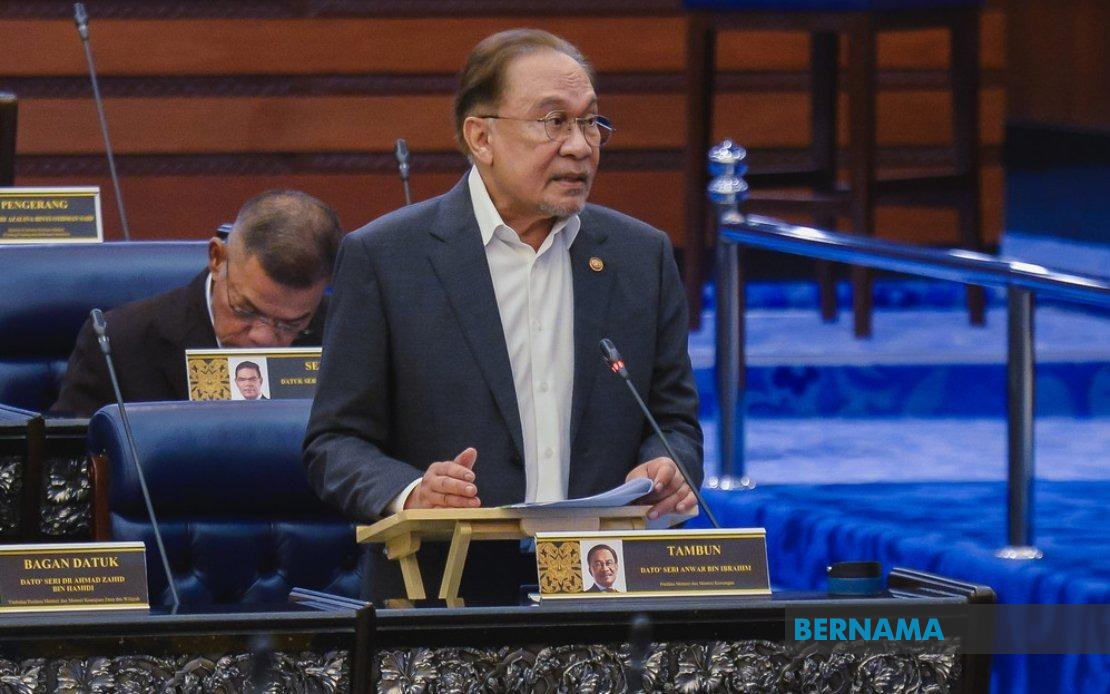
Prime Minister Datuk Seri Anwar Ibrahim has drawn a firm line on how the Federal Government will handle requests from state administrations seeking extra funding for development initiatives tied to a Notice of Change, signalling tighter controls over expenditure approvals. Speaking during Minister's Question Time in Parliament, Anwar made clear that no state can expect automatic approval for additional allocations whenever project costs spiral, establishing a framework that requires fresh negotiation and detailed assessment before federal coffers are opened.
The Prime Minister's intervention addresses a systemic challenge facing Malaysian governance where infrastructure projects frequently exceed their original budgets, straining both state and federal finances. By insisting on renegotiation protocols, Anwar is attempting to inject greater fiscal discipline into a process that has historically allowed costs to balloon with limited accountability. The stance reflects broader concerns within the Federal Government about ensuring that financial commitments are properly scrutinised and that responsibility for cost overruns is clearly assigned.
Anwar outlined two critical dimensions that must be evaluated whenever a Notice of Change triggers requests for supplementary funding. The first involves establishing precisely who bears responsibility for the cost increase—specifically whether the contractor has contributed to escalating expenses through delays, inefficiency, or contractual breaches. This investigation is essential for determining whether the Federal Government should absorb additional costs or whether cost overruns should remain the contractor's liability under existing contractual terms.
The second consideration centres on the fundamental principle that state governments cannot unilaterally bind the Federal Government to open-ended funding obligations. This principle is particularly important in Malaysia's federal system, where state administrations must balance their own budgetary constraints against the reality that major infrastructure projects often require federal partnership and guarantee. Anwar's articulation of this boundary suggests the Federal Government intends to evaluate each case on its merits rather than treating additional funding requests as routine administrative approvals.
The immediate context for these remarks involves Kedah's application for supplementary funding related to the Pulau Bunting Water Treatment Plant project, which requires formal approval of an associated Notice of Change. This specific case illustrates the broader challenge: water infrastructure, critical for public health and economic development, frequently encounters cost pressures during implementation due to supply chain disruptions, labour expenses, or technical complications discovered during construction. However, Anwar's response suggests the Federal Government will not treat critical infrastructure as a blank cheque scenario where escalating costs are automatically accommodated.
For Malaysian states contemplating similar funding requests, the Prime Minister's statement establishes new procedural requirements that will likely slow approvals but enhance scrutiny. State administrations will need to prepare comprehensive documentation demonstrating that cost increases were unavoidable, that contractors have been held accountable where appropriate, and that the project's strategic importance justifies federal intervention. This approach mirrors international best practice in project management, where change orders and supplementary funding require detailed justification and formal reassessment of project viability.
The implications extend beyond individual water projects to encompass the broader infrastructure agenda across Southeast Asia's second-largest economy. Malaysia's development aspirations depend partly on state-level projects in areas like water management, transportation, and utilities, yet the Federal Government cannot indefinitely absorb cost overruns without compromising macroeconomic stability. Anwar's position reflects recognition that sustainable infrastructure requires disciplined project management from initiation through completion, with clear cost controls and accountability mechanisms.
Deputy Prime Minister and Energy Transition and Water Transformation Minister Datuk Seri Fadillah Yusof has been tasked with providing detailed technical explanation on the Kedah case, suggesting the Federal Government will undertake substantive analysis of the Pulau Bunting project's circumstances. Fadillah's portfolio encompasses both energy and water transformation, positioning him to evaluate whether the Kedah request aligns with broader national water security objectives or represents localized pressures that should be managed through alternative means.
The renegotiation requirement also reflects constitutional and administrative principles governing federal-state relations in Malaysia. While states possess certain autonomy over local development priorities, the Constitution grants the Federal Government ultimate authority over resource allocation, particularly when federal funding is involved. Anwar's clarification reinforces that this constitutional framework will be applied rigorously, preventing states from effectively forcing federal hand through accumulated project commitments that subsequently require supplementary support.
For contractors and private sector participants in infrastructure development, the Prime Minister's remarks underscore that notices of change will face heightened scrutiny at the federal level. This may incentivise more thorough initial project planning, more realistic cost estimates, and stronger contractual provisions that clarify responsibility for cost escalation. The effect should be to concentrate negotiating pressure at the project's design and tendering stages rather than distributing pressures across subsequent change order negotiations.
The broader governance implication points toward a Federal Government determined to exercise closer financial oversight after years during which project cost escalations accumulated with limited challenge. This reflects lessons learned from infrastructure initiatives where initial budgets bore little relation to eventual expenditures, eroding public confidence in government planning and implementation capacity. By establishing clear renegotiation protocols, Anwar is signalling that fiscal responsibility will be treated as fundamental to the administration's credibility and sustainability.
Moving forward, state governments will need to align infrastructure planning with realistic cost assessments and build contingency provisions into initial budget submissions rather than expecting to secure supplementary funding through notices of change. This approach should ultimately strengthen project discipline across Malaysian states and federal entities, producing more reliable cost data and more defensible public spending patterns. The Federal Government's stance also creates incentives for states to conduct more rigorous due diligence before initiating development projects, reducing the frequency of costly revisions and change orders.

