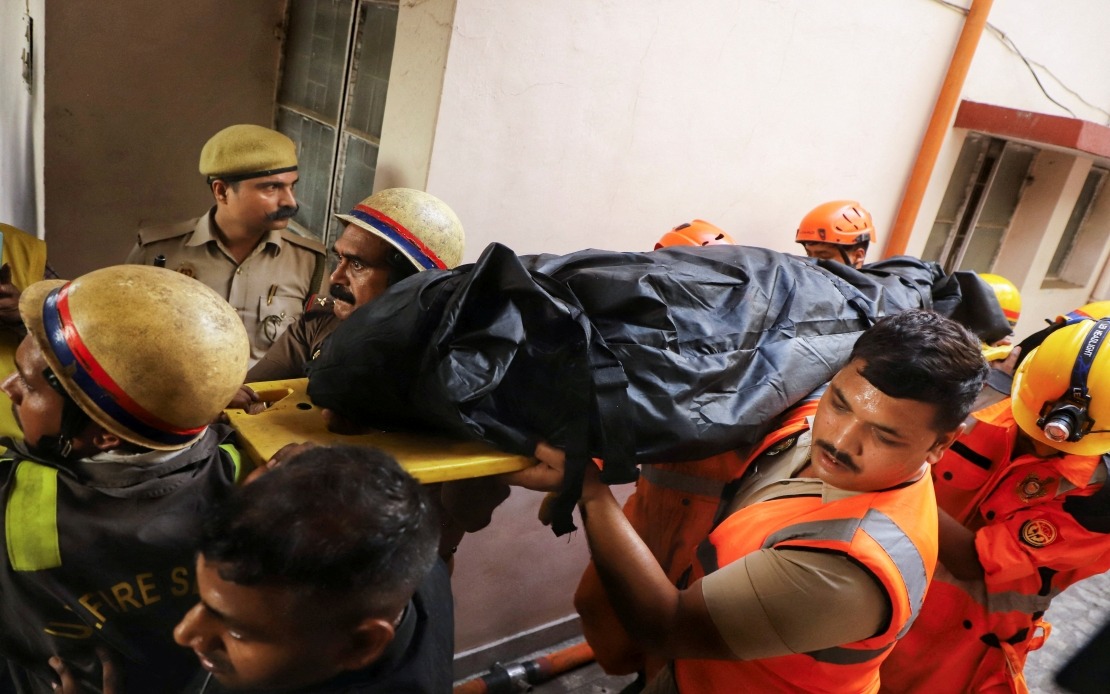
A devastating fire tore through a commercial building in Lucknow, Uttar Pradesh on Monday, claiming the lives of at least 15 people, the majority of them young students attending an animation training centre housed within the structure. The tragedy unfolded rapidly across the three-storey building located in the Aliganj area, trapping occupants who faced thick smoke and limited escape routes. Emergency responders and bystanders managed to rescue some occupants, though the speed and intensity of the blaze prevented a larger-scale rescue operation.
Harrowing scenes emerged as desperate individuals attempted to flee the inferno. Social media footage and eyewitness accounts documented the terror of the moment, with some children jumping from windows into the smoke-filled streets below as panicked bystanders scrambled to alert emergency services. The building's mixed commercial nature, combining the animation training facility with retail stores on different floors, complicated evacuation efforts and contributed to the rapid spread of flames through multiple sections simultaneously.
The emergency medical response mobilized quickly following the incident. King George's Medical University's trauma centre received over 20 patients from the scene. Upon arrival, medical staff assessed the injured and made triage decisions; five victims were admitted for ongoing treatment while fifteen others were pronounced dead on arrival, indicating the severity of injuries sustained by those who could not escape the building in time. The death toll underscores the lethal nature of fires in densely occupied structures with inadequate safety measures.
Uttar Pradesh Chief Minister Yogi Adityanath acknowledged the calamity while addressing a political rally in another city, offering condolences to the bereaved families. His statement, though brief, recognized the human cost of the tragedy and the emotional devastation affecting those who lost loved ones. The incident occurred amid a broader context of escalating fire-related disasters across India, suggesting systemic vulnerabilities in building code enforcement and emergency preparedness.
This Lucknow tragedy arrives on the heels of another catastrophic fire earlier in June, this time at a Delhi hotel that claimed at least 22 lives, many of them foreign medical tourists seeking affordable treatment in India. The proximity of these two major incidents within weeks has intensified scrutiny on India's fire safety infrastructure and regulatory oversight. Both events demonstrate that fire hazards affect diverse victim populations across different building types and geographic regions, from educational facilities to hospitality establishments.
The recurrence of deadly fires in commercial buildings points to persistent gaps in India's approach to occupancy regulations and safety protocols. Overcrowding in training centres, inadequate fire exits, malfunctioning or absent sprinkler systems, and poor emergency lighting are common factors investigators typically identify in post-incident analyses. The animation training centre in Lucknow, like many similar facilities across India, likely operated with minimal regulatory scrutiny regarding fire safety compliance, prioritizing operational efficiency over systematic hazard prevention.
For Malaysia and other Southeast Asian nations, the Lucknow incident serves as a sobering reminder of the importance of stringent building codes and consistent enforcement mechanisms. Many regional businesses and training institutions mirror the operational models common in India, where cost-cutting measures sometimes compromise safety infrastructure. Malaysian authorities responsible for occupancy permits and building inspections can draw lessons from India's ongoing struggles, recognizing that rapid urbanization and commercial expansion must be paired with rigorous safety oversight.
The tragedy also highlights the vulnerability of young people in educational and training settings. Animation training centres and similar skill-development facilities often operate in repurposed commercial spaces, sometimes in older buildings with questionable structural integrity and outdated safety systems. Students enrolled in such programmes typically lack familiarity with emergency procedures specific to their training location, making them particularly susceptible during sudden crises. Institutional responsibility for pre-incident safety briefings and regular evacuation drills remains inconsistently applied across the region.
Investigations into the Lucknow fire's origin and rapid escalation will likely reveal preventable contributing factors. Whether caused by electrical faults, blocked exits, inadequate firefighting equipment, or a combination of deficiencies, each element represents a failure in the safety chain. Preliminary findings will probably recommend strengthened inspection protocols, mandatory safety training for building staff, and enhanced emergency response coordination between municipal authorities and fire services.
The immediate aftermath of such tragedies typically generates public outcry and governmental commitments to reform, though sustained implementation of safety improvements often falters once media attention wanes. For affected families in Lucknow, the loss represents an irreversible rupture in their lives. For policymakers across India and Southeast Asia, it presents an urgent imperative to prioritize life safety over administrative convenience or business interests. The question now facing Indian officials is whether this tragedy, combined with the Delhi hotel fire, will catalyze comprehensive reforms or fade into the growing list of preventable disasters.

