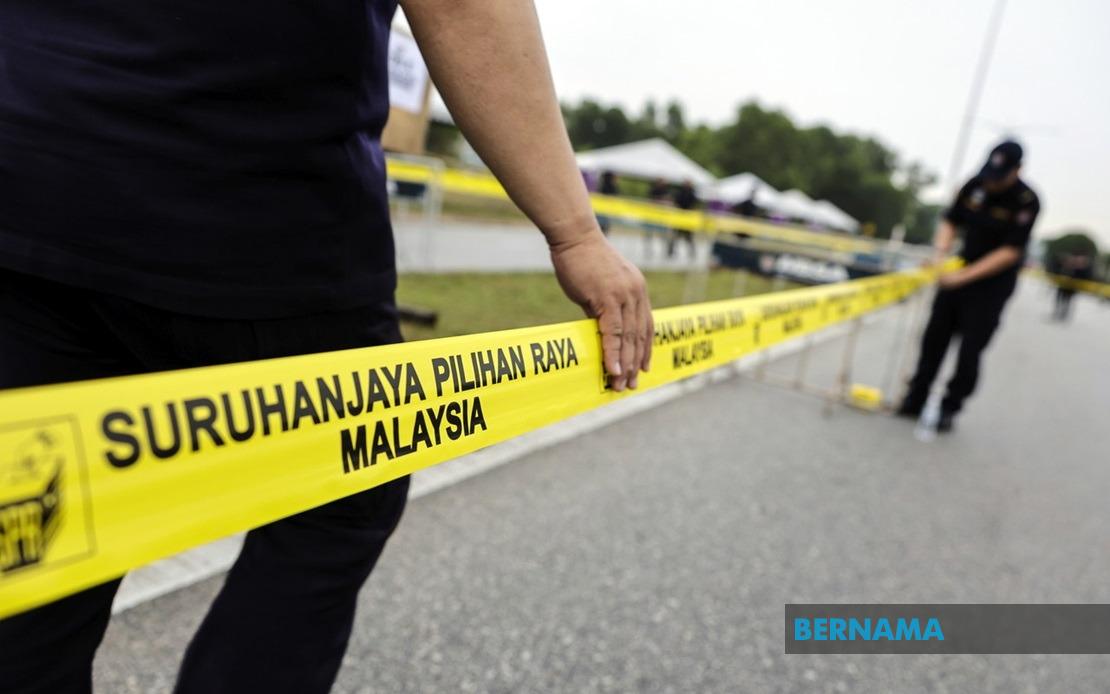
The Malaysian Meteorological Department has reassured voters and election participants that Negeri Sembilan will largely enjoy favourable conditions on July 18, the nomination day for the state's 16th election, though forecasters warn of afternoon thunderstorms developing across the state. The outlook reflects typical mid-year weather patterns for the state, with morning hours presenting the most stable atmospheric conditions and afternoon heating triggering convective activity typical of the season.
According to MetMalaysia director-general Dr Mohd Hisham Mohd Anip, the morning period will bring clear skies to five districts: Jelebu, Jempol, Kuala Pilah, Rembau and Tampin. These areas are expected to remain dry during the critical morning hours when nomination centres operate. However, two districts face different conditions—Port Dickson and Seremban are forecast to experience rain during the morning, potentially requiring voters and election officials to navigate wet conditions. The divergence in morning weather reflects the state's diverse microclimatic zones and the influence of maritime moisture affecting coastal and near-coastal areas.
The afternoon weather picture shifts markedly, as Dr Mohd Hisham indicated that thunderstorms will develop across virtually all districts as afternoon heating intensifies. This pattern is characteristic of equatorial climates during the southwest monsoon season, when inland heating and high humidity combine to trigger atmospheric instability. The development of afternoon storms across multiple districts simultaneously suggests a region-wide convergence effect rather than isolated convective cells, implying that weather-related disruptions could affect numerous nomination centres simultaneously.
Despite the thunderstorm forecast, MetMalaysia has provided encouraging guidance regarding rainfall intensity. Dr Mohd Hisham characterised the expected precipitation as temporary and moderate in magnitude, describing it as brief passing showers rather than the kind of sustained downpour that could significantly impede election activities. This distinction carries practical importance for election management, as brief showers, while potentially inconvenient, are unlikely to disrupt the nomination process or force extended facility closures. The brief nature of forecast rainfall suggests that squall lines will move through rapidly rather than stalling over any single location.
Temperature conditions across the state will reflect typical mid-year patterns, with MetMalaysia forecasting minimum temperatures between 23 and 24 degrees Celsius and maximum temperatures of 32 to 33 degrees Celsius. These ranges present neither extreme heat nor unseasonable cold, falling comfortably within normal parameters for Negeri Sembilan during July. The relatively modest temperature range indicates atmospheric stability in the early morning hours before convective heating develops, potentially explaining the fine conditions forecast for the morning period. Election officials and voters should prepare for humid conditions accompanying the relatively warm maximum temperatures, which could compound discomfort during afternoon hours when storms develop.
The nomination process itself will occur within a compressed timeframe that largely avoids the worst of the afternoon weather. Nomination centres across Negeri Sembilan's eight locations will operate from 9 am to 10 am, a window that falls entirely within the forecast fine morning period for most districts. Even the areas expecting morning rain—Port Dickson and Seremban—will experience their heaviest precipitation earlier in the day, potentially clearing somewhat by nomination centre operating hours. This fortunate timing means that weather is unlikely to present serious logistical obstacles to the nomination process, though candidates and supporters in rain-affected districts should arrive with appropriate precautions.
MetMalaysia has advised all stakeholders—candidates, supporters, election workers, and the general public—to monitor the official MetMalaysia website for updated forecasts as nomination day approaches. This guidance reflects best practice in weather communication, as 24-hour and shorter-term forecasts typically carry greater accuracy than predictions made further in advance. With nomination day falling the following morning, voters and participants have opportunity to access refined forecasts that may provide more granular detail regarding specific district conditions or timing of afternoon storms.
The Negeri Sembilan state election represents a significant electoral exercise involving all 36 state seats across the state's nine districts. The Election Commission dissolved the State Legislative Assembly on June 5, establishing July 28 as early voting day and August 1 as the main polling day. This timeline provides nearly two weeks between nomination and early voting, offering ample opportunity for campaign activities and candidate promotion. The staggered election calendar, with early voting preceding main polling by four days, reflects contemporary election management practices increasingly adopted across Malaysian jurisdictions.
Electoral participation figures underscore the significance of this election. The EC's electoral roll indicates 889,490 registered voters across Negeri Sembilan, comprising 867,151 ordinary voters, 16,884 military personnel and spouses eligible for early voting, and 5,455 police personnel similarly eligible for early voting. The inclusion of military and police early voting blocs reflects federal electoral provisions extending voting access to uniformed service personnel who may face operational constraints on polling day. With nearly 900,000 eligible voters across 36 constituencies, the average constituency electorate approximates 24,700 voters, indicating moderate constituency sizes typical of Peninsular Malaysian state elections.
The contest has already crystallised around established coalitions, with Pakatan Harapan announcing intentions to contest all 36 seats through its constituent parties: PKR (16 seats), DAP (11 seats), and Amanah (9 seats). This comprehensive contestation strategy reflects PH's ambitions to achieve maximal representation in the state assembly. Barisan Nasional, by contrast, announced it will contest 25 seats, a more selective approach comprising UMNO (16 seats), MCA (7 seats), and MIC (2 seats), suggesting either strategic seat-sharing arrangements or voluntary restraint in certain constituencies. Perikatan Nasional has fielded 11 candidates across PAS (5), Wawasan (4), Gerakan (1), and MIPP (1), maintaining its electoral presence while clearly positioning itself as a tertiary force in the state contest.
Smaller parties have also registered candidates, with ASLI, PSM, and Berjasa each fielding single candidates, expanding the overall field and potentially fragmenting votes in closely contested constituencies. Bersatu was expected to announce its candidature later on July 17, potentially adding another layer to the electoral landscape. This proliferation of political contenders reflects Malaysia's maturing democratic competition, though it raises questions about vote-splitting effects in constituencies where multiple parties compete for similar voter bases. The resulting 36-seat chamber will reflect voter preferences across this fragmented political landscape, with weather conditions on nomination day unlikely to significantly influence final electoral outcomes but potentially affecting candidate registration processes if severe disruptions occur.

