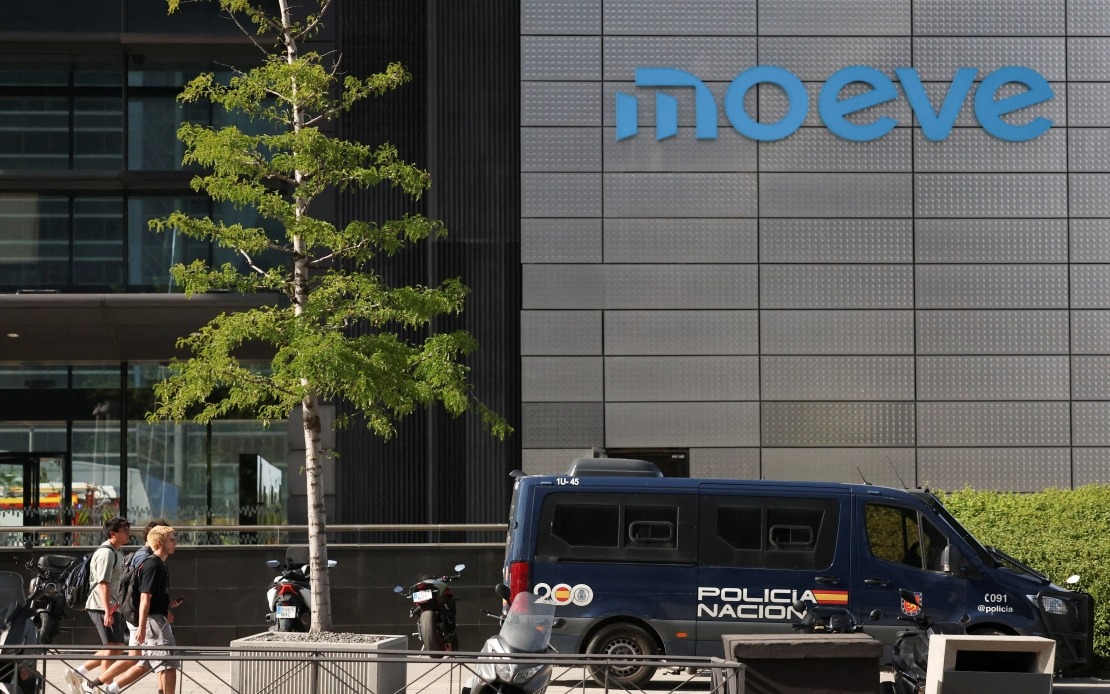
Madrid's iconic Torre Moeve, the second-tallest building in Spain, caught fire on Tuesday afternoon when an explosion occurred inside the structure, prompting authorities to evacuate the entire complex and triggering visible plumes of smoke that could be seen across the Spanish capital. The incident sent alarm through the densely populated commercial district and raised immediate concerns about the safety of one of Europe's most prominent office towers, though emergency response teams acted swiftly to contain the situation and prevent escalation.
The explosion detonated at approximately 5.00 pm local time, with Spanish national broadcaster RTVE reporting that the National Police confirmed the incident. The blast originated within the building's mechanical systems and technical infrastructure, leading initial investigations to focus on potential equipment failure or maintenance-related issues. Such occurrences in high-rise buildings underscore the critical importance of regular safety audits and inspection protocols that must be maintained in large commercial structures, particularly those housing complex technical systems that support operations across multiple floors.
According to the Spanish government delegation based in Madrid, flames erupted on the 25th floor, a level dedicated entirely to technical rooms and building infrastructure rather than office spaces where large numbers of workers would typically congregate. This location proved fortunate, as it limited direct exposure to the fire and reduced the immediate risk to occupants throughout the remaining floors. The technical nature of the affected level suggests the fire may have originated from electrical systems, HVAC equipment, or other mechanical installations rather than from combustible materials typical in office environments.
Emergency response was activated immediately, with firefighters from the Madrid City Council mobilizing to the scene. They successfully extinguished the flames and subsequently conducted thorough inspections of the building's interior to assess structural integrity and identify any secondary fire risks that might have developed during the initial incident. The rapid containment prevented the fire from spreading to adjacent floors or causing extensive damage to the tower's infrastructure, a critical outcome given the building's significance to Madrid's skyline and economic importance.
The evacuation of Torre Moeve proceeded as a precautionary measure to ensure all occupants reached safety while firefighting operations commenced. Authorities coordinated the orderly departure of workers and visitors, implementing emergency protocols designed specifically for high-rise structures where elevator use must be restricted and stairwell capacity becomes a significant logistical consideration. The successful evacuation without panic or chaos reflected both the building's emergency preparedness systems and the public's familiarity with evacuation procedures in major urban centres.
While the scale and visibility of the incident generated concern throughout Madrid, casualty figures remained remarkably low. Only two workers sustained minor smoke inhalation injuries, and a bystander experienced an anxiety attack triggered by the dramatic nature of the event and the emergency response. All three individuals received on-scene treatment and were released without requiring hospital admission, indicating that the fire's brief duration before suppression prevented more serious medical consequences that might otherwise have resulted from prolonged smoke exposure.
The incident highlights vulnerabilities that exist even in modern, well-maintained high-rise buildings, particularly regarding technical infrastructure that operates continuously and may experience unforeseen failures. Torre Moeve, as a landmark structure integral to Madrid's commercial landscape, serves as a reminder that comprehensive maintenance schedules, equipment redundancy, and emergency preparedness remain essential safeguards in contemporary urban environments. For Malaysian readers, this event parallels discussions surrounding building safety standards in Southeast Asia's rapidly expanding skyline, where similar towers house hundreds or thousands of workers daily.
Investigations into the precise cause of the explosion would follow standard Spanish protocols, examining maintenance records, equipment condition reports, and any recent modifications to technical systems on the affected floor. Such investigations typically take weeks or months to complete, as authorities examine every detail to determine whether the incident resulted from negligence, equipment malfunction, or circumstances beyond reasonable foresight and prevention. The findings would inform whether additional safety measures or regulatory adjustments might be necessary for comparable buildings across Spain and Europe.
The visible nature of the incident, with smoke plumes recognizable across Madrid's urban landscape, demonstrated how high-rise fires remain among the most dramatic and psychologically impactful urban emergencies, even when actual harm remains limited. The image of flames and smoke billowing from a second-tallest building generates significant media attention and public concern disproportionate to the actual damage or casualties involved. This psychological dimension influences how communities and policymakers respond to building safety issues, sometimes prompting comprehensive reviews of existing structures and regulatory frameworks governing their operation and maintenance.

