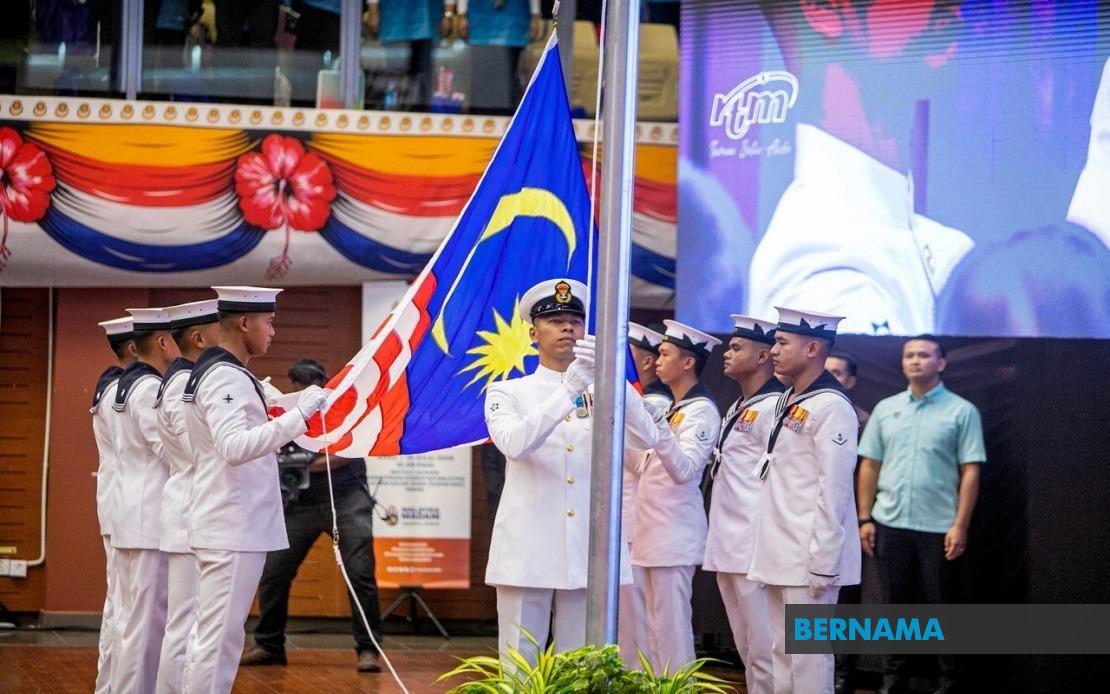
The symbolic flag-raising ceremony that has long anchored Malaysia's patriotic calendar made its return on July 19 when Prime Minister Datuk Seri Anwar Ibrahim presided over the launch of the 2026 National Month and Fly the Jalur Gemilang campaign in Ipoh. The revival of this ceremonial tradition, after a gap of two years, marks a deliberate effort to reinvigorate the annual ritual that has served as a focal point for national unity and patriotic sentiment across the country.
The event took place at the Sultan Azlan Shah Ministry of Health Training Institute (ILKKM SAS) in Tanjung Rambutan, a venue chosen to align with broader 2026 National Day and Malaysia Day celebrations. By selecting a health institution as the backdrop, organisers underscored the connection between national pride and service to the community, particularly relevant given Malaysia's healthcare sector's importance to public welfare and social cohesion.
Following his opening remarks, the Prime Minister formally launched the nationwide campaign before transferring the Jalur Gemilang to a nine-member contingent from the Royal Malaysian Navy's Lumut Base. This symbolic handover, led by Chief Petty Officer Mohamad Razif Aliff Md Yusof, carried deeper significance than mere ceremonial protocol. The involvement of military personnel reinforced the connection between national defence and civilian patriotism, a message particularly resonant in Southeast Asia's complex geopolitical landscape where territorial and maritime concerns remain relevant to national consciousness.
The flag hoisted during the ceremony measured 1.82 metres by 3.65 metres, a substantial display that commanded attention and respect. As the naval team raised the Jalur Gemilang, attendees sang the national anthem Negaraku in unison, creating a solemn moment reflective of collective national identity. Such ceremonies, though ostensibly simple, serve important psychological and social functions by creating shared experiences of national belonging across diverse populations.
The programme incorporated additional patriotic elements designed to deepen emotional and civic engagement. ILKKM SAS trainee Muhammad Ammar Mohd Asri recited the Rukun Negara pledge, the foundational principles upon which Malaysia's constitution rests. The recitation of these five principles—belief in God, loyalty to the sovereign, upholding the constitution, the rule of law, and good behaviour and morality—provided substantive content to what might otherwise be a purely ceremonial exercise. Guests maintained standing posture throughout, a physical manifestation of respect that reinforced the solemnity of the moment.
The National Month and Fly the Jalur Gemilang campaign operates as an institutionalised expression of civic participation. Held annually, the initiative encourages Malaysians from all walks of life and backgrounds to display the national flag prominently in their homes, businesses, and public spaces. This widespread flag-flying creates a visible landscape of patriotism throughout August and September, transforming the urban and rural environment into a sea of the blue, yellow, white, and red colours that define national identity. For a multiethnic and multireligious nation, such inclusive symbols of national belonging hold particular significance in fostering social cohesion.
A notable cultural addition to this year's campaign involves the unveiling of "Aku Berjanji" as the official theme song for HKHM 2026. Composed and performed by Faizal Tahir, the track made its public debut at the ceremony, with downloads becoming available immediately thereafter through the Merdeka360 portal. The use of contemporary music to convey patriotic messages represents an adaptation of traditional ceremonies to appeal to younger demographics, ensuring that National Month celebrations resonate across generational divides.
The 2026 National Month campaign will unfold through a succession of patriotic programmes and activities organised throughout the country, building momentum toward the dual celebrations of National Day on August 31 and Malaysia Day on September 16. These two observances, separated by a fortnight, commemorate distinct but complementary aspects of Malaysian identity: National Day marks the declaration of independence, while Malaysia Day recognises the formation of the Federation of Malaysia through the union of Malaya, Sabah, Sarawak, and Singapore.
The reinstatement of the flag-raising ceremony carries implicit messages about continuity and institutional memory. By reviving a practice that had lapsed, the government signals its commitment to maintaining traditions that bind citizens together. In the context of Southeast Asia, where rapid modernisation and globalisation sometimes create tensions with traditional practices, deliberate preservation of civic rituals acknowledges the enduring value of shared symbols and collective rituals in maintaining national cohesion.
For Malaysian and regional observers, the emphasis on flag display and patriotic expression during National Month reflects broader patterns evident across Southeast Asia, where governments increasingly employ cultural and symbolic initiatives to strengthen national identity. The success of such campaigns ultimately depends on genuine voluntary participation rather than coercion, suggesting that the appeal to citizenship and belonging must resonate authentically with diverse populations. The choice to centre the 2026 launch on a flag-raising ceremony—a practice that requires active participation and visible commitment—demonstrates confidence in the enduring power of simple, dignified rituals to unite increasingly complex and pluralistic societies.

