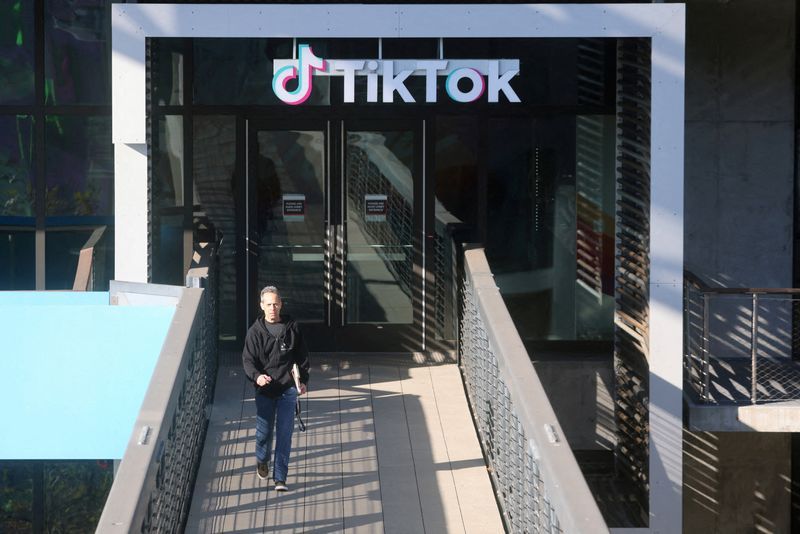
Florida has launched a legal challenge against TikTok, with the state's attorney general filing suit in St. Lucie County court to enforce compliance with H.B. 3, a landmark child safety statute that took effect in January 2025. The complaint, filed by Republican Attorney General James Uthmeier, centres on allegations that the ByteDance-owned platform systematically circumvents the law's core requirement: prohibiting children under 14 from establishing accounts on the service.
The state's case pivots on two interconnected claims of misconduct. First, Uthmeier contends that TikTok knowingly allows underage users to access its platform despite legal barriers, enabling a practice the state views as deliberately defiant. Second, and perhaps more significantly for child welfare advocates, the filing asserts that TikTok has misrepresented the scale and nature of harmful content—including violent and sexually explicit material—that young users encounter when browsing the platform. This misrepresentation, Florida argues, deceives parents into believing their children face fewer risks than the platform actually poses.
In a statement accompanying the lawsuit, Uthmeier framed the action as a fundamental defence of children's interests against corporate prioritisation of profit margins. His rhetoric reflects growing bipartisan frustration with social media companies that many policymakers believe have prioritised engagement metrics and user growth over safeguarding vulnerable populations. The lawsuit seeks not only financial damages but also a judicial order mandating that TikTok restructure its operations and safety mechanisms to align with Florida law.
TikTok's official response struck a more conciliatory tone, with a company spokesperson acknowledging ongoing engagement with the Florida attorney general's office. The platform claimed it has already begun suspending accounts belonging to users under 14 within the state and has committed to further platform modifications designed to satisfy state regulatory requirements. However, this assurance does not preclude the company from vigorously contesting the allegations in court, as the spokesperson signalled TikTok's intention to mount a robust defence grounded in what it characterises as its "strong record on minor safety."
Florida's action against TikTok represents just one front in a much broader litigation campaign spanning the American legal landscape. More than 25 state attorneys general have independently launched lawsuits against the platform, typically invoking consumer protection statutes and accusing TikTok of engineering its interface and algorithms to foster addictive behaviour among young users. These actions collectively reflect a narrative gaining institutional traction: that TikTok's design deliberately exploits adolescent neurobiology and psychological vulnerabilities, contributing to what health professionals increasingly describe as a mental health crisis among teenagers.
The litigation ecosystem surrounding social media platforms has expanded dramatically beyond governmental enforcement. Thousands of civil suits filed by individual users and school districts across the United States allege that TikTok, Meta Platforms (which operates Facebook and Instagram), and other companies have caused documented psychological harm to young people through addictive design practices and exposure to harmful content. While these companies uniformly deny wrongdoing and assert they implement comprehensive safeguarding measures, the mounting legal pressure suggests courts and juries are increasingly receptive to these claims.
A recent court outcome in Los Angeles provides cautionary evidence for the platforms. In what appears to be the first jury trial in this category of litigation, a Los Angeles panel found Meta and Alphabet's Google liable for negligence in a case brought by a young woman who attributed her depression and anxiety to addiction developed during childhood use of their services. TikTok, named as a co-defendant, settled the case before trial rather than proceed to verdict. In another significant settlement, TikTok agreed to pay $8 million to resolve claims brought by a Kentucky school district, though the company did not admit liability.
H.B. 3, the Florida statute anchoring this latest lawsuit, imposes particularly stringent age-verification requirements compared to legislation in other states. The law flatly prohibits users under 14 from maintaining accounts and mandates parental consent for users aged 14 to 15. Enforcement has proven contentious, with a Florida federal judge previously blocking the law on constitutional grounds, concluding it infringes upon minors' First Amendment protections. This injunction has been temporarily suspended pending appellate review, creating an unusual legal posture where Florida continues enforcing the statute while challenging the judicial block in appeals court.
Florida's commitment to aggressive platform regulation extends beyond TikTok. In 2025, the state sued Snap, owner of Snapchat, with Attorney General Uthmeier's office characterising the company's conduct as "particularly egregious." The complaint alleged that Snap deliberately markets Snapchat as a secure application suitable for 13-year-olds whilst the platform simultaneously provides pathways to pornography and illicit drug transactions. Snap's defence rests on constitutional arguments, claiming the law impermissibly restricts minors' First Amendment rights—a position that has found some judicial sympathy but insufficient to prevent ongoing enforcement whilst appeals proceed.
The regulatory trajectory evident in Florida's strategy reflects a philosophical reorientation within American state governance toward viewing social media platforms as uniquely dangerous to child development. Rather than relying solely on platform self-regulation or federal oversight, individual states have begun legislating age-gating requirements, content transparency, and algorithmic accountability directly. This decentralised approach creates compliance complications for platforms operating nationwide, particularly when state laws contradict one another or face constitutional challenges.
For Malaysian and Southeast Asian observers, Florida's litigation posture offers instructive parallels and contrasts. While Malaysia has not yet implemented similarly stringent age-based restrictions on social media platforms, the regulatory debates occurring in Florida and elsewhere increasingly influence global conversations about platform governance. The question of whether parental control mechanisms and age verification represent appropriate regulatory tools—or whether they constitute unconstitutional restrictions on speech and privacy—will likely shape digital policy discussions across the region.
The broader pattern emerging from these lawsuits suggests that social media companies face unprecedented legal and financial exposure in their core market of the United States. Beyond the immediate financial implications, regulatory fragmentation across American states may eventually incentivise platforms to implement stricter safety features globally rather than maintain inconsistent policies by jurisdiction. This dynamic could gradually extend protections currently debated in Florida to users in other countries, including Malaysia, through corporate decisions driven by litigation risk rather than through formal legislative processes.