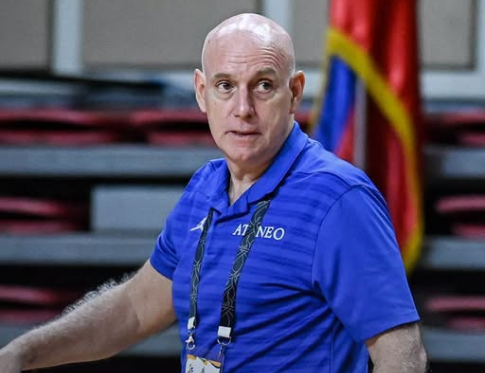
Philippine law enforcement authorities have initiated proceedings against former Ateneo de Manila University men's basketball coach Thomas Anthony Baldwin and ten others for alleged violations of the Anti-Hazing Act, stemming from an incident that claimed the lives of two players. The Philippine National Police Criminal Investigation and Detection Group submitted its formal recommendation to classify the incident as unlawful hazing following the deaths of teammates Rene Baterbonia and Divine Adili, who drowned during a training exercise conducted on June 8 in Dipaculao, Aurora.
The accused group encompasses not only Baldwin in his capacity as head coach, but also forms the broader coaching and support infrastructure of the basketball programme. Those recommended for charges include strength and conditioning coaches Grant Dearns and Ceasar Vicent Javellana Elumba, assistant coaches Dean Caesar Castaño, Sandro Nicholas Romero Soriano, and Reynaldo Jacinto. The recommendation also covers student managers Paolo Manuel Maceda Adevoso and Andrew Lorenzo Bondoc Salud, alongside physical therapist John Eric Quiambao Rueca and utility personnel Aris Ramos Pronce and Joel Palmiano Rapa. Every individual named had participated in the Aurora beach activity and bore some degree of supervisory or organisational responsibility for the events that transpired.
Investigators determined that none of the 11 team officials intervened to halt the activity despite observable dangers. According to statements from authorities, all personnel were present on the beach as events unfolded, yet nobody questioned the wisdom of proceeding, raised safety concerns, or sought to interrupt proceedings. This collective inaction became a central focus of investigative findings, as it demonstrated what authorities characterised as negligence or tacit approval of increasingly hazardous conditions affecting athletes under their care.
Crucially, authorities expanded the legal interpretation of hazing beyond traditional notions confined to initiation ceremonies. Under Republic Act No. 11053, the Anti-Hazing Act, hazing encompasses forced calisthenics, prolonged exposure to harsh weather conditions, and any activity producing physical or psychological suffering as part of membership qualification or continuation. The prosecution's argument hinges on the assertion that the training activity, cloaked in the language of team-building, functioned effectively as a screening mechanism to determine which roster members would ultimately represent the university in the University Athletics Association of the Philippines competition.
The reconstructed timeline of events reveals a progression of escalating physical demands. Players were roused at 4am on the morning in question and compelled to run four kilometres before dawn. Subsequently, the group engaged in strenuous competitive games followed by punitive physical exercises imposed upon losing participants. This sequence of exertion continued throughout the morning, subjecting athletes to cumulative fatigue before the aquatic component of the programme commenced. The strategic timing of activities becomes significant when considered against environmental conditions prevailing on that specific date.
Authorities emphasised the dangerous marine environment surrounding the fatalities. The seawater training exercise commenced between 2pm and 2.30pm, precisely coinciding with peak tidal conditions forecast for 2.27pm on June 8. This temporal overlap ensured that athletes entered waters characterised by powerful rip currents, substantial wave action, and unpredictable seabed depths. Investigators determined that participants, already depleted from sustained physical exertion, faced an aquatic environment presenting objective hazards amplified by their diminished physical condition.
The circumstances surrounding recovery of the bodies have attracted particular investigative scrutiny. No weights were discovered attached to either deceased athlete when their bodies were retrieved from the water. This absence challenges any narrative suggesting athletes exercised autonomous control over their participation or could easily withdraw from the aquatic activity. The lack of weights implies the drownings resulted from genuine inability to manage the marine conditions rather than deliberate risk-taking by athletes themselves, further implicating supervisory failures of coaching personnel.
Baldwin previously issued a lengthy public apology disseminated through institutional social media channels, acknowledging responsibility for the deaths of Baterbonia and Adili. The nearly nine-minute video address represented an early stage in accountability processes, though such statements do not preclude criminal prosecution under Philippine law. The coach's acknowledgment of his role stands separate from the formal legal proceedings now advancing through the Department of Justice, where prosecutors must evaluate evidence and determine whether to proceed with formal charges.
The investigation's focus on activity design and purpose reveals how institutions can obscure hazing through euphemistic framing. Ateneo officials initially characterised the Aurora exercise as routine team-building, yet investigators established that the activity functioned explicitly to narrow the roster from twenty potential members to the seventeen ultimately submitted to league authorities. By tethering qualification for continuing programme participation to physical endurance tests conducted under increasingly dangerous conditions, the coaching staff created a fundamentally coercive environment incompatible with voluntary, safe athletic development.
This case carries profound implications for Philippine sporting institutions and their legal obligations toward athlete welfare. The courts will now determine whether the Anti-Hazing Act applies beyond traditional fraternity-style initiations to encompass contemporary sports training methodologies. A finding of liability would establish that coaches and athletic programmes bear absolute responsibility for creating safe participation environments, regardless of whether harm emerges from overtly malicious intent or merely from negligent overestimation of athlete resilience. Such precedent would reshape how Philippine universities design conditioning programmes and manage team selection processes.

