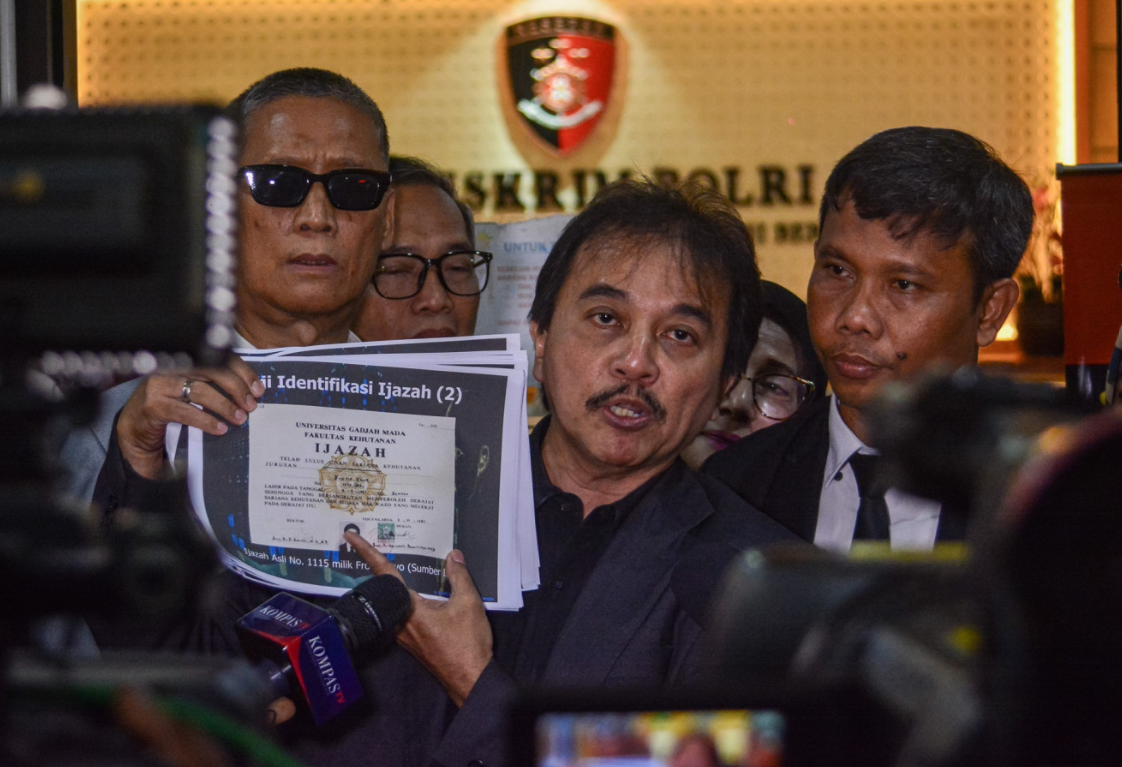
The Jakarta Police arrested former youth and sports minister Roy Suryo and health activist Tifauzia 'Tifa' Tyassuma on Friday morning at their respective residences, intensifying a contentious political dispute that has consumed Indonesian public discourse since 2019. The pair face defamation charges stemming from their public assertions that former president Joko 'Jokowi' Widodo's university diploma was fraudulent, a claim that has spawned multiple legal battles and police investigations over the past six years.
Roy's legal counsel, Ahmad Khozinudin, confirmed the detentions while the Jakarta Police's General Crimes Directorate characterised the action as routine procedure preceding the transfer of the case to prosecutors. According to investigation director Sr Comr Iman Imanuddin, the detention enabled police to complete administrative protocols before escalating the matter to the Jakarta Prosecutor's Office, including finalising health examinations and cross-checking evidentiary materials. The police agency maintained that the arrest sequence reflected standard criminal justice protocols rather than any extraordinary intervention.
Beyond the defamation allegations, authorities also accused both suspects of tampering with electronic documents to substantiate their claims regarding the diploma's authenticity. These additional charges invoke the Electronic Information and Transactions (ITE) Law, legislation that carries maximum sentences of six years imprisonment and has become increasingly controversial among Indonesian civil liberties advocates who argue it permits overly broad prosecutorial discretion. The combination of defamation and document manipulation accusations represents a more serious legal posture than initial inquiries into the diploma matter itself.
The diploma controversy itself traces its roots to 2019, when social media users began questioning whether Jokowi had genuinely obtained his academic credentials from his claimed educational institution. Rather than fading as a minor online dispute, the allegation crystallised into a significant political flashpoint that divided Indonesian society along ideological lines. Supporters of Jokowi dismissed the allegations as baseless partisan attacks, whilst critics contended that transparency regarding presidential qualifications served the public interest and merited serious investigation.
The dispute has generated an elaborate series of legal proceedings spanning multiple years and involving numerous parties. In 2022, civil litigation commenced whilst subsequent police investigations and court filings continued throughout 2024 and into 2025. The National Police concluded their investigation in May 2025 by declaring Jokowi's diploma authentic and terminating their formal inquiry into forgery allegations. Nevertheless, sceptics including Roy Suryo maintained their objections during a case review session held in July 2025, demonstrating that the controversy remained politically potent despite official police conclusions.
The arrest of Roy and Tifa occurs within the context of Indonesia's increasingly complicated relationship with its former president. Jokowi, who departed office in 2024 after a decade leading Southeast Asia's largest economy, has faced mounting legal scrutiny from successor administrations investigating various matters from his tenure. The diploma controversy, though focused on academic credentials rather than presidential conduct, exemplifies how personal disputes can become intertwined with broader political rivalries as leadership transitions occur.
Defence attorneys expressed strong objection to the detention, arguing that both suspects had consistently responded to police summonses and fulfilled all procedural requirements. Refly Harun, representing Roy and Tifa, characterised the arrest as disproportionate given that prosecutors were not scheduled to receive the case until Monday, making the weekend detention apparently unnecessary from an administrative standpoint. This legal challenge raises substantive questions about whether prosecutorial discretion in Indonesia adequately protects suspects' rights or whether political considerations sometimes override procedural prudence.
The broader defamation investigation previously identified eight suspects, though police subsequently withdrew charges against three individuals—Eggi Sudjana, Damai Hari Lubis and Rismon Sianipar—following mediation agreements. The selective advancement of charges against some suspects whilst dropping others suggests either varying evidentiary standards or negotiated resolutions reflecting power differentials between accused parties. This uneven application of prosecutorial pressure has itself become a secondary controversy, raising concerns among observers monitoring Indonesian legal independence.
For Malaysian observers, the Jokowi diploma case offers instructive lessons regarding how political transitions can generate prolonged institutional conflicts within neighbouring democracies. Indonesia's experience suggests that disputes over personal credentials or historical governance matters can escalate into serious legal confrontations utilising broad defamation and cyber law statutes. The case also illustrates how investigations ostensibly about factual accuracy can become vehicles for settling political scores between competing power centres, a dynamic relevant to Malaysia's own complex political landscape where transitions between administrations frequently trigger retrospective legal actions.
The detention of Roy and Tifa represents a notable escalation because it transforms what began as a civil and reputational controversy into criminal prosecution with potential imprisonment consequences. This transition from public disputation to state-enforced legal consequences fundamentally alters the stakes for critics of powerful figures, potentially chilling legitimate discourse about accountability and transparency. The international community, including observers from neighbouring Southeast Asian nations, will likely scrutinise whether the prosecution proceeds primarily on evidentiary grounds or reflects political vindication of Jokowi against persistent critics.

