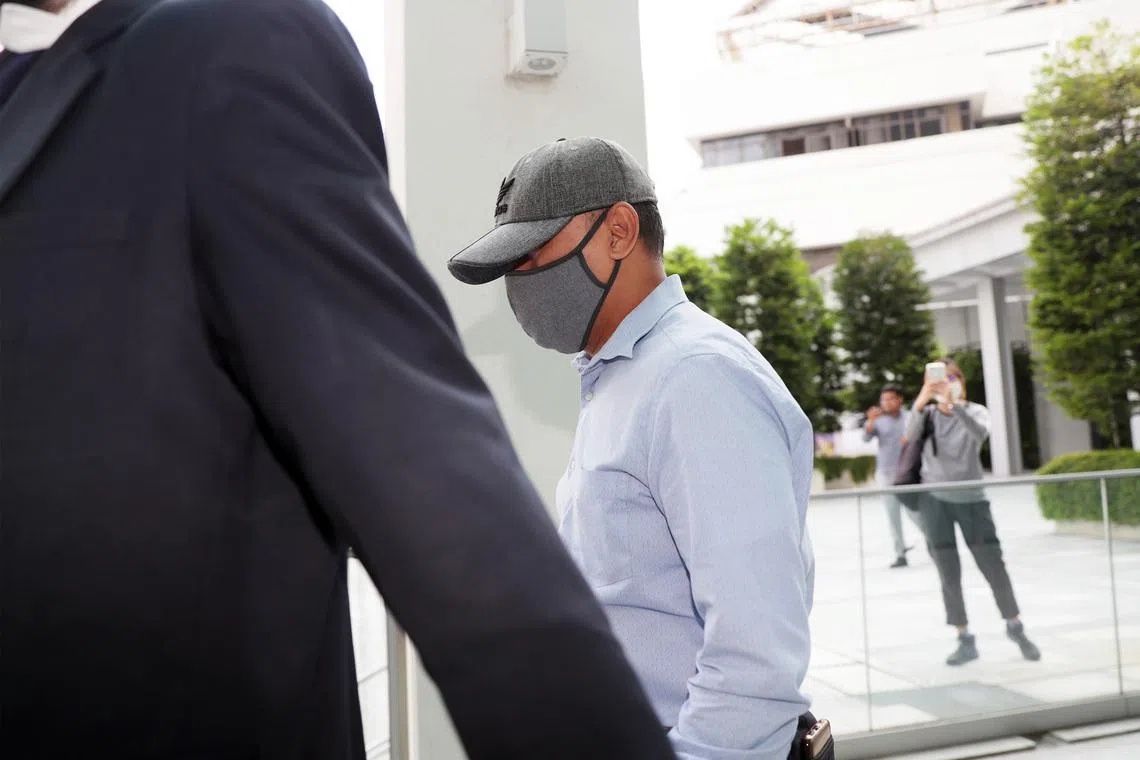
A former senior executive at two Singapore mosques has been handed a 14-month prison sentence after being found guilty of corruption offences. Abdul Rahim Mawasi, 59, abused his position as executive chairman of Darul Aman Mosque and Sallim Mattar Mosque to provide his friend with confidential pricing information, enabling the latter's construction firm to secure lucrative contracts totalling S$223,000. The conviction underscores the serious consequences of abuse of trust within religious institutions, where financial stewardship is central to community confidence.
At the time of the offences, Abdul Rahim held a dual role: he was a senior officer with the Islamic Religious Council of Singapore (MUIS) who had been seconded to manage the two mosques. This arrangement placed him in a position of significant authority over procurement decisions and gave him access to sensitive bidding information that should have remained confidential throughout the tender process. His conviction in April followed a full trial, with sentencing delivered on June 26.
The scheme centred on a long-standing personal friendship between Abdul Rahim and Mohd Mustaqim Kam (also known as Kam Hock Beng), a director at construction firm Zeal-Con Engineering. In July 2018, the two men hatched a plan: they would jointly establish a travel company offering pilgrimage trips, with Abdul Rahim contributing no initial capital. Instead, Kam would funnel profits from construction contracts secured at the two mosques into paid-up capital for their shared venture. This arrangement essentially converted public institutional funds into personal investment capital, a clear conflict of interest.
The first instance of corruption involved Darul Aman Mosque's renovation work. When the mosque sought vendors for yard construction in 2018, Zeal-Con submitted two separate quotes. The initial bid dated August 20 stated S$128,600, but a revised quote submitted on September 12 dropped to S$118,000, undercutting the next-lowest bid of S$125,500 from a competing firm. According to court findings, Abdul Rahim had conducted detailed discussions with Kam about pricing strategy and provided what prosecutors termed "crucial price indications" that allowed Zeal-Con to fine-tune its bid and win the contract for S$118,000 on September 26. The mosque's management board remained unaware of this behind-the-scenes coordination.
A similar pattern emerged at Sallim Mattar Mosque. In September 2019, Zeal-Con submitted an initial quote of S$115,700 for roof and reception area works. Two months later, the firm submitted a revised bid of S$105,000 for the identical scope of work. Deputy Public Prosecutor Bryan Wong stated that Abdul Rahim had specifically advised Kam to lower the company's quote to secure the contract. The mosque subsequently issued letters of contract award to Zeal-Con linked to the reduced amount. Together, these two mosque contracts formed the backbone of the corruption scheme.
To further obscure their scheme from detection, Abdul Rahim arranged for his son to hold shares in their joint venture company, Amal Travel and Tour (ATT), which Kam had established in late 2019. The arrangement involved allotting 25,000 shares worth S$1 each to Abdul Rahim's son in November 2019, effectively allowing Abdul Rahim to maintain financial interest while maintaining plausible deniability. Wong emphasized during proceedings that Abdul Rahim "failed to disclose his interest in that company to MUIS," a critical breach of transparency obligations owed to his employer.
When the matter reached trial, Abdul Rahim's legal team mounted a vigorous defence. His lawyer, Satwant Singh Sarban Singh, denied that Abdul Rahim had any involvement with ATT and pointed out that he held no shares in the company—a technically accurate but legally hollow assertion given that his son held the shares on his behalf. The defence also highlighted that Zeal-Con had completed the construction works satisfactorily and that neither mosque sustained documented financial losses from the arrangement. However, these arguments failed to persuade the court that no corruption had occurred.
Prosecutors countered that the absence of direct financial loss did not diminish the seriousness of the breach. Wong stressed that Abdul Rahim had committed "a serious public sector corruption offence for financial gain," regardless of whether the mosques received acceptable work in return. The distinction matters considerably: corruption charges focus on improper conduct and abuse of authority, not merely on quantifiable harm. By steering contracts to a predetermined winner based on friendship rather than fair competition, Abdul Rahim violated the trust placed in him as a steward of religious community resources.
Abdul Rahim's conviction also came against the backdrop of his co-conspirator's earlier sentencing. Kam, then 66, received six months' jail in February 2025 for his role in the scheme. The disparity in sentences—Kam received half the time despite initiating the arrangement—reflects the courts' view that Abdul Rahim, as the public official with fiduciary responsibilities, bore greater culpability. This distinction carries implications for how Southeast Asian jurisdictions assess corruption charges involving state or quasi-state employees versus private sector participants.
The case resonates beyond Singapore's borders because it illustrates vulnerabilities in institutional governance that many Southeast Asian religious organizations face. Religious councils and mosques across the region often operate with limited transparency, small management teams, and modest budgets, creating environments where personal relationships can override formal procurement procedures. The involvement of MUIS, a statutory board, also demonstrates that even formally regulated institutions can experience breaches when individual officers prioritize personal interests.
At sentencing, Abdul Rahim's defence sought leniency, requesting no more than six months' jail and emphasizing his lack of prior criminal convictions. The court rejected this plea, imposing 14 months instead—nearly double the requested term. This decision signals judicial determination to deter similar misconduct among public officials entrusted with religious community resources. Abdul Rahim's bail was set at S$30,000, with his sentence commencement scheduled for July 10, allowing time for legal procedures and personal affairs.
The case underscores the importance of institutional checks within religious organizations, particularly regarding procurement and contract awards. For Malaysian readers, the Singapore prosecution serves as a cautionary example of how easily trusted officials can rationalize conflicts of interest, especially when personal relationships intersect with institutional authority. The scheme required no complexity—merely the sharing of information that Abdul Rahim controlled—yet it fundamentally compromised the integrity of the institutions he served. As Malaysian religious councils and community organizations review their governance frameworks, the Abdul Rahim case demonstrates why robust conflict-of-interest policies, competitive bidding procedures, and transparent disclosure requirements remain essential safeguards.

