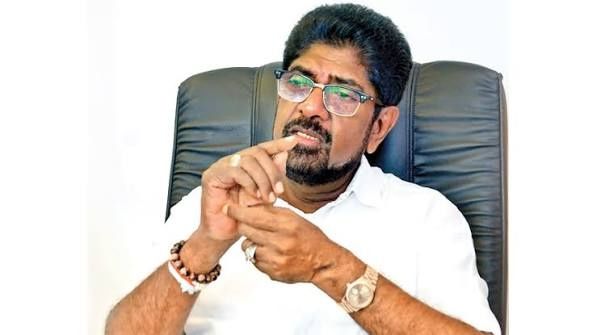
Former Sri Lankan minister Keheliya Rambukwella has been taken into custody by the island's anti-corruption authorities over his alleged involvement in the theft of a centuries-old sacred rock that once formed part of the entrance to a historic royal palace. The arrest, announced on Tuesday, represents the latest in a series of serious corruption allegations against the politician, painting a troubling picture of institutional decay during his tenure in government positions.
The stolen object at the centre of the case is a heavily carved granite moonstone, an elaborate circular stepping stone that historically constituted a symbolic entrance feature to the palace of Veera Parakrama Narendrasinghe, the last major Sinhala king to rule the island before his reign concluded in 1739. The theft occurred in December 2022, during a period of profound national crisis when Sri Lanka was grappling with its most severe economic catastrophe in decades. The Commission to Investigate Allegations of Bribery or Corruption (CIABOC) alleges that Rambukwella not only conspired in the removal of this culturally significant artifact but also actively worked to impede police investigations into the matter.
The implications of the moonstone's theft extend beyond mere property crime. The object represents a tangible link to Sri Lanka's medieval history and architectural heritage, making its disappearance a matter of cultural significance for a nation already struggling with institutional credibility. That a government minister allegedly facilitated such a theft speaks to the depth of governance challenges that emerged during the country's economic unravelling. The timing of the offence during the acute phase of the sovereign debt default suggests a broader pattern of institutional breakdown where even high-ranking officials may have felt emboldened to exploit national assets for personal gain.
Rambukwella faces multiple charges extending well beyond the moonstone case. The anti-corruption commission has also indicted him for misusing government funds to employ six individuals for his personal business interests, representing a direct diversion of state resources. This charge underscores how some officials apparently leveraged their ministerial positions to blur the boundaries between public resources and private enterprise, a recurring problem in post-crisis governance.
A parallel legal proceeding adds substantial weight to the accumulating allegations against him. Rambukwella currently faces prosecution in an unrelated court case concerning the procurement of counterfeit medications for state hospitals during his tenure as health minister. According to police testimony presented to the court, Rambukwella authorised the acquisition of a life-saving cancer medication that investigators determined was merely water. The scandal represents not merely financial corruption but potentially jeopardised patient welfare during a period when the healthcare system was already under severe stress.
The counterfeit medicine scandal carries particular resonance for Southeast Asian readers given the region's ongoing struggles with pharmaceutical counterfeiting and the vulnerabilities that emerge when health systems face external pressures. During 2022 and 2023, as Sri Lanka defaulted on its US$46 billion foreign debt and declared bankruptcy, the country faced an acute shortage of essential medications. Patients requiring critical treatments found themselves unable to access necessary drugs through legitimate channels, creating desperation that criminals could exploit and officials could allegedly manipulate for profit.
The health ministry drug procurement crisis is not an isolated matter confined to Rambukwella's actions. Multiple senior officials within the health ministry apparatus have been indicted in connection with the scheme, suggesting a more systemic problem within the procurement process. This pattern of multiple indictees indicates that the counterfeit medication scandal may have involved institutional failures rather than isolated instances of individual malfeasance, pointing to weaknesses in supply chain verification and quality control mechanisms that urgently require reform.
The constellation of charges against Rambukwella illustrates how economic crises can catalyse institutional corruption. When governments face sovereign debt crises and foreign exchange shortages, the pressure to find alternative funding sources can create conditions where officials rationalise inappropriate conduct. The theft of the moonstone, the misuse of state employment funds, and the procurement of counterfeit medicines all occurred during the same period of national emergency, suggesting that Rambukwella's alleged conduct was not incidental but rather part of a broader pattern of asset-stripping during a moment of vulnerability.
For Malaysian observers, the Rambukwella case offers cautionary insights about governance vulnerabilities during economic stress. Malaysia's own experience with political instability and leadership transitions has occasionally created similar windows of vulnerability in institutional oversight. The case demonstrates why maintaining robust anti-corruption machinery and independent investigative bodies remains essential, particularly during periods when financial pressures might otherwise encourage officials to view government assets as available resources for personal redirection.
The arrest also underscores the importance of heritage protection mechanisms and cultural property safeguards, concerns that resonate across South and Southeast Asia where valuable historical artifacts remain vulnerable to theft and smuggling. As countries grapple with post-pandemic economic recovery and the temptations that accompany fiscal stress, the moonstone theft serves as a reminder that cultural patrimony requires protection from those entrusted with its stewardship.
Rambukwella's continued detention will likely produce further revelations as investigations proceed. The CIABOC's actions suggest that Sri Lanka's anti-corruption institutions retain capacity to pursue high-profile cases even during periods of economic turbulence. Whether these prosecutions will catalyse broader institutional reform or merely represent selective accountability remains an open question, one with implications extending far beyond the island nation itself.

