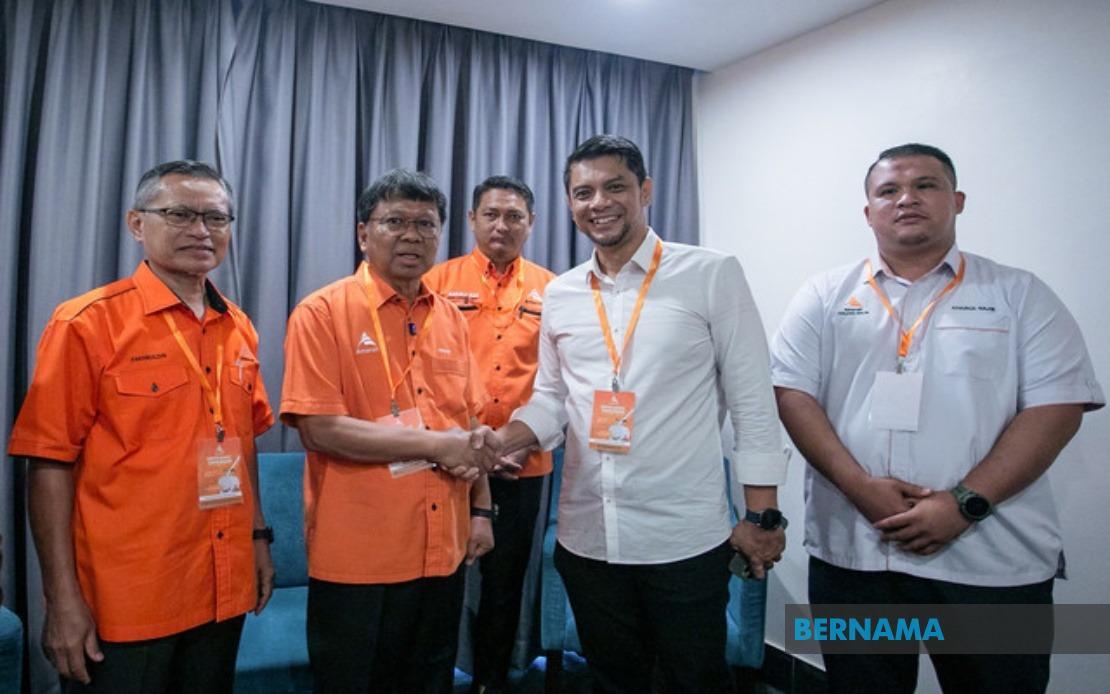
Hasnul Zulkarnain Abd Munaim, who previously represented Titi Serong in the Perak state assembly, has regained membership in Parti Amanah Negara (Amanah) following approval from the party's senior decision-making bodies. The readmission was formally endorsed during the party's joint National Management Meeting and National Leadership Meeting convened on June 18, according to an announcement made in Ipoh on June 21.
Perak Amanah chairman Datuk Asmuni Awi framed the readmission as part of a deliberate recalibration of the party's approach to managing its relationship with former members. He indicated that while Hasnul Zulkarnain had previously signalled his willingness to return to the party fold, the broader political environment and internal party circumstances had not previously aligned to permit serious consideration of such applications. The timing of the approval, Asmuni suggested, reflected a maturation in how Amanah now views the return of defectors who maintain ideological commitment to the party's core principles and platform.
The trajectory of Hasnul Zulkarnain's party affiliations over the past four years illuminates the turbulent nature of Malaysian coalition politics during this period. In March 2020, as the nascent Perikatan Nasional government solidified power in Perak following dramatic political upheaval, Hasnul Zulkarnain stepped away from Amanah and assumed independent status. This move occurred in tandem with similar defections by Yong Choo Kiong, a former Tronoh assemblyman, and A. Sivasubramaniam, the previous Buntong representative. However, the independent interlude proved temporary for Hasnul Zulkarnain. By July 2020, merely four months later, he gravitated towards Parti Pribumi Bersatu Malaysia (Bersatu), the Mahathir-aligned coalition partner that had catalysed the earlier political realignment.
The readmission carries particular significance within Perak's political ecosystem, where Amanah has endeavoured to maintain relevance amid the state's volatile party dynamics. Asmuni's comments reveal an acknowledgment that the party's strength derives not merely from individual members, but from the retention of ideological cohesion. His characterisation of former members as still harbouring allegiance to Amanah's foundational mission suggests that the party leadership views defection less as permanent rupture and more as temporary divergence, potentially recoverable when circumstances shift. This interpretation contrasts with the adversarial postures some political parties adopt towards returnees.
Hasnul Zulkarnain's background strengthens the symbolic weight of his reinstatement. Beyond his role as a state representative, he served as Amanah Youth chief at the state level, positioning him as a figure who had invested in the party's institutional development beyond mere legislative representation. His previous leadership credentials within Amanah's youth wing suggest that his departure may have registered as a particular loss, and his return correspondingly represents recovery of institutional memory and established networks within the party structure.
The broader context for this readmission involves Amanah's strategic positioning in a Malaysian political landscape increasingly characterised by coalition fluidity. The party, which emerged from the 2015 PAS-UMNO split and has since navigated multiple coalition configurations, faces persistent questions about its electoral viability and membership stability. By explicitly adopting a policy receptive to returning members, Amanah signals both confidence in its direction and pragmatic acknowledgment that Malaysian politics permits no permanent exclusions. Other parties have similarly embraced readmission policies in recent years, reflecting a competitive environment where membership recruitment and retention carry operational and symbolic importance.
For Hasnul Zulkarnain personally, the readmission represents an opportunity to rehabilitate his political standing within Amanah's ecosystem. His public expression of gratitude to party leadership framed the decision as validating his future contributions, suggesting that he views this chapter as enabling him to pursue political ambitions within a party structure rather than constrained by independent status. The timing also carries implications for Perak state politics as the 2026 state elections approach, with party compositions and individual positioning becoming increasingly consequential.
The readmission of Hasnul Zulkarnain also reflects patterns observable across Malaysian politics more broadly, where elected representatives shift between parties in response to coalition reconfiguration, changing electoral prospects, or personal calculations about party trajectories. Unlike the more punitive approaches some parties have historically adopted, Amanah's approach suggests a maturation in how political institutions manage membership volatility. This development carries implications for political stability insofar as it normalises rather than penalises party switching, though it simultaneously acknowledges the structural reality that such switching constitutes an established feature of Malaysian political practice.
The resonance of this readmission extends beyond individual careers to illuminate broader questions about party identity and cohesion in Malaysia's federal system. Amanah, positioned as a reformist PKR alternative with roots in PAS's progressive wing, has navigated identity questions throughout its existence. The readmission of a former state-level official and youth leader suggests the party remains confident enough in its organisational direction to welcome returning members without requiring extensive probation or subordinate positioning. This stance contrasts sharply with the securitised approaches some coalitions adopt towards former members.

