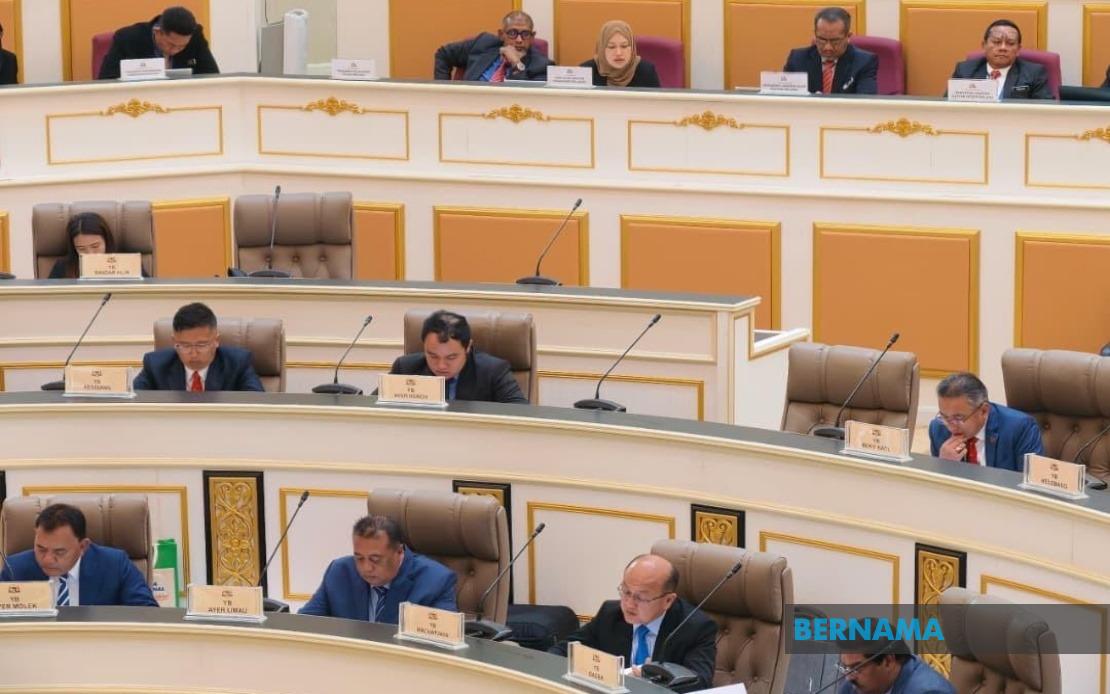
A significant political realignment unfolded in the Melaka State Legislative Assembly on July 15 when four Democratic Action Party legislators formally crossed to the opposition benches, signalling deepening fissures within the ruling coalition and raising fresh questions about governmental stability in the southern state.
The four assemblymen who made the transition are Allex Seah Shoo Chin representing Kesidang, Low Chee Leong from Kota Laksamana, Leng Chau Yen of Banda Hilir, and Kerk Chee Yee representing Ayer Keroh. Their relocation to seats occupied by Perikatan Nasional and Independent lawmakers was the culmination of a withdrawal of support announced the previous day, effectively ending their participation in the Barisan Nasional-administered state administration.
The departure underscores a fundamental disagreement over governance principles. The Melaka DAP faction cited the state legislature's passage of constitutional amendments permitting the appointment of unelected assemblymen as the trigger for their decision. Party chairman Khoo Poay Tiong characterised the measure as fundamentally incompatible with democratic and electoral integrity, explaining that the immediate withdrawal reflected the party's principled opposition to what it viewed as an undemocratic institutional reform.
The move creates a peculiar fragmentation within what was previously the Pakatan Harapan alliance in Melaka. Notably, Adly Zahari, the sole Amanah representative and concurrently the Melaka Pakatan Harapan chairman, maintained his seat within the government bloc. This divergence reveals the tactical complexities and internal disagreements plaguing opposition-aligned parties in the state, with different components calculating their political interests differently in response to the constitutional controversy.
Prime Minister Datuk Seri Anwar Ibrahim had attempted to forestall the rupture, publicly urging the Melaka DAP to postpone their decision to allow continued focus on developmental priorities and citizen welfare. His intervention, however, proved unsuccessful in dissuading the four legislators from proceeding with their exit, indicating the depth of conviction underlying their objections to the constitutional amendments.
The assembly seating rearrangement on the final day of the sitting was the procedural manifestation of this political realignment. Assembly Speaker Datuk Ibrahim Durum appealed to all members to conduct themselves with discipline, propriety, and courtesy throughout proceedings, adhering strictly to parliamentary rules. Such appeals to decorum typically accompany periods of legislative tension when factional divisions threaten to undermine institutional norms.
For Malaysian observers and regional analysts, this incident reflects a broader pattern of coalition instability that has characterised Malaysian politics since the 2018 general election. The constitutional amendment controversy in Melaka touches on fundamental questions about representation and legitimacy that resonate throughout the federation. The introduction of appointed rather than elected representatives strikes at the core principles upon which Westminster-derived parliamentary systems depend, and the willingness of legislators to resign from government over this matter suggests genuine ideological commitment rather than mere partisan maneuvering.
The Melaka situation also illustrates the vulnerability of state governments that lack commanding majorities. With four DAP assemblymen now in opposition, the calculation of legislative support for the Barisan Nasional administration shifts materially. The government must now depend more heavily on securing backing from independent legislators and ensuring complete party discipline among remaining coalition partners to maintain its legislative position and advance its agenda.
This development carries implications extending beyond Melaka's borders. Southeast Asian democracies have increasingly grappled with questions regarding the legitimacy of appointed versus elected representation, particularly as governments seek to consolidate power through constitutional engineering. Malaysia's experience in Melaka provides a cautionary example of how such institutional modifications can trigger unexpected political consequences and fracture existing coalitions, ultimately destabilising rather than reinforcing governmental authority.
The episode also demonstrates the limited efficacy of top-level political intervention when lower-level party cadres hold principled positions. Despite the Prime Minister's personal appeal for postponement, the Melaka DAP chose to prioritise their stated commitment to democratic principles over coalition unity. This suggests that future attempts to manage political stability through elite negotiation may face increasing resistance from party members more willing to accept electoral costs in pursuit of what they perceive as fundamental principles.

