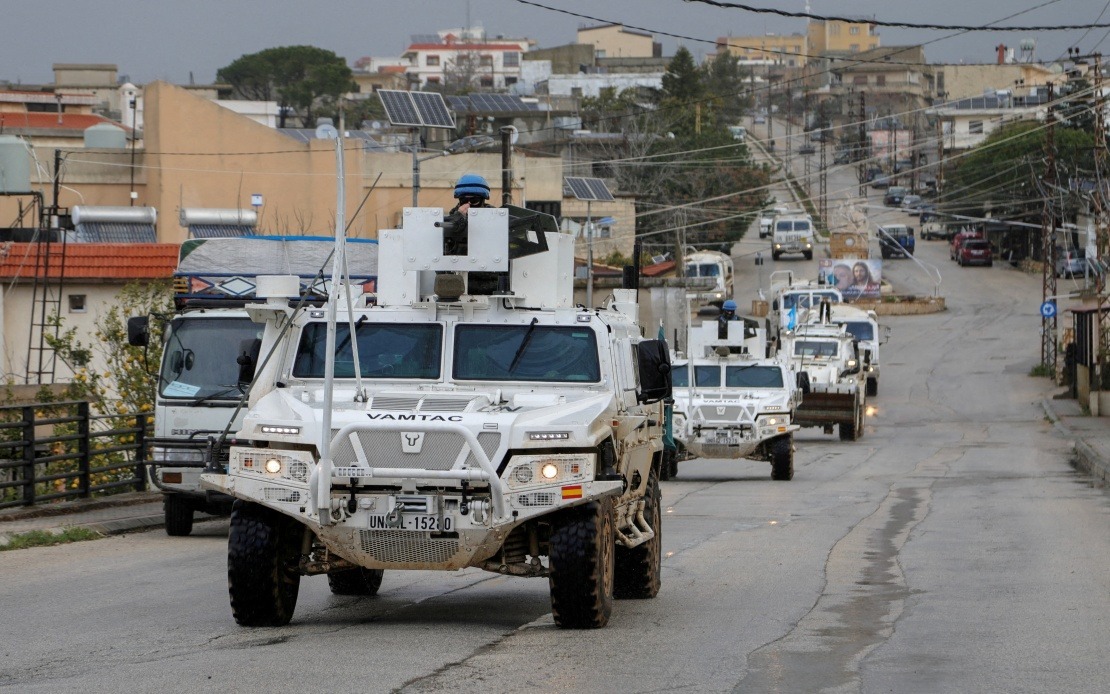
France and Italy have announced plans to create a multinational coalition designed to sustain Lebanon's stability once the United Nations Interim Force in Lebanon concludes its nearly five-decade presence. French President Emmanuel Macron disclosed the arrangement during a joint press conference with Italian Prime Minister Giorgia Meloni in Antibes on the southern French coast, signalling a coordinated European response to one of the Middle East's most pressing geopolitical challenges.
The initiative represents a significant diplomatic undertaking between two major European powers to address the power vacuum that will emerge following UNIFIL's departure. According to UN Security Council Resolution 2790, the peacekeeping mission will formally cease operations on December 31, with personnel withdrawals to be completed within twelve months thereafter. The timing is crucial, as Lebanon's internal stability remains fragile and the country continues grappling with economic collapse, political paralysis, and security threats on multiple fronts.
Macron framed the coalition effort as essential to reinforcing Lebanese state sovereignty and strengthening its armed forces at a critical juncture. The French President emphasised that the arrangement would be undertaken in close coordination with both the European Union and the United Nations, suggesting a multilateral architecture rather than a unilateral intervention. This approach seeks to address international concerns about military adventurism while building consensus among key stakeholders regarding Lebanon's future security architecture.
The underlying strategic concern driving both nations' commitment centres on preventing Lebanese territory from becoming a flashpoint for escalating regional tensions. The country has long served as a theatre for proxy conflicts between competing regional powers, particularly involving Hezbollah and various other armed groups. The departure of UNIFIL, which has maintained a buffer role in southern Lebanon since 1978, could create conditions that permit renewed destabilisation or weaponisation of Lebanese soil against neighbouring states, particularly Israel.
Meloni's endorsement of the initiative underscores Italian alignment with the French position on Lebanon's security needs. The Italian Prime Minister specifically highlighted the dangers of allowing a security vacuum to materialise, characterising such an outcome as "extremely dangerous" for the broader region. Italy's involvement reflects both its Mediterranean interests and its role as a founding EU member with substantial diplomatic influence in Middle Eastern affairs.
For Southeast Asian observers, this European intervention strategy offers instructive parallels to regional security challenges. The Franco-Italian approach emphasises multilateral coordination, institutional frameworks, and prevention of unilateral power grabs—principles increasingly relevant as powers compete for influence across Southeast Asia. The emphasis on strengthening host-nation capacity rather than imposing external military governance reflects evolving international norms about intervention.
The coalition framework also highlights how traditional Western powers are adapting to 21st-century security challenges where conventional peacekeeping proves insufficient. Rather than simply extending UNIFIL or creating another UN-mandated force, France and Italy are proposing a flexible multinational arrangement potentially involving diverse contributors and tailored to Lebanon's specific requirements. This model could influence how international actors approach stabilisation operations elsewhere.
Lebanon's dire economic circumstances add complexity to the coalition's prospective mandate. The country faces a financial crisis of historic proportions, with currency collapse and hyperinflation rendering basic governance difficult. Any international force or coalition will need to operate within an environment where state capacity is severely constrained and where public trust in institutions has eroded substantially. The Franco-Italian initiative thus represents not merely a military or security challenge but a comprehensive stabilisation effort.
The coordination mechanism between the proposed coalition and the European Union carries significant weight. EU involvement lends legitimacy and potentially financial support to the initiative, while also ensuring that European strategic interests in Mediterranean stability remain protected. This integration distinguishes the approach from purely French or Italian undertakings, embedding Lebanese stabilisation within the broader European security architecture.
Regional actors including Israel, Syria, and Iran will likely scrutinise the coalition's actual composition and operational parameters closely. The success of any post-UNIFIL arrangement depends substantially on its perceived neutrality and its ability to prevent Lebanese territory from becoming a launching point for attacks against neighbouring states. The Franco-Italian proposal's emphasis on UN coordination suggests an effort to bridge these competing concerns, though such balance remains challenging in practice.
Looking ahead, the coalition's effectiveness will depend on securing commitments from additional nations and establishing clear rules of engagement that command respect from Lebanese political factions and regional powers alike. France and Italy's diplomatic groundwork in Antibes represents an important opening move, but translating agreement into operational capacity within Lebanon's contested political environment will require sustained commitment and sophisticated management of competing interests.
For Malaysia and ASEAN nations, the Franco-Italian approach to post-mandate stabilisation offers lessons about managing transitions when international missions conclude. The emphasis on building local capacity, coordinating through multilateral institutions, and preventing security vacuums reflects principles increasingly relevant to Southeast Asian security challenges as regional powers navigate great power competition.

