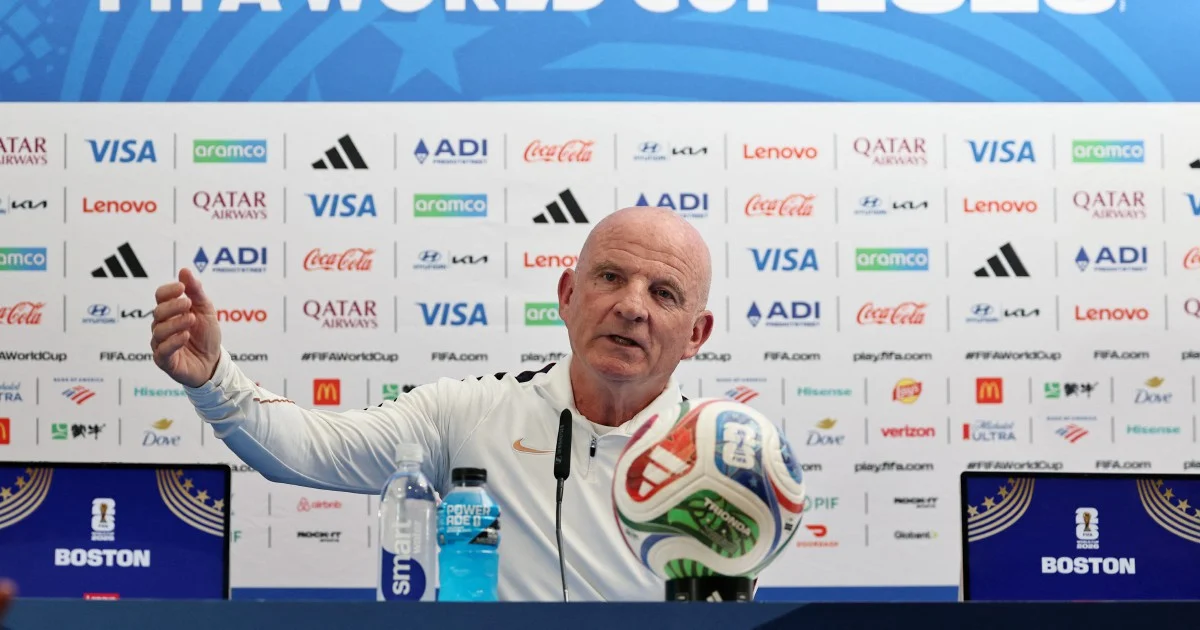
France will pursue top place in their World Cup Group I when they encounter a formidable Norway side on Friday, with assistant coach Guy Stephan underscoring the strategic importance of the result beyond mere tournament positioning. Speaking in Boston ahead of the fixture, Stephan addressed reporters in the absence of manager Didier Deschamps, who has temporarily departed the squad to attend his mother's funeral. The French delegation faces a match where first place carries tangible operational benefits that extend well beyond the symbolic value of topping a group in international football.
The mathematical reality favours France heading into their third group-stage encounter. Having accumulated six points from their opening two matches, the 2018 world champions require only a draw against Norway to secure first place, a feat made possible by their superior goal difference within the group. This seemingly modest requirement masks a more nuanced tactical and logistical calculation that has become increasingly important in the tournament's structure. Should France accumulate the necessary point, they would maintain their advantageous position without expending additional energy on pursuit of victory, an increasingly valued commodity as tournaments progress into knockout phases.
The logistical dimension that Stephan emphasized represents a critical factor in modern tournament football, particularly in a geographically expansive nation like the United States. Finishing atop the group allows France to remain based in the Northeastern region, where their current operations are centred near Boston. The alternative scenario—finishing second—would require the team to undertake extensive travel across American time zones to cities including Dallas, Miami, and Atlanta for subsequent knockout-stage encounters. These geographical distances carry implications extending beyond simple travel fatigue; they encompass acclimatisation challenges, disrupted training schedules, and the logistical complexity of managing player recovery and preparation in unfamiliar environments.
Temperature considerations add another layer to Stephan's strategic analysis. The climate conditions in the Northeast differ substantially from those in Southern states during this period, and maintaining familiarity with existing environmental conditions provides a competitive edge that sophisticated coaching staffs increasingly recognise. Remaining in a single geographical area throughout the tournament's early knockout rounds allows players to avoid multiple climate adjustments, permitting them to focus exclusively on tactical preparation and physical recovery rather than environmental adaptation. This accumulation of seemingly minor advantages can prove decisive when matches are decided by marginal differences in player performance and alertness.
Norway presents a formidable obstacle despite France's mathematical advantage, as both nations have demonstrated equal potency throughout the group stage. Entering this decisive fixture undefeated with perfect records from their opening matches, Norway arrives as a team in peak form and with nothing to lose from a competitive standpoint. This positioning sometimes liberates teams to play with particular freedom, unburdened by the weight of expectation that accompanies tournament favourites. France must therefore approach the encounter with appropriate respect while managing the temptation to calculate their way to a draw rather than pursuing outright victory.
Central defender William Saliba's absence through injury represents a notable gap in France's defensive architecture. As a key component of their backline, Saliba's unavailability necessitates tactical adjustments that require careful management against a Norwegian side adept at creating attacking opportunities. Additionally, striker Marcus Thuram's calf complaint introduces uncertainty regarding the team's offensive capabilities, forcing Stephan and the coaching staff to evaluate whether the player can contribute meaningfully or whether the injury warrants precautionary rest. These personnel considerations add layers of complexity to team selection and tactical deployment that extend beyond simple position-filling.
Stephan's temporary elevation to public-facing responsibilities reflects the leadership continuity required when circumstances force managerial absence. His comments demonstrate an understanding of both immediate objectives and the broader tournament architecture that will shape France's path through the competition. His relationship with Deschamps, characterised by regular communication across varying circumstances, ensures that strategic coherence remains intact despite physical separation. However, Stephan acknowledged that the day of the funeral would necessarily limit contact, reflecting appropriate deference to personal circumstances that transcend sporting competition.
France's qualification following two matches—an outcome Stephan noted occurs infrequently in competitive international football—represents a substantial achievement that provides context for the group-stage finale. The team enters this fixture having already assured their progression to knockout football, eliminating the desperation that sometimes characterises final group matches. This position affords the coaching staff flexibility in squad management and allows them to balance immediate objectives with longer-term player welfare and recovery considerations.
The broader implications for Southeast Asian observers extend beyond France's specific circumstances. The example illustrates how modern international football tournaments increasingly demand attention to logistical and environmental factors that rival the importance of pure tactical and technical considerations. Teams competing across unfamiliar geographical territories must develop sophisticated planning to mitigate the disadvantages that travel and climate adjustment impose. France's strategic emphasis on remaining in the Northeast serves as a instructive case study for any football federation preparing competitors for international tournaments conducted across continental distances, whether in North America, Asia, or other vast geographical regions.
As Friday's encounter approaches, France balances multiple competing objectives: securing first place, managing injury concerns among key personnel, and maintaining squad cohesion during a period when managerial attention is divided by personal circumstances. The match represents more than a routine group-stage finale; it exemplifies how contemporary international football integrates tactical ambition, personnel management, logistical strategy, and human circumstances into a complex operational framework that determines competitive outcomes across the tournament's duration.

