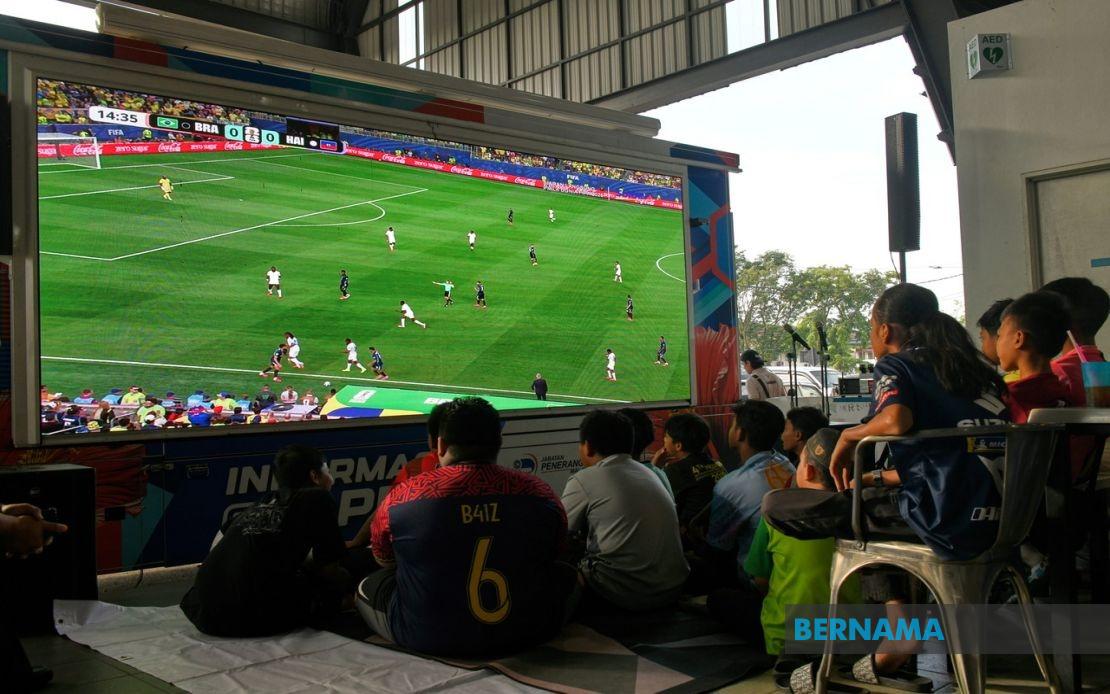
The Malaysian government's decision to provide free access to 2026 FIFA World Cup matches through public broadcaster Radio Televisyen Malaysia (RTM) and Unifi TV is delivering tangible financial relief to the hospitality sector and consumers, Communications Minister Datuk Fahmi Fadzil said on Wednesday. Speaking in Butterworth after observing World Cup viewership at a local public market food court, Fahmi highlighted the initiative's positive reception among business owners struggling with rising operational costs, framing the free broadcast policy as a practical response to economic pressures facing both traders and households across the country.
The initiative has struck a chord particularly with restaurant operators, who have embraced the government's move to circumvent expensive broadcast licensing fees that typically burden the food and beverage sector during major sporting tournaments. The Malaysian Muslim Restaurant Owners Association conveyed their appreciation directly to Fahmi, noting that the arrangement translates into significant cost savings that operators would otherwise absorb themselves. These savings represent more than mere accounting adjustments—they address a recurring challenge that small and medium-sized restaurant owners face whenever high-profile international sporting events arise, making the difference between profitability and financial strain during peak viewing seasons.
One food premises operator shared a particularly telling anecdote with the minister, noting that this represented the first time in over twenty years that he had been able to legally broadcast World Cup matches without incurring substantial licensing costs. This remark underscores the historical burden that Malaysian restaurant owners have shouldered, often facing the choice between investing heavily in broadcast rights or missing out on the customer traffic that major tournaments generate. The free-to-air arrangement through RTM, its digital platform RTMKlik, and Unifi TV eliminates this false choice, enabling smaller establishments to remain competitive with larger venues that may possess greater financial resources to secure broadcast rights.
Fahmi articulated the broader policy objective underlying the initiative: reducing the cumulative financial burden carried by both individual consumers and small business operators. In a climate where multiple cost pressures—from supply chain disruptions to regional geopolitical tensions—already constrain household budgets and business margins, eliminating the need to pay for World Cup broadcast access provides meaningful relief. The minister explicitly connected the measure to consumer welfare, suggesting that cost reductions at the business level could translate into better pricing and increased foot traffic for participating establishments, creating a symbiotic benefit that extends beyond mere goodwill.
The hospitality sector's enthusiasm reflects deeper economic realities facing Malaysia's food and beverage industry. Restaurant operators contend with volatile input costs, rising labor expenses, and shifting consumer behavior in an increasingly competitive market. During global sporting events, establishing venues as destination viewing locations requires both the allure of the matches themselves and competitive pricing structures that attract customers. By removing broadcast licensing costs from the equation, the government has effectively lowered a significant operational barrier that previously disadvantaged smaller players and independent operators who could not negotiate favorable rates with international broadcasters.
Fahmi's visit to the Seberang Jaya Public Market food court extended beyond symbolic political engagement. The minister actively observed the Brazil versus Haiti match alongside members of the public and engaged directly with traders, gathering firsthand intelligence about business conditions and the economic challenges confronting them. This ground-level consultation proved particularly valuable, as traders communicated concerns about cost pressures and identified areas where government support might prove beneficial. Such direct interaction between senior policymakers and the affected business community ensures that policy responses address genuine needs rather than assumed grievances.
The minister subsequently committed to relaying trader feedback to higher levels of government, specifically mentioning Prime Minister Datuk Seri Anwar Ibrahim and Penang Chief Minister Chow Kon Yeow. This commitment signals that the World Cup broadcast initiative operates within a broader government agenda to address cost-of-living pressures and support small business operators. The hierarchical reporting structure ensures that local concerns aggregate into provincial and national policy deliberations, potentially informing future interventions aimed at supporting the hospitality and broader business sectors.
Beyond the immediate economic benefits, Fahmi articulated a philosophical position regarding government engagement with ordinary citizens and business operators. He expressed hope that more ministers, Members of Parliament, and state assemblymen would similarly invest time in direct ground-level visits to observe conditions firsthand and understand the lived experiences of traders and communities. This appeal for greater political presence in business and community spaces reflects recognition that policy effectiveness depends partly on policymakers maintaining genuine connection with implementation realities rather than governing through administrative distance.
The communications minister also contextualized the cost pressures affecting Malaysian businesses within the regional geopolitical environment. He noted that ongoing conflict in West Asia continues to generate global supply chain disruptions and price increases for various goods, impacts that ripple through Malaysia's economy despite the geographic distance from the conflict zone. These international pressures contribute to the cost-of-living challenges that traders identified during his market visit, suggesting that domestic policy measures like the World Cup broadcast initiative, while valuable, operate within constraints imposed by broader global economic conditions beyond Malaysia's immediate control.
The free World Cup broadcast initiative demonstrates how strategic government policy can address practical challenges facing ordinary Malaysians without requiring substantial fiscal expenditure. By leveraging publicly owned broadcast infrastructure and existing partnerships with Unifi TV, the government achieved cost relief for vulnerable business sectors without creating new budgetary burdens. The policy also generated political goodwill and demonstrated government responsiveness to trader concerns, outcomes that extend beyond the measurable economic savings involved.
Looking forward, the success of this initiative may inform future government approaches to managing costs during major international events. As Malaysia anticipates hosting or participating in additional significant sporting and cultural occasions, the template established through the World Cup broadcast arrangement could guide similar interventions aimed at protecting business competitiveness and consumer access to major events. The measure ultimately reflects a pragmatic understanding that government's role includes facilitating broad-based participation in significant global phenomena rather than allowing market dynamics to concentrate access among the most affluent segments of society.

