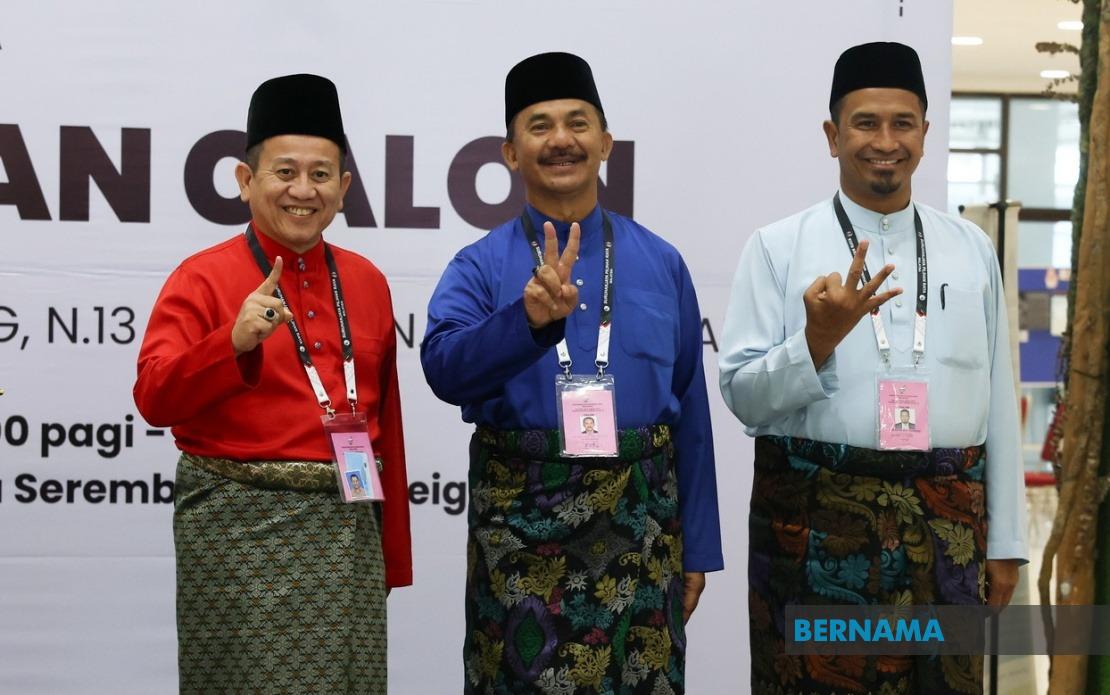
The 16th Negeri Sembilan State Election is poised to deliver considerable renewal across the state's political landscape, with voters encountering a markedly different roster of candidates than in previous contests. The three major coalitions have adopted notably different recruitment strategies, balancing experienced officeholders with an influx of newcomers seeking to inject fresh perspectives into the 36 State Legislative Assembly seats. This generational recalibration reflects broader patterns within Malaysian politics as parties grapple with succession planning and the desire to project dynamism to increasingly discerning electorates.
Pakatan Harapan's candidate slate demonstrates the most aggressive modernisation, with the coalition presenting 24 new faces across its complete roster of 36 candidates. This substantial turnover signals PH's confidence in cultivating emerging talent whilst retaining sufficient institutional knowledge through seasoned campaigners. The coalition's approach includes prominent repositioning: Datuk Seri Aminuddin Harun, the Negeri Sembilan PH Chairman, has vacated the Sekamat seat to contest Linggi, a strategic manoeuvre suggesting internal calculations about electoral geography and personal political trajectories. Alongside such repositioning sits DAP Secretary-General and Transport Minister Anthony Loke, who maintains his Chennah DUN seat defence, anchoring PH's campaign with a figure of national ministerial stature and providing reassurance to voters about the coalition's continued governance credentials.
Barisan Nasional's approach reflects a more measured calibration, fielding 13 new candidates among its 25 total nominees—a 52 percent turnover rate that sits between complete renovation and conservative retention. This balance appears designed to satisfy both internal party dynamics demanding opportunities for emerging leaders and voter preferences for tested administrators. Mohamad Hasan, the UMNO Deputy President and Foreign Minister, grounds BN's campaign through his defence of the Rantau seat, signalling continuity in governance representation. Similarly, Datuk Seri Jalaluddin Alias, Negeri Sembilan BN Chairman, contests the Pertang seat he won in 2023, projecting stability through retained incumbency. However, the coalition has engineered several tactical repositioning moves: Datuk Ismail Lasim vacates Senaling to contest Juasseh, suggesting careful recalibration of electoral resources across constituencies.
Perikatan Nasional's approach to the election reflects its multi-party coalition structure, with component parties—PAS, Gerakan, Wawasan, and MIPP—together fielding 11 candidates that blend incumbent figures with fresh entries. This decentralised candidate selection across component parties demonstrates PN's looser organisational coherence compared to its rivals, potentially limiting unified campaign messaging but allowing individual parties greater autonomy in identifying local candidates. The coalition's fragmented approach contrasts sharply with PH's centralised deployment, suggesting different organisational maturity levels and strategic priorities.
Bersatu's participation exemplifies the structural shifts within Malaysian opposition politics. The party is fielding 24 candidates under its own logo—a significant symbolic departure from its 2023 use of the PN designation. Datuk Tun Faisal Ismail Aziz represents Bersatu's new-generation candidates, whilst Hanifah Abu Bakar exemplifies retained incumbents, notably defending the Labu seat. This dual-candidate approach suggests Bersatu's attempt to establish independent electoral viability whilst maintaining relationships with established figures, reflecting the party's evolving positioning within Malaysian coalitional politics.
Beyond the major players, smaller formations have assembled competitive candidacies. Parti Berjasa, Parti Orang Asli Malaysia (ASLI), and Parti Sosialis Malaysia (PSM) each field solitary representatives, whilst four independent candidates complete the field. This fragmentation across 103 total candidates creates a diverse electoral ecosystem where voters encounter genuine choice beyond the established coalitional blocs, potentially fragmenting votes and introducing unpredictability into seat projections.
The demographic composition of candidates reveals significant generational contrasts. Datuk Abd Latiff A Tambi, the 70-year-old PH candidate for Gemencheh, represents political continuity and accumulated experience, whilst Leevineshwaraan Murugan, the 23-year-old Bersatu candidate for Sri Tanjung, embodies youth-oriented political entry. This 47-year age span between the oldest and youngest candidates symbolises the broader candidate refreshment occurring across the election, with established parties attempting to cultivate younger leaders whilst maintaining sufficient grey-hair presence to assure voters of administrative competence and political stability.
The nomination closure at 10 am established the final 103-candidate field competing for 36 seats—a ratio exceeding three candidates per seat that guarantees three-way or more complex contests across most constituencies. This candidate density means marginal seats will likely determine overall outcomes, with voters exercising unusual agency in selecting amongst comparable candidates rather than encountering the traditional binary choices that have characterised Malaysian state elections. For Malaysian observers, such competitive density offers refreshing variety but introduces analytical complexity in predicting outcomes based on traditional polling methodologies.
Election timing provides campaigns with compressed periods for candidate introduction and platform communication. Early voting on July 28 provides voters opportunity for advance balloting, potentially reducing standard polling-day turnout pressures. The August 1 polling date establishes a mid-year electoral moment capturing post-monsoon period conditions when transportation and voter accessibility typically remain optimal. The timing avoids major religious and cultural observances, permitting full campaign deployment without logistical constraints.
For Southeast Asian political observers, Negeri Sembilan's electoral dynamics reflect broader regional patterns wherein established coalitions face pressure to demonstrate renewal through candidate refreshment whilst maintaining institutional continuity. Malaysia's state elections increasingly serve as laboratories for testing political messaging, candidate recruitment strategies, and voter response to generational succession within established parties. The Negeri Sembilan contest demonstrates how major coalitions navigate the competing demands of stability and dynamism, attempting to project forward-looking leadership credentials whilst retaining sufficient experienced personnel to convince voters of governance competence and administrative reliability in executing state functions.

