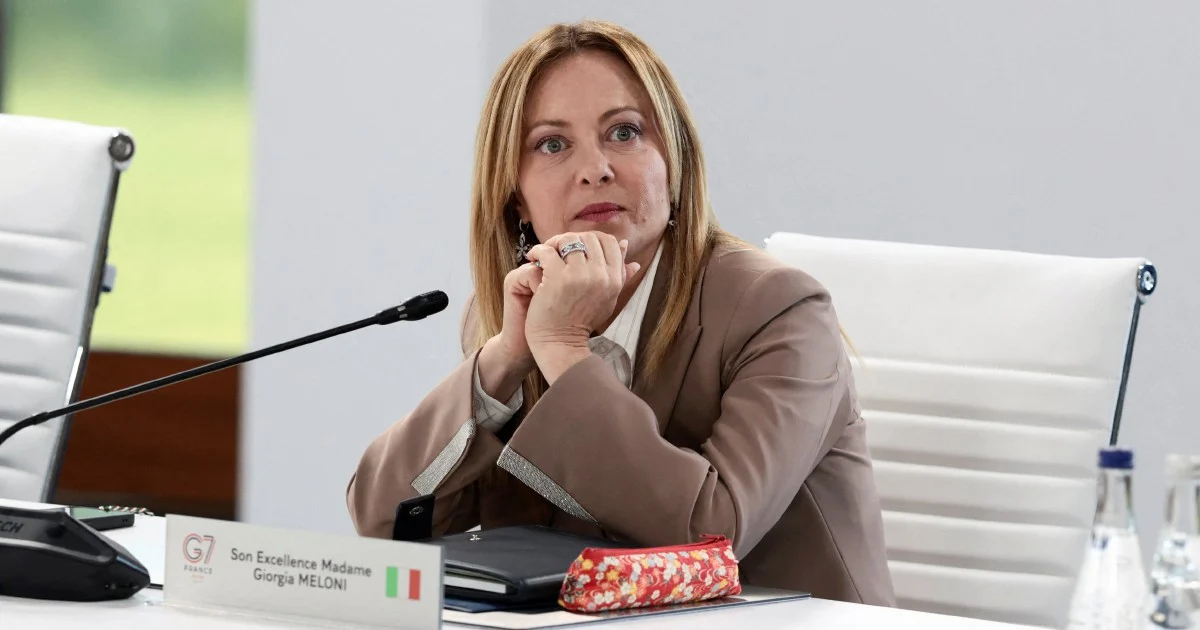
The trajectory of Giorgia Meloni's relationship with Donald Trump encapsulates a broader realignment in European politics and transatlantic diplomacy. When Trump assumed office for his second presidential term in 2025, the Italian Prime Minister stood alone among European leaders in receiving an invitation to the inauguration ceremony—a symbolic gesture that seemed to herald a strengthened partnership between Rome and Washington. That singular honour appeared to signal the beginning of unprecedented alignment between the Trump administration and Italy's right-wing government, built on shared ideological sympathies and policy priorities.
Meloni's presence at Trump's swearing-in was not merely ceremonial. It reflected what observers characterised as a carefully cultivated relationship, with the Italian leader positioning herself as a reliable interlocutor and potential bridge between the new American administration and a fractious Europe. Her attendance suggested Trump's confidence in Meloni as a kindred political spirit, someone who shared his nationalist inclinations and scepticism of multilateral institutions. For Italy, the optics were equally valuable—an opportunity to elevate Rome's profile in Washington and secure influence over emerging American policy directions that would shape European futures.
Yet this courtship has curdled with remarkable speed. The transformation from Trump confidante to vocal opponent reveals the instability of personal political relationships when confronted with competing national interests and ideological fault lines. Meloni's recent criticisms of Trump mark a significant departure from her earlier posture of alignment, raising questions about the sustainability of transatlantic partnerships built primarily on personality rather than institutional structures or aligned interests.
The shift reflects several interconnected pressures bearing down on Meloni's government. Italy, despite its Mediterranean position and traditionally Atlanticist orientation, has genuine economic and security concerns that cannot always be reconciled with Trump's America First doctrine. Tariffs, trade policies, and the administration's approach to Ukraine and NATO obligations create friction points where Italian and American interests diverge substantially. When Trump's policies threaten European prosperity or undermine collective security arrangements that Italy depends upon, Meloni faces a political choice between loyalty to a personal relationship and defence of national welfare.
Meloni's pivot also reflects the complexity of European right-wing politics, where nationalist movements maintain complicated relationships with American conservatism. While both share populist rhetoric and scepticism of progressive cosmopolitanism, European nationalist parties remain fundamentally committed to European interests and autonomy. Trump's willingness to disrupt transatlantic alliances, challenge NATO's foundational assumptions, and pursue unilateral policies runs counter to Italy's strategic requirement for a stable, predictable international order in its backyard. Meloni cannot indefinitely ignore the concerns of fellow European leaders, particularly when Trump's policies directly impact continental stability.
The domestic political calculus in Italy further complicates Meloni's position. She leads a coalition government comprising multiple parties with distinct constituencies. While her Brothers of Italy party shares ideological affinities with Trump's movement, coalition partners and the broader Italian electorate increasingly worry about the economic consequences of American tariffs and policy unpredictability. Public opinion matters in democracies, and Italian citizens concerned about recession, employment, and European cohesion exert pressure on their representatives to resist uncritical alignment with policies perceived as damaging.
Meloni's emerging criticism of Trump also demonstrates the fragility of the European right's previous enthusiasm for Trump's first term. Having observed the consequences of his policies—the trade wars, the withdrawal from the Paris climate agreement, the abandonment of the Iran nuclear deal—European conservative leaders recognised that Trump's vision of international relations often conflicts with European interests. The romance with Trump proved to be precisely that: a temporary fascination rather than the foundation for enduring partnership.
For Southeast Asian and Malaysian observers, Meloni's reversal holds instructive value. It illustrates how smaller and medium-sized powers navigating great power competition must balance ideological affinity with strategic prudence. Malaysia, like Italy, exists in a region where powerful actors pursue interests that do not always align with local preferences. The temptation to align exclusively with sympathetic partners must be tempered by awareness that national survival and prosperity depend ultimately on maintaining autonomous policy space and diverse diplomatic relationships.
The Italian case also underscores the limitations of personal diplomacy divorced from institutional anchoring. Meloni's initial cultivation of Trump reflected a gamble that personal chemistry with a powerful leader could substitute for formal alliances and shared institutional commitments. The subsequent reversal suggests this calculation failed. Durable international relationships require structures, reciprocal benefits, and alignment of core interests—not merely compatibility between individual leaders.
Looking forward, Meloni's public criticism of Trump signals that Europe, despite internal divisions, will increasingly pursue policies that prioritise continental cohesion over alignment with American unilateralism. This realignment could reshape transatlantic relations for years to come, particularly if other European leaders follow Meloni's example in distancing themselves from Trump policies they view as harmful. The Italian Prime Minister's transformation from Trump whisperer to Trump critic may ultimately define her legacy more than her initial cultivation of the American president.

