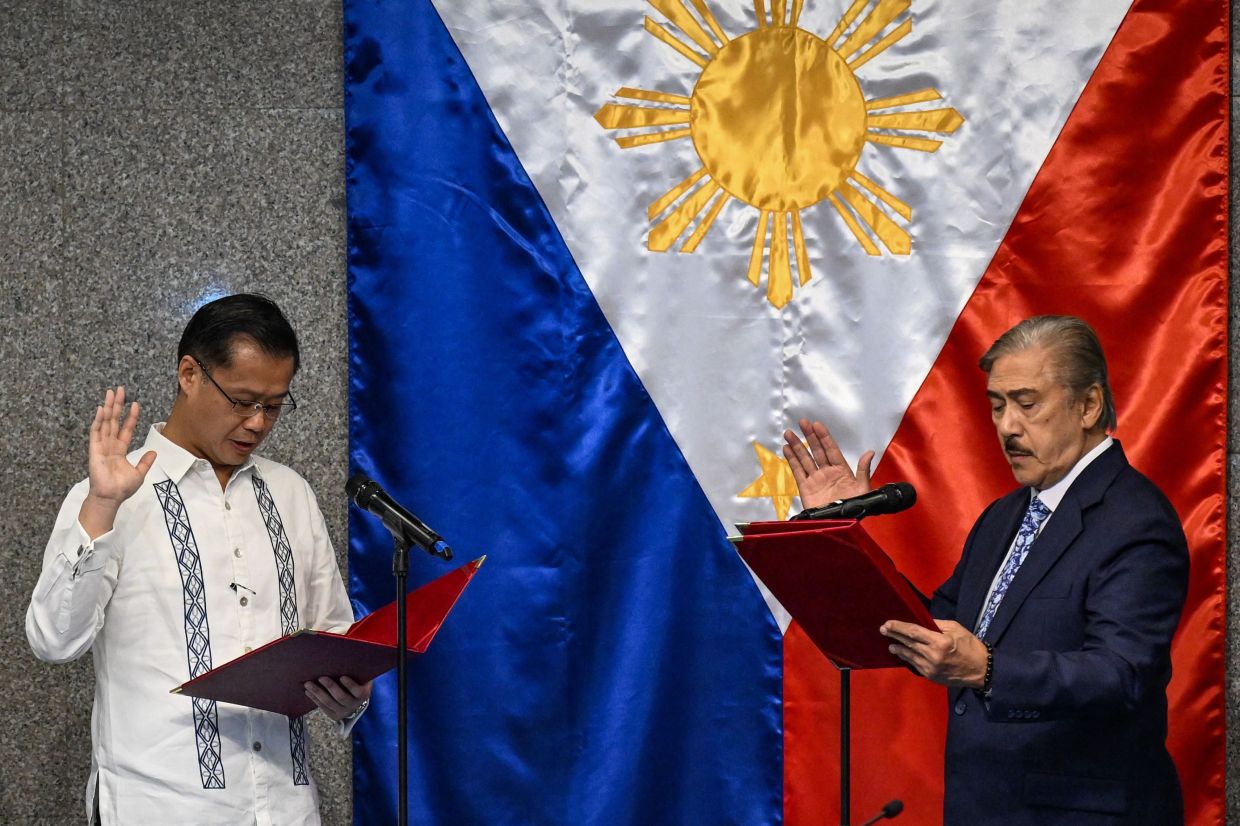
Senator Sherwin Gatchalian has assumed the presidency of the Philippine Senate following a special session held on Wednesday, June 17, in which fellow legislators voted to install him as head of the chamber. The election underscores the fluid and sometimes contentious nature of legislative leadership in the Philippines, where parliamentary maneuvers and shifting alliances can rapidly alter the balance of power within key institutions. Gatchalian's ascension marks a notable change in direction for the upper house, which had been led by Alan Peter Cayetano since May 11.
The voting margin proved razor-thin, with exactly thirteen senators participating in the special session to cast their ballots for Gatchalian—the precise minimum threshold required to conduct such an election and select a new presiding officer. This narrow mandate reflects the delicate equilibrium within the 24-member chamber and demonstrates how individual defections or shifts in loyalty can fundamentally alter institutional outcomes. The low attendance and tight voting pattern suggest that legislative consensus on leadership remains elusive, even as the chamber moves forward under new direction.
Gatchalian brings substantial political experience to the role, having previously served as Mayor of Valenzuela City, a municipality in Metro Manila's northern reaches, before transitioning to the House of Representatives and eventually winning a Senate seat. His background in local and national governance provides him with relationships across multiple levels of the Philippine political hierarchy, potentially positioning him to navigate the complex factional dynamics that characterize the current Senate. His election represents the ascendancy of a figure with roots in the metropolitan Manila political establishment.
The path to Gatchalian's presidency proved contentious and dramatic. On June 3, a bloc of twelve senators had already elected him as Senate president pro tempore, simultaneously declaring that Cayetano had abandoned his position. However, Cayetano disputed this characterization, insisting that he remained the legitimate Senate president and arguing that thirteen votes—not twelve—would be necessary to conduct any election or removal of senior chamber officers. This technical dispute over procedural requirements reflected deeper disagreements about the legitimacy of the earlier maneuver.
The turning point came with the defection of Senator Joel Villanueva, who had previously aligned himself with Cayetano's faction. In a significant political realignment, Villanueva appeared at the June 17 special session to support Gatchalian's camp, providing the crucial additional vote that transformed a controversial twelve-vote plurality into a legitimate thirteen-vote majority. Villanueva's switch appears to have been the decisive factor that convinced Cayetano to concede, as the mathematics of Senate support had shifted irreversibly against him.
Cayetano himself signaled the changing political landscape on Tuesday, shortly before the special session. After consulting with Villanueva, he acknowledged that the numerical balance within the Senate had fundamentally altered in ways unfavorable to his continued leadership. Rather than fighting a losing battle that might further divide the chamber, Cayetano indicated his willingness to step down from the Senate presidency, allowing for an orderly transition rather than protracted institutional conflict. His pragmatic acceptance of political reality prevented the kind of prolonged factional warfare that might have damaged the chamber's effectiveness.
The current composition of the Senate complicates leadership dynamics and explains why such tight voting margins matter. The chamber officially comprises 24 members, but only 22 are currently sitting and available to participate in legislative business. Senator Jinggoy Estrada's recent surrender to authorities and subsequent 90-day suspension ordered by the Sandiganbayan, the Philippines' anti-graft court, has removed him from active participation. Additionally, Senator Ronald Dela Rosa, who faces charges before the International Criminal Court, remains a fugitive whose whereabouts remain unknown, further reducing the effective Senate strength.
These absences and suspensions create a mathematical environment where smaller coalitions can exercise disproportionate influence. With only 22 available senators, controlling thirteen or more votes represents a supermajority position that is far more difficult to assemble than it would be in a fully staffed chamber. This reality makes individual senator defections or absences far more consequential than they might otherwise be, elevating the significance of Villanueva's decision to shift his support to Gatchalian.
The institutional instability reflected in these leadership contests raises questions about governance effectiveness within the Philippine Congress. Repeated contests over the Senate presidency suggest underlying factional tensions that persist despite the institutional structures meant to provide stability and continuity. For observers in Southeast Asia and beyond, these episodes illustrate how legislative chambers in developing democracies can experience significant turbulence when political alignments prove fluid and institutional norms remain contested.
The implications for Philippine governance extend beyond mere institutional precedent. The Senate's legislative agenda and the priorities it pursues will likely reflect the policy preferences of Gatchalian and his supporting coalition, potentially shifting emphasis from positions Cayetano might have championed. Committee assignments, legislative scheduling, and the allocation of resources within the chamber will now flow from Gatchalian's leadership, affecting what issues receive attention and resources in the months ahead.
For Malaysia and other regional democracies, the Philippine Senate transition offers instructive lessons about legislative dynamics and power management. While Malaysia's parliamentary system differs structurally from the Philippine bicameral legislature, both nations grapple with managing factional tensions within legislative bodies and maintaining institutional stability amid shifting political coalitions. The speed and relative civility with which the Philippines resolved its Senate leadership contest, despite its contentious nature, suggests institutional mechanisms capable of accommodating political change without triggering constitutional crises—a reassuring precedent for democratic governance in the region.