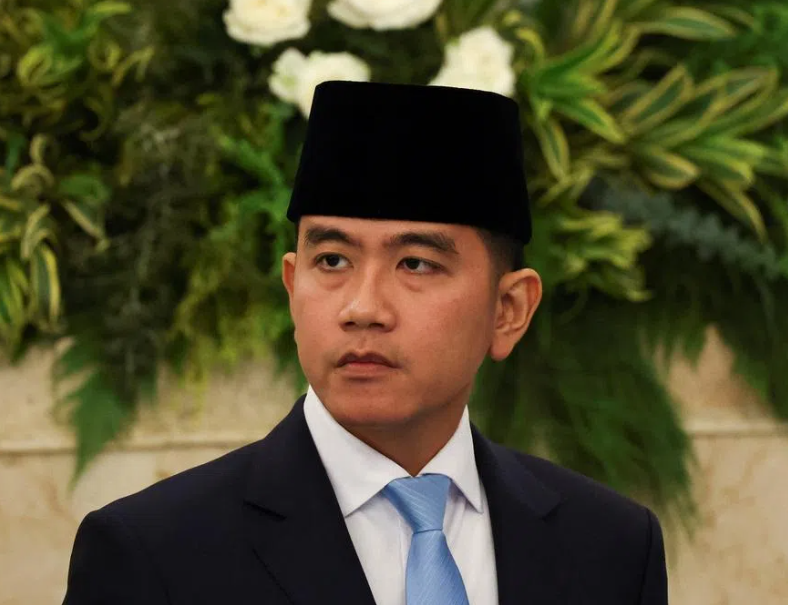
Vice-President Gibran Rakabuming Raka has thrust himself into the centre of Indonesia's mounting student protest movement by personally engaging with critics of the government's most contentious initiatives. Just days after demonstrations erupted in Jakarta against the free meals programme and the Red and White Cooperative initiative, the 38-year-old vice-president invited five university students aboard a plane for an official four-day working visit to eastern Indonesia on June 18, signalling an unprecedented willingness to address public discontent directly from the corridors of power.
The gesture followed a closed-door meeting with student representatives at the presidential palace three days earlier, where Gibran presented himself as receptive to their research findings and concerns about the two flagship programmes that have become lightning rods for criticism of the Prabowo Subianto administration. Muhammad Abdi Maludin, a student leader from Bung Karno University who attended the meeting, publicly declared that the Vice-President had welcomed their input and pledged to audit their findings before briefing President Prabowo. This appearance of openness contrasted sharply with the government's typical top-down approach to policy implementation and sparked intense scrutiny about Gibran's true intentions.
Yet observers across Indonesia's political landscape remain deeply sceptical about the authenticity of this outreach. On social media, commenters questioned whether Gibran had deliberately selected students from lesser-known universities rather than Indonesia's most prestigious institutions to ensure a more compliant audience. One critic noted that involving representatives from the country's largest campuses would have lent the engagement greater credibility and organic appeal. These suspicions intensified after local media outlets revealed in late June that students attending the palace meeting had received cash payments ranging from 2 million to 20 million rupiah afterwards—a detail that the Presidential Palace acknowledged it was investigating, while the true source and purpose of the money remained murky.
Analysts at Jakarta's Centre for Strategic and International Studies view Gibran's manoeuvres as a carefully calculated political strategy rather than a genuine attempt at collaborative policymaking. Nicky Fahrizal, a researcher at the institution, characterised the Vice-President's visible engagement with students as a deliberate effort to cultivate an image of accessibility and responsiveness at a critical juncture for his political future. The timing appears particularly significant given that Indonesia's next presidential election cycle is scheduled for 2029, and speculation has swirled about whether Gibran might position himself as a candidate, despite his public silence on the matter. By aligning himself with student concerns now, Fahrizal suggests, Gibran is attempting to build political capital and raise his profile among younger voters who will play a decisive role in future electoral contests.
However, the actual substantive impact of Gibran's engagement appears limited by the institutional architecture of Indonesian governance. Unlike previous vice-presidents who wielded significant policy portfolios, Gibran has largely remained peripheral to major decision-making since taking office alongside President Prabowo in October 2024. Although he has been formally linked to high-profile assignments such as Papua's development and the new capital Nusantara, these connections have not translated into concrete operational authority. In the case of both the free meals programme and the Red and White Cooperative initiative, real control resides elsewhere within the government structure, making Gibran's pronouncements largely symbolic rather than substantive.
The National Nutrition Agency, which oversees the free meals programme, reports directly to President Prabowo rather than to the Vice-President's office. Similarly, the Red and White Cooperative initiative operates as a presidential priority programme coordinated across multiple ministries and agencies, further insulating it from Gibran's influence. When the Vice-President visited a primary school in East Nusa Tenggara during his mid-June trip, he acknowledged shortcomings in the free meals programme and called for governance improvements, particularly following corruption allegations that had forced the replacement and arrest of the agency's leadership in June. Yet these remarks, while publicly reassuring, carry little weight in determining how the programme actually functions or evolves.
Irman Lanti, a political scientist at Padjadjaran University, has been particularly blunt in his assessment of Gibran's actual role in these initiatives. According to Lanti's analysis, all available evidence suggests that Gibran has not been meaningfully involved in shaping either the free meals or Cooperative programmes, which appear to operate under the primary direction of the military and police apparatus. From this perspective, the Vice-President's growing visibility around these issues represents an attempt to manufacture relevance rather than an expression of genuine decision-making authority. Lanti characterised Gibran's recent moves as an effort to demonstrate his worth by exploiting the momentum of student demonstrations, essentially attempting to insert himself into a narrative he did not create and cannot fundamentally alter.
Edbert Gani Suryahudaya, another researcher at CSIS's Department of Politics and Social Change, has characterised Gibran's strategy as deliberately performative and aimed at managing public anger rather than addressing underlying grievances. Given the widespread criticism currently directed at the government and its officials, Suryahudaya argues, Gibran has calculated that relatively low-cost symbolic gestures can generate significant public attention and goodwill. The engagement with students, from this vantage point, represents an accessible and politically profitable way of staying relevant in the public consciousness without requiring the difficult work of substantive policy reform or the institutional conflicts that might accompany genuine attempts to reshape these programmes.
The broader context for Gibran's manoeuvres involves the sustained erosion of public confidence in the government's flagship initiatives. The free meals programme, conceived as a cornerstone of the administration's social welfare agenda, has been battered by corruption allegations and implementation failures that have undermined its credibility. The Red and White Cooperative initiative, designed to establish thousands of village-run businesses across the archipelago, has similarly encountered scepticism about its feasibility and genuine commitment to rural economic empowerment. These challenges have created political space for Gibran to position himself as a bridge between public concerns and government decision-making, even if his actual leverage over these programmes remains minimal.
For Malaysian observers and regional analysts, Gibran's approach offers instructive lessons about how vice-presidents and second-tier government figures navigate political constraints and cultivate future electoral prospects. His strategy of direct engagement with student activists, while maintaining plausible deniability about substantive influence, demonstrates how contemporary Southeast Asian politicians can leverage social media visibility and personal accessibility to build political capital even when formal institutional power remains concentrated elsewhere. The scepticism that has greeted his overtures—particularly regarding the apparent payment of students and the selective nature of the engagement—also illustrates how Southeast Asian publics have become increasingly sophisticated in detecting performative gestures and orchestrated public relations exercises.
Looking forward, Gibran's trajectory will likely depend on his capacity to translate these preliminary engagements into either genuine influence over policy or sustained visibility as a political figure capable of responding to public concerns. The 2029 election cycle looms as a critical test of whether his current strategy has successfully established him as a credible political actor independent of his father's legacy or whether he remains fundamentally constrained by the institutional limitations and distrust that currently characterise his position within the Prabowo administration. His handling of student engagement and programme criticism will continue signalling to Indonesian voters—particularly younger demographics—whether he represents a genuine force for accountability and responsiveness or merely another political operator seeking advantage through carefully managed symbolism.

