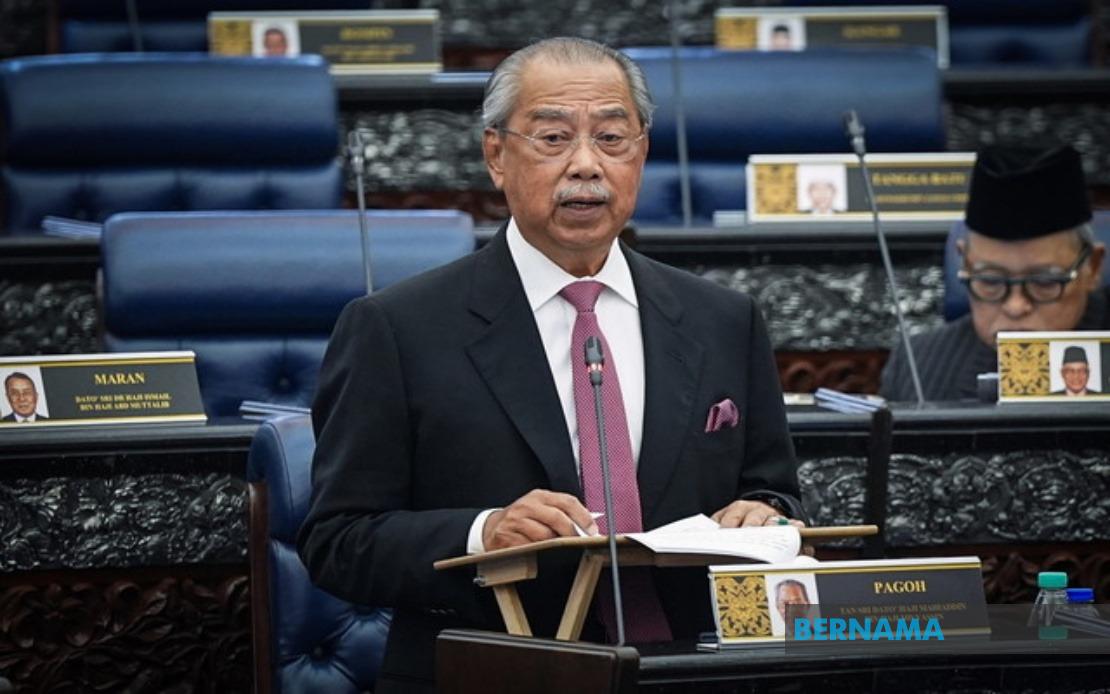
Tension erupted in the Dewan Rakyat on August 11 as government-aligned lawmakers delivered scathing critiques of opposition members who walked out during a ministerial briefing on the Royal Commission of Inquiry report examining Lembaga Tabung Haji's stewardship and management spanning the period from 2014 to 2020. The boycott, led by senior opposition figures including Opposition Leader Datuk Seri Hamzah Zainuddin and Perikatan Nasional officials, prompted fierce pushback from MPs who remained to participate in what many characterised as a crucial parliamentary proceeding with implications for millions of Malaysians.
Muar MP Syed Saddiq Syed Abdul Rahman articulated the frustration of those who stayed for the debate, arguing that the walkout represented a fundamental abdication of parliamentary responsibility. He characterised the absence as particularly damaging given that opposition lawmakers frequently position themselves as champions of Malay and Islamic interests, yet chose not to engage in substantive deliberation concerning one of the nation's most significant financial institutions serving the Malay-Muslim community. Syed Saddiq's intervention underscored a recurring theme throughout the session: the notion that Parliament functions as a forum for democratic accountability, not merely a stage for political theatre or tactical manoeuvres.
The core contention advanced by government-supporting MPs centred on the concept of parliamentary duty. These lawmakers maintained that elected representatives bear an obligation to scrutinise institutional performance regardless of broader political circumstances or disagreements with the government. Syed Saddiq notably rejected the suggestion that parliamentary functions should pause or diminish due to external factors, explicitly stating that Parliament does not operate as a vehicle for a single individual or political force. This framing reframed the boycott not simply as opposition to a specific government position, but rather as dereliction of representative duty to the millions of Malaysians who placed their faith in the parliamentary system.
The scale of those affected by Tabung Haji's operations emerged as a defining element of the criticism. Multiple speakers invoked the figure of approximately ten million depositors who maintain financial interests within the institution, emphasising that these individuals—predominantly Muslim Malaysians—depend on their elected representatives to ensure rigorous oversight and protection of their assets. This numerical emphasis served to elevate the debate beyond partisan political positioning, framing it instead as a matter of fiduciary responsibility. Syed Saddiq directly appealed to his colleagues to distinguish between disagreeing with specific government policies and abandoning altogether their constitutional function as checks on institutional management.
Pageh MP Tan Sri Muhyiddin Yassin positioned himself and his Bersatu coalition partners as demonstrating principled opposition governance. Despite occupying seats in the opposition bloc, Muhyiddin and five other Bersatu MPs chose to remain in the chamber and engage substantively with the RCI findings. His framing of this choice as indicative of responsible opposition conduct implicitly created a hierarchy of political behaviour—one in which genuine oversight and public accountability rank above party solidarity or coordinated boycotts. This positioning is particularly significant given Bersatu's recent trajectory within Malaysian politics and its attempts to establish distinct identity and messaging.
Putrajaya MP Datuk Dr Radzi Jidin reinforced this message by appealing for parliamentary proceedings to remain insulated from what he characterised as political drama. His invocation of public interest and truth-seeking suggested that the inquiry into Tabung Haji transcended ordinary partisan contestation. This argument holds particular resonance in Malaysian contexts, where public institutions serving specific religious or ethnic communities carry heightened symbolic and practical significance. The integrity of Tabung Haji directly affects the financial wellbeing and confidence of millions of Muslim Malaysians in a specifically designed institution meant to combine conventional banking with Islamic principles and religious welfare provision.
Padang Serai MP Datuk Azman Nasrudin expanded the scope of representation at stake, invoking not only the ten million Tabung Haji depositors but also the broader Malaysian populace whose national finances remain implicated in institutional management. This rhetorical move situated parliamentary scrutiny of Tabung Haji within an encompassing framework of national economic governance and public stewardship. The implication runs that elected representatives answerable to more than thirty million Malaysians cannot legitimately sidestep engagement with matters affecting the financial system and institutional integrity upon which the broader economy depends.
The RCI examination itself concerns a particularly sensitive period in Tabung Haji's history, spanning 2014 to 2020—years during which the institution faced significant governance questions and financial challenges. The Royal Commission's mandate to investigate management and operational matters during this interval suggests the inquiry identified substantive issues warranting parliamentary attention and remedy. From the perspective of those criticising the boycott, avoiding participation in debate about these findings effectively meant abandoning depositors to uncertainties regarding what went wrong and what corrective measures the government intended to implement.
Another dimension emerged through Sri Gading MP Aminolhuda Hassan's remarks acknowledging cross-ethnic and cross-religious participation in the debate. He specifically praised Betong MP Datuk Dr Richard Rapu @ Aman anak Begri for engaging substantively with Tabung Haji matters despite not being Muslim. This observation highlights how institutional governance transcends narrow communal boundaries—that effective parliamentary scrutiny requires all representatives, regardless of religious or ethnic background, to engage seriously with matters affecting specific communities. The implicit rebuke to those who boycotted suggests that even non-Muslim MPs recognised their constitutional obligation to participate in debate affecting millions of their fellow citizens.
Angkatan Muda Keadilan, representing the youth wing of Parti Keadilan Rakyat, issued a separate statement characterising the Perikatan Nasional coalition's boycott as irresponsible and politically immature. This internal opposition criticism from within the broader anti-government movement adds another layer to the controversy, suggesting that the boycott decision fractured rather than unified opposition ranks. The youth party's assertion that walking away creates perceptions of prioritising party interests over depositor welfare cuts to the heart of why many observers found the boycott problematic—it appeared to subordinate institutional accountability to political positioning.
The legislative and institutional stakes underlying this confrontation merit careful consideration from Malaysian and regional perspectives. Tabung Haji represents a distinctive model in Islamic finance and social policy, combining religious obligation with financial services in ways unique to Malaysia's constitutional arrangement recognising Islam's special position. When a Royal Commission investigates the institution's management across a seven-year period, the resulting inquiry engages questions about whether Malaysia's specific institutional arrangements for serving Muslim communities function effectively and fairly. Parliamentary debate on RCI findings thus becomes essential for validating institutional reform and public confidence—objectives that boycotts fundamentally undermine regardless of the political justifications offered.
Looking forward, this incident illuminates ongoing tensions within Malaysian parliamentary culture regarding the balance between partisan opposition and institutional responsibility. The controversy highlights how political divisions can crystallise around fundamental questions about whether legislators prioritise representing constituent interests through rigorous institutional oversight, or whether party discipline and political tactics supersede such representative functions. As Malaysia's political landscape continues evolving with coalition realignments and shifting power dynamics, the standards established through episodes like this debate carry implications for whether Parliament functions as an effective accountability mechanism or devolves into a venue where partisan calculations override public interest considerations.

