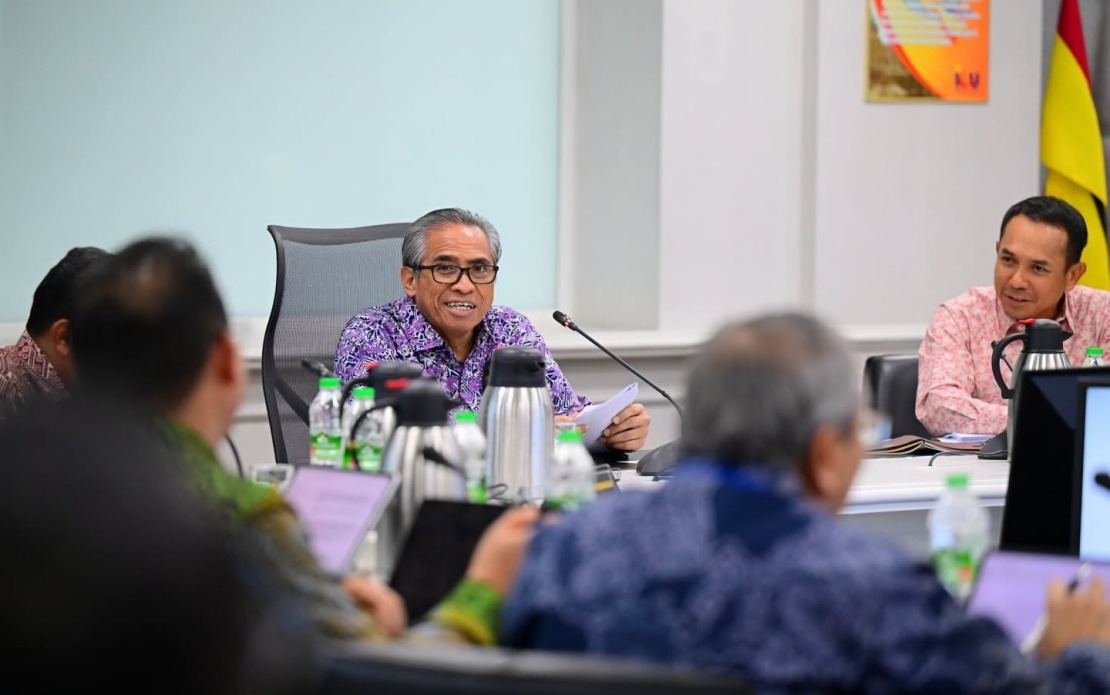
The Malaysian government is shifting into high gear on a massive infrastructure push targeting 40,000 small-scale development initiatives spread across the country. Tan Sri Shamsul Azri Abu Bakar, the Chief Secretary to the Government, has issued clear directives to all ministry secretaries-general to prioritise these projects, signalling a government strategy focused on delivering tangible benefits to citizens in the near term rather than waiting for larger, longer-duration initiatives to bear fruit.
Announcing the decision through a Facebook post following a National Development Action Committee meeting, Shamsul Azri emphasised that the projects represent what officials term "low-hanging fruit"—initiatives that are administratively straightforward and capable of swift completion. This terminology reflects a deliberate policy choice to demonstrate government effectiveness by showcasing wins that communities can witness and experience within months rather than years, an approach that carries political significance in the context of public service delivery expectations.
The portfolio of projects spans the full spectrum of routine infrastructure and public facility maintenance that directly touches daily life. Road repairs address the chronic pothole and surface degradation issues familiar to Malaysian drivers across urban and rural areas alike. Drain maintenance targets the flooding vulnerabilities that plague communities during monsoon seasons. Government quarters refurbishment affects public sector workers and their families. School classroom repairs directly benefit students and educators, while healthcare facility upgrades enhance service delivery in medical centres and clinics nationwide. Public stall and market improvements respond to traders' long-standing complaints about deteriorating infrastructure in commercial spaces.
What distinguishes this initiative is not the novelty of individual project types but rather the institutional commitment to accelerate their execution. Shamsul Azri's directive requires KSUs to conduct on-the-ground site visits, actively supervise implementation progress, and troubleshoot obstacles as they emerge. This hands-on supervisory mandate signals accountability expectations, positioning ministry leaders as responsible not merely for approving projects but for ensuring their timely completion. The emphasis on field visits particularly underscores impatience with desk-bound administration detached from implementation realities.
The timeline proves ambitious yet achievable for projects of this scale. Most initiatives are designed for completion within three to six months, a window short enough to maintain momentum and public interest but realistic for coordinating supply chains, contractor availability, and technical execution in Malaysia's diverse geographical and administrative contexts. This compressed timeline also serves political optics, allowing the government to point to completed works within a single fiscal period or election cycle, demonstrating responsiveness to citizen needs.
For Malaysian citizens, particularly in smaller towns and rural areas, this initiative addresses a persistent governance complaint: invisibility of development spending and slow-moving project cycles. When a local community sees their school classrooms repaired, their market stalls upgraded, or their neighbourhood roads resurfaced within months of government announcement, the perceived legitimacy of public institutions strengthens measurably. This psychological dimension matters as much as the physical infrastructure improvements themselves.
The implications for Southeast Asia's region merit consideration as well. Malaysia's emphasis on rapid, visible service delivery contrasts with developmental approaches that prioritise megaprojects or delayed trickle-down benefits. The regional dimension becomes apparent when other ASEAN governments contemplate similar strategies to enhance public satisfaction amid economic pressures and rising expectations. The Malaysian model—40,000 decentralised improvements rather than fewer centralised showcase projects—represents a particular philosophy of inclusive development.
Implementation challenges inevitably await. Coordinating 40,000 projects across multiple ministries and local administrations tests bureaucratic capacity and inter-agency cooperation. Budget constraints may emerge as contractors bid for limited slots. Local government bodies must align with ministry timelines and standards. Supply chain disruptions could delay material procurement for road repairs and maintenance works. Shamsul Azri's insistence on KSU engagement reflects awareness that execution gaps commonly emerge between policy pronouncement and field-level delivery.
The projects' composition reveals government priorities in the present environment. Roads and drainage infrastructure suggest investment in basic urban and rural connectivity. Educational and healthcare facility improvements acknowledge that public services require physical infrastructure investment to function effectively. Market and public stall upgrades signal recognition of informal and small-scale trader concerns. The breadth of categories indicates an attempt to distribute benefits across geographical regions and demographic groups rather than concentrating improvements in specific areas.
For ministry personnel and local administrators, this directive reshapes work priorities immediately. KSUs cannot treat project implementation as a secondary responsibility delegated to junior officials; the chief secretary's directive elevates field supervision to a leadership-level obligation. This structural change in how government executives allocate their time and attention may prove as significant as the infrastructure projects themselves, potentially improving information flow about implementation obstacles reaching senior decision-makers.
The financial outlay for 40,000 projects remains unspecified in available details, raising questions about budgetary source and allocation mechanisms. Whether funding comes from existing ministry allocations, special development funds, or reprioritised expenditure shapes the initiative's real fiscal impact. The government's ability to mobilise resources at this scale simultaneously across multiple agencies tests both financial management systems and political will to sustain the programme despite competing spending pressures.
Sustainability presents another consideration. Rapid completion of 40,000 projects could concentrate maintenance burdens in future years if quality suffers or if refurbished infrastructure lacks adequate upkeep arrangements. Roads repaired hastily may deteriorate quickly without proper maintenance schedules. Government buildings upgraded quickly require ongoing care to preserve investments. The initiative's long-term success depends not merely on swift execution but on embedding maintenance responsibilities and funding within operational budgets.
Ultimately, Shamsul Azri's directive represents a calculated shift toward demonstrable, incremental development delivery. Rather than waiting for large-scale projects to transform infrastructure landscapes, the government is pursuing broad-based, visible improvements that accumulate across regions and communities. Whether this strategy effectively builds public confidence in institutional performance, or whether citizens ultimately demand larger structural transformations, will emerge as the projects progress toward their completion targets over coming months.

