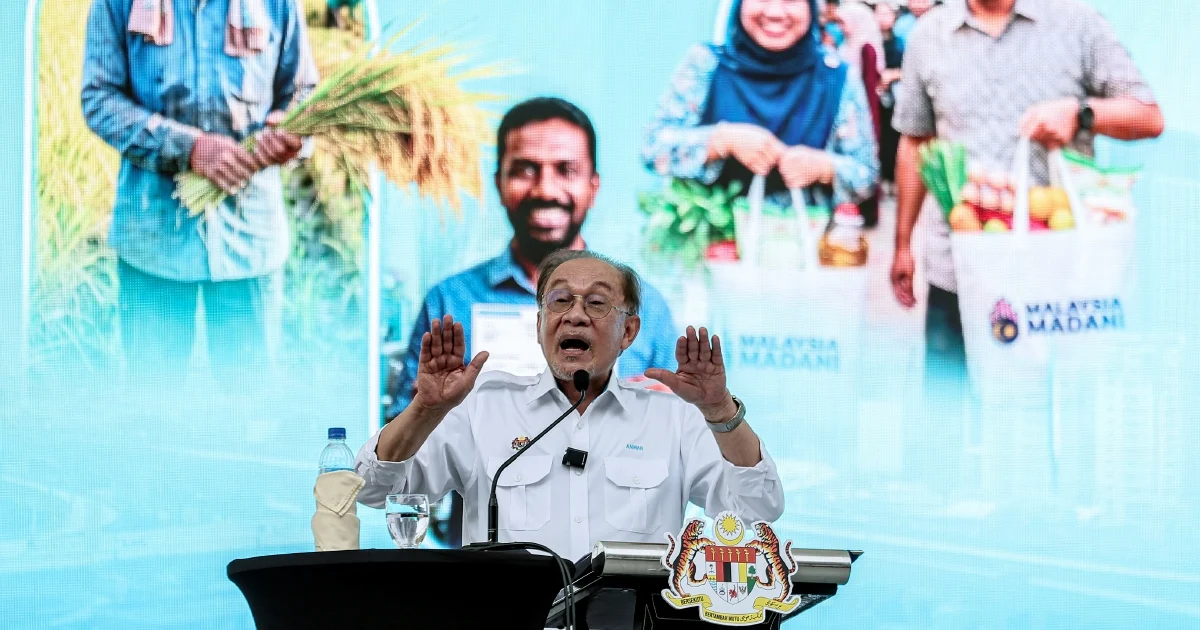
Prime Minister Anwar Ibrahim has announced a substantial increase in government support for community-based neighbourhood watch initiatives across the country, with annual grants to Neighbourhood Watch Areas (KRT) set to rise from RM6,000 to RM10,000 beginning in the new year. The decision, unveiled during a visit to Segamat, represents a 67 per cent uplift in funding that underscores the administration's commitment to grassroots security and community cohesion programmes.
The disbursement of these enhanced grants is scheduled to commence on January 1, 2027, providing neighbourhood watch organisations nationwide with substantially more resources to execute their community policing and crime prevention activities. This timing allows local groups adequate preparation to incorporate the additional funding into their operational planning for the year ahead.
Neighbourhood Watch Areas play a critical role within Malaysia's broader public safety architecture. These volunteer-led community organisations function as the frontline interface between residents and law enforcement, enabling localised threat identification, neighbourhood patrols, and information sharing that complements official police operations. By strengthening the financial foundation of these groups, the government aims to enhance their operational capacity and effectiveness.
The funding increase acknowledges the mounting operational costs faced by neighbourhood watch organisations across diverse geographic and socioeconomic contexts. Rural, suburban, and urban watch groups operate under varying logistical circumstances, yet all incur expenses for communications equipment, patrol materials, training, and community engagement activities. The enhanced grant allocation reflects recognition that previous funding levels had not kept pace with inflationary pressures and expanding operational requirements.
For Malaysia's local government landscape, this initiative carries particular significance as a direct policy intervention in community development. Neighbourhood Watch Areas typically emerge organically from residential clusters and operate with substantial voluntary participation, yet require modest financial support to function sustainably. The government's commitment to increasing this support signals confidence in community-driven approaches to crime prevention and social cohesion, areas where volunteer engagement often delivers outcomes at lower per-capita cost than purely official channels.
The announcement arrives amid broader policy discussions regarding community resilience and neighbourhood safety in Malaysian cities and towns. As urbanisation accelerates and residential patterns evolve, maintaining robust neighbourhood-level coordination becomes increasingly important for detecting emerging security concerns and fostering social trust. The funding enhancement enables watch organisations to invest in training programmes, communication systems, and awareness campaigns that deepen community participation.
For neighbourhood watch members and coordinators, the increased allocation provides breathing room in operational budgets previously stretched thin. Groups can now allocate resources toward equipment upgrades, member welfare activities, or expanded outreach programmes designed to attract younger volunteers and sustain long-term participation. This is particularly relevant in suburban areas experiencing rapid demographic change.
The policy also reflects the government's approach to distributed governance, recognising that security and community wellbeing cannot be achieved through top-down enforcement alone. By investing in grassroots organisations, policymakers implicitly endorse the principle that informed, engaged residents constitute a vital component of any effective public safety system. This represents an alignment with international best practices emphasising community-police partnerships.
Regional implications extend beyond Malaysia's borders, as other Southeast Asian nations grapple with similar challenges around formalising and supporting community watch initiatives. Malaysia's decision to substantially increase funding demonstrates political confidence in this model and may influence policy discussions in neighbouring countries considering comparable investments in grassroots security infrastructure.
The implementation timeline provides neighbourhood watch associations with clarity for budget planning and resource allocation. By establishing January 1, 2027 as the disbursement date, the government allows sufficient lead time for administrative processing and local coordination. Watch groups can begin identifying priority areas for deploying additional resources well before the funds arrive.
The increase also carries implicit acknowledgment that the previous RM6,000 annual grant, while meaningful, had not fully addressed the evolving needs of neighbourhood watch organisations operating across Malaysia's geographically and economically diverse landscape. This adjustment brings funding levels more closely aligned with contemporary operational realities.
Moving forward, the neighbourhood watch sector will likely experience revitalisation through this enhanced financial commitment. Organisations may establish new programmes, expand training initiatives, or strengthen their liaison functions with police authorities. The effect should be measurable in improved community reporting, enhanced neighbourhood patrols, and deeper integration of volunteer activities into formal public safety frameworks at the local level.

