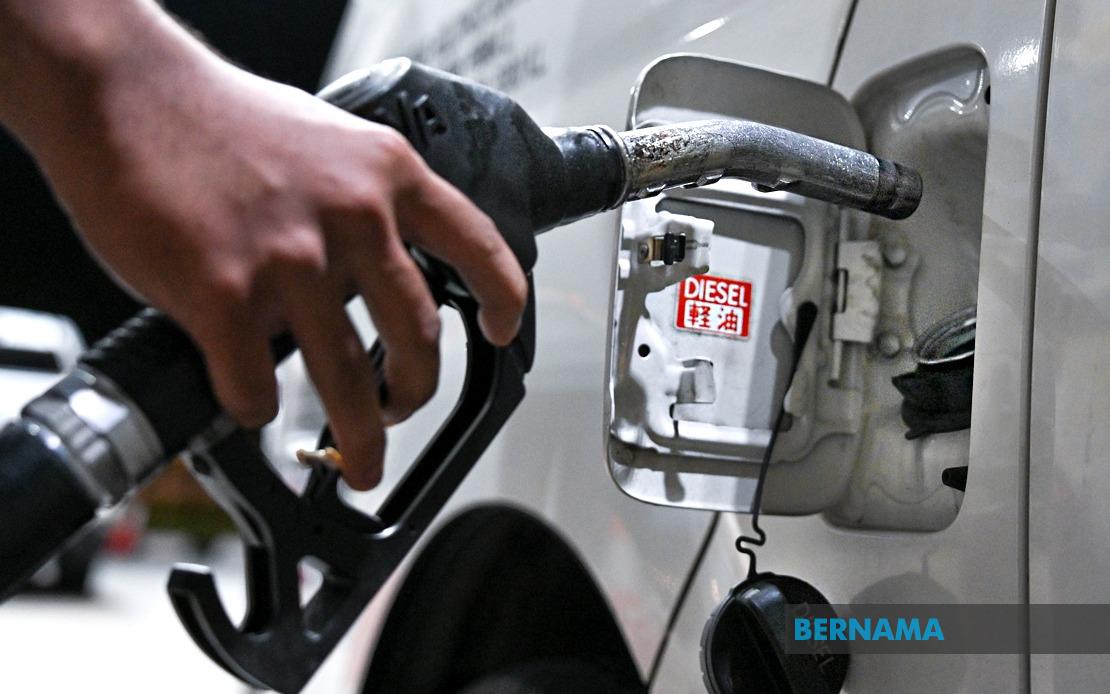
Prime Minister Datuk Seri Anwar Ibrahim announced a significant shift in Malaysia's fuel subsidy policy today, declaring that the MADANI Government will lower the subsidised diesel price to RM2.10 per litre beginning July 2026. The decision represents a carefully calibrated effort to balance fiscal responsibility with relief for ordinary Malaysians whose livelihoods depend on diesel consumption. The new pricing structure will employ the same verification mechanism used under the successful BUDI MADANI RON95 programme, requiring users to present their MyKad identification at the point of purchase.
The announcement carries particular importance for Malaysia's economic geography, as it marks the government's commitment to extending uniform fuel subsidy treatment nationwide. Currently, diesel pricing reflects sharp regional disparities: petrol stations across Sabah, Sarawak, and Labuan retail diesel at RM2.15 per litre under the existing subsidy arrangement, whilst Peninsular Malaysia operates without state-level subsidisation, leaving consumers to pay the unsubsidised market rate of RM4.37 per litre. This structural imbalance has long created complications for cross-regional commerce and fairness concerns among users in different parts of the country. The Ministry of Finance confirmed in its statement today that the new system will establish a nationally consistent pricing framework, allowing residents and businesses across all regions to access identical subsidised rates.
For small and medium-scale operators whose business models hinge on controlling transportation expenses, the tariff reduction promises meaningful financial relief. Mohd Faizal Ahmad, a 43-year-old night market trader based in Shah Alam, Selangor, characterised the government's move as long-awaited news that would substantially reduce his operating burden. He welcomed the geographic universality of the scheme and expressed optimism about the MyKad verification process, provided it maintains operational simplicity and accessibility for ordinary users. His perspective reflects the sentiments of Malaysia's informal and semi-formal business sectors, where diesel costs frequently rank among the three largest expenditure categories alongside rent and labour.
Tan Chee Keong, a 52-year-old small-scale contractor operating in Johor Bahru, operates a four-wheel drive vehicle for maintenance and construction materials delivery—a usage pattern typical of Malaysia's scattered development landscape. He identified fuel as a primary cost driver in his enterprise and welcomed the measure as both positive and equitable, particularly because the subsidy targeting mechanism aims to prevent diversion to unintended recipients. His cautious optimism hinges on the government's ability to execute robust verification systems that prevent subsidy leakage, a recurring challenge in Malaysia's historical attempts at fuel price management.
Agricultural producers face distinctive operational pressures that make diesel pricing especially consequential. R. Mageswaran, a 38-year-old vegetable farmer based in Sungai Siput, Perak, operates a delivery van that services markets and food establishments across his region almost daily. For such producers, transportation costs directly translate into the margins that determine viability; lower diesel prices mechanically reduce the cost of getting perishable goods from farm to consumer. Mageswaran's hope that the programme proceeds smoothly reflects awareness that implementation quality will determine whether policy announcements generate tangible economic benefit for genuine users, as opposed to creating administrative friction.
The subsidy reform follows international and regional trends toward targeted rather than universal fuel support. Many countries have discovered that blanket price controls create fiscal drain, import pressures, and perverse incentives that favour high-volume users and fuel diversion. Malaysia's shift toward verification-based eligibility attempts to thread this needle: providing meaningful relief to identifiable citizens and residents whilst containing budgetary exposure. The MyKad requirement establishes a clear identifier for determining who qualifies, though implementation will require robust cooperation between the petroleum retail network, financial systems, and identity verification infrastructure.
Second Finance Minister Datuk Seri Amir Hamzah Azizan will elaborate on implementation mechanics in a forthcoming statement. Key questions for the business community and consumers include the timeline for MyKad system integration at petrol stations, procedures for non-citizen workers and foreign traders who may lack Malaysian identification, and contingency arrangements should verification systems experience technical disruption. The logistics of rolling out authentication infrastructure across Malaysia's dispersed service station network presents material challenges that will determine whether the policy achieves its intended effect.
From a macroeconomic perspective, this reform sits within the broader MADANI Government agenda of rationalising subsidies whilst protecting vulnerable groups. Diesel subsidies carry substantial fiscal costs and create distortions in Malaysia's energy markets, making their curtailment economically sensible. By restricting subsidies to verified Malaysians whilst maintaining a moderately supportive price of RM2.10 per litre, the government attempts to manage inflation concerns, maintain competitiveness for diesel-dependent sectors, and demonstrate fiscal discipline. The July 2026 implementation date allows businesses and consumers several months to adjust planning and pricing structures.
Regional equity considerations underscore the announcement's significance. Sabah and Sarawak have historically enjoyed superior diesel pricing due to geographic and political factors, creating implicit cross-subsidisation that Peninsular consumers effectively bore. Extending uniform subsidisation nationwide represents a recalibration of implicit regional transfers, potentially addressing perceptions of unfairness whilst requiring careful political management given the sensitivities surrounding state-level resource allocation in Malaysia's federal structure.
The business community's reception, as reflected in today's interviews, suggests cautious acceptance rather than enthusiasm. This measured response reflects both appreciation for price relief and scepticism about implementation execution. Malaysia's history with subsidy schemes, tariff controls, and targeted assistance programmes includes both successes and instances where intended beneficiaries failed to realise anticipated benefits. The genuine test of this announcement will emerge not in the policy formulation but in the operational reality from July 2026 onward, when verification systems must function reliably across thousands of petrol stations serving millions of daily transactions.

