The Prime Minister's Department (Religious Affairs) is rolling out a fresh platform designed to amplify the influence and reach of Malaysia's most distinguished Islamic thinkers. The Maal Hijrah Lecture Series represents a deliberate effort to move scholarship and intellectual discourse from the confines of university halls and specialist groups into mainstream public consciousness, according to Minister in the Prime Minister's Department (Religious Affairs) Dr Zulkifli Hasan.
Spoken at the launch of the Maal Hijrah 1448H/2026 Lecture Series in Putrajaya on June 18, Dr Zulkifli's remarks underscore a growing recognition within Malaysia's government that religious and ethical thought should not remain the exclusive domain of academics and clergy. The initiative reflects a broader policy direction aimed at ensuring that the intellectual contributions of celebrated Islamic figures resonate across all demographic strata, including non-Muslim communities. By deliberately positioning these scholars' ideas as accessible and relevant to society at large, the government signals its commitment to elevating public discourse on religion and ethics beyond traditional boundaries.
The timing of this launch coincides with celebrations marking Maal Hijrah 1448H/2026, the Islamic calendar year commemorating Prophet Muhammad's migration from Mecca to Medina. The initiative has already garnered institutional backing from key players in Malaysia's higher education sector. Both Universiti Sains Islam Malaysia (USIM) and International Islamic University Malaysia (IIUM) have pledged support, providing the infrastructure and networks necessary to execute the lecture series across multiple venues and audiences. This collaboration represents a significant institutional commitment, signalling that the nation's leading Islamic universities view the dissemination of scholarly thought as central to their mission.
Dr Zulkifli articulated an ambitious vision during the officiation, emphasising that the project will expand systematically to incorporate additional universities and educational institutions. This phased approach suggests a recognition that sustainable impact requires embedding the initiative within established academic structures rather than relying on ad-hoc arrangements. By anchoring the lecture series within universities, the government creates durable channels for knowledge dissemination while leveraging existing audiences of students, faculty, and the academic community.
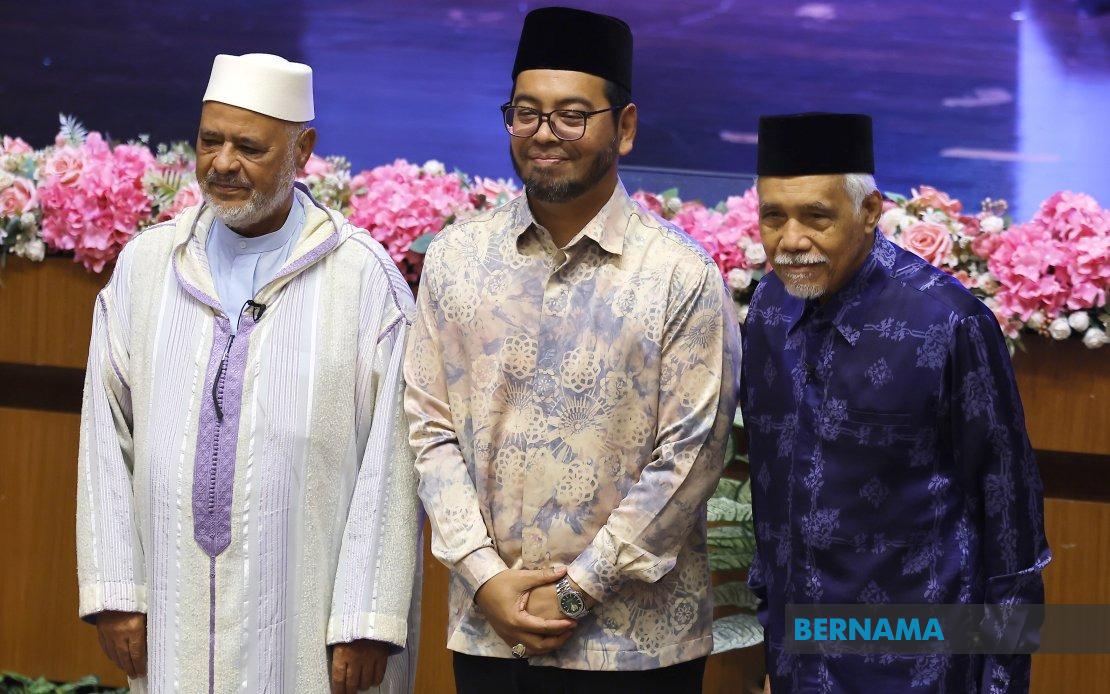
The inaugural event itself honoured two exemplary figures in Islamic scholarship. Emeritus Professor Osman Bakar, the rector of IIUM, received the national Maal Hijrah figure award, recognition that validates his decades of contributions to Islamic intellectual thought within a Malaysian context. Internationally, the accolade went to Professor Sheikh Dr Ahmad Al-Raysuni, a respected jurisprudence expert based in Morocco, whose work on Islamic law and contemporary applications carries significant weight across the Muslim world. The Sultan of Perak, Sultan Nazrin Shah, presented the awards alongside monetary prizes, trophies, and certificates of appreciation, lending formal state recognition to their scholarly achievements.
The choice of these recipients carries symbolic weight for Malaysia's positioning within global Islamic discourse. Professor Osman Bakar's selection affirms the government's confidence in home-grown intellectual leadership, while Professor Al-Raysuni's honour extends Malaysia's engagement with prominent Islamic scholars from across the Muslim world. This balance between national and international recognition demonstrates an intent to foster both local expertise and cross-border intellectual exchange. For Malaysia, a Muslim-majority nation with significant religious soft power ambitions in Southeast Asia, such recognition reinforces the country's role as a centre for contemporary Islamic thought.
The underlying philosophy driving this initiative addresses a persistent challenge in modern Islamic discourse: the gap between elite scholarship and public understanding. Many citizens, including educated professionals and decision-makers, remain disconnected from the nuanced intellectual contributions of leading scholars. By creating platforms for these figures to articulate their ideas in accessible formats, the government aims to narrow this gap. This democratisation of knowledge could have far-reaching implications for how Malaysians engage with religious and ethical questions in their professional and civic lives.
Dr Zulkifli's explicit mention of reaching non-Muslim audiences reveals an even broader strategic consideration. In a diverse, multi-faith society like Malaysia, intellectual leadership on ethical and moral issues transcends religious boundaries. Islamic scholars addressing contemporary challenges such as environmental stewardship, economic justice, or interfaith harmony can contribute meaningfully to national conversations regardless of the listener's faith background. By positioning the lecture series as a vehicle for such cross-communal engagement, the government frames Islamic scholarship not as insular or sectarian, but as relevant to the entire nation's wellbeing.
The institutional partnerships underpinning this initiative also suggest a methodical approach to quality control and credibility. USIM and IIUM bring established academic standards, peer-review mechanisms, and scholarly networks that lend legitimacy to the lectures. These universities serve as gatekeepers ensuring that the content meets intellectual rigour standards while remaining intellectually accessible. This institutional anchoring distinguishes the initiative from more superficial efforts at popularisation and signals a commitment to substantive, coherent messaging rather than mere broadcasting of ideas.
For Southeast Asian readers, the Maal Hijrah Lecture Series warrants attention as a case study in how governments can facilitate intellectual discourse within religious contexts. Malaysia's approach—combining government support with academic partnerships and deliberate cross-community engagement—offers insights for other nations navigating the relationship between religious education, public discourse, and national cohesion. The initiative also positions Malaysia as a potential hub for Islamic intellectual activity in the region, potentially attracting scholars and students seeking platforms for meaningful exchange.
The success of this initiative will ultimately depend on its execution and reception. The government's aspiration to mainstream Maal Hijrah figures' thinking across all social strata is ambitious and will require sustained effort, adequate resourcing, and genuine engagement from partner institutions. Public reception will be shaped by the quality of lectures, the accessibility of venues and scheduling, and whether the content genuinely speaks to contemporary concerns facing Malaysians. If executed effectively, the series could reshape how Islamic scholarship informs public policy and everyday discourse in Malaysia.