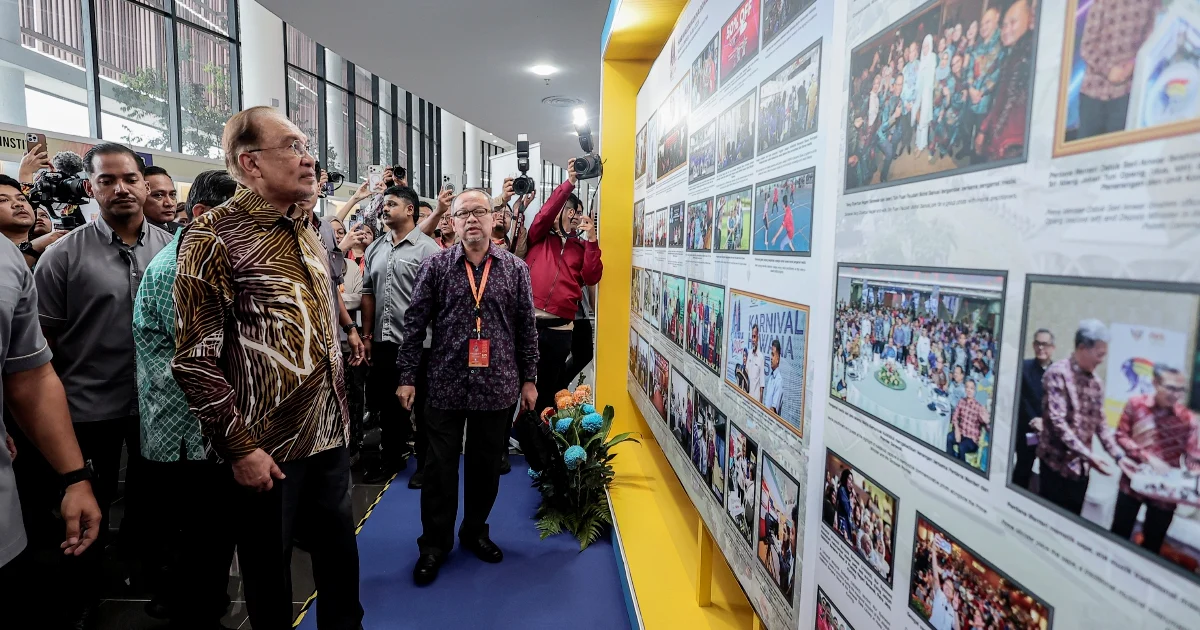
Prime Minister Datuk Seri Anwar Ibrahim has pledged RM1 million in government funding for Tabung Kasih@Hawana 2026, a welfare assistance scheme designed to support journalists and media industry workers facing financial hardship. The commitment, announced at an event in Permatang Pauh, underscores the administration's determination to strengthen support mechanisms for those working in Malaysia's increasingly challenging news sector.
The allocation represents a concrete measure to address welfare concerns among media professionals, whose livelihoods have come under sustained pressure from economic headwinds and technological disruption. By establishing dedicated funding for such assistance programmes, the government acknowledges the vital role that journalists and media workers play in maintaining democratic discourse and public information standards across the nation.
Beyond the immediate welfare injection, Anwar's announcement signals deeper government commitment to broader media industry transformation. The Prime Minister indicated that the RM1 million commitment forms part of a sustained policy agenda to modernise how Malaysia's news ecosystem operates and how its workforce adapts to contemporary challenges. This suggests coordinated efforts extending beyond emergency welfare towards systemic improvements in the sector.
The Hawana 2026 platform appears designed as a dedicated framework for implementing media-focused initiatives, consolidating multiple policy objectives within a single strategic umbrella. Such centralised approaches can streamline decision-making and ensure coordinated rollout of government support, though industry observers will likely scrutinise whether the initiatives genuinely address structural problems or function primarily as welfare supplements.
For Malaysian journalists already grappling with salary stagnation, newsroom layoffs, and advertising revenue migration to digital platforms, the welfare fund announcement acknowledges material hardship within the profession. However, industry analysts have long argued that sustainable solutions require addressing root causes: transitioning business models, investing in digital infrastructure, and protecting editorial independence from political and commercial pressures.
The government's willingness to allocate specific funding demonstrates recognition that market forces alone cannot sustain quality journalism. This reflects patterns evident across Southeast Asia and globally, where established media organisations have struggled financially while digital-native publishers and social media platforms have captured advertising and audience attention. Malaysia's experience mirrors these broader trends, making government support increasingly central to journalism sustainability discussions.
The welfare fund mechanism also carries implications for freelancers, contractual staff, and workers across smaller publications and digital news outlets who typically lack employer-provided safety nets. Expanding eligibility criteria and accessibility for such assistance could meaningfully improve conditions for Malaysia's most precarious media workers, though implementation details remain unclear.
Regional perspectives matter here. Southeast Asian governments have increasingly recognised that media industry stability requires active engagement rather than leaving the sector entirely to market pressures. Singapore, Thailand, and Indonesia have pursued various policy approaches, from subsidies to training programmes to infrastructure investments. Malaysia's initiative contributes to this broader regional conversation about government responsibility in sustaining journalism.
The timing of the announcement at Permatang Pauh, Anwar's parliamentary constituency, carries political symbolism beyond the policy substance. It positions the Prime Minister as advocate for media worker welfare and industry modernisation, framing the administration as proactive rather than reactive on media sector challenges. Whether this translates into broader structural reforms affecting media regulation, ownership concentration, or advertising market dynamics remains to be seen.
Looking forward, success will depend on how comprehensively the RM1 million allocation addresses worker needs versus how effectively the broader transformation agenda tackles systemic pressures on journalism. Media practitioners will scrutinise whether government support correlates with editorial independence or creates implicit expectations regarding coverage. Maintaining clear boundaries between welfare assistance and editorial influence represents a critical challenge for implementing such programmes credibly.
The Hawana 2026 framework suggests multi-year commitment rather than one-off intervention. If the government sustains funding and expands the initiative scope across subsequent years, it could signal serious investment in media ecosystem health. Conversely, if the RM1 million represents peak commitment with declining support thereafter, the impact may prove limited relative to structural challenges facing journalism.
Industry observers will watch closely whether this announcement precedes additional policy measures addressing advertising market dynamics, digital platform regulation, or media ownership concentration. Welfare funding operates as symptomatic treatment; structural transformation requires confronting underlying industry economics and regulatory frameworks that shape how Malaysian media operates.

