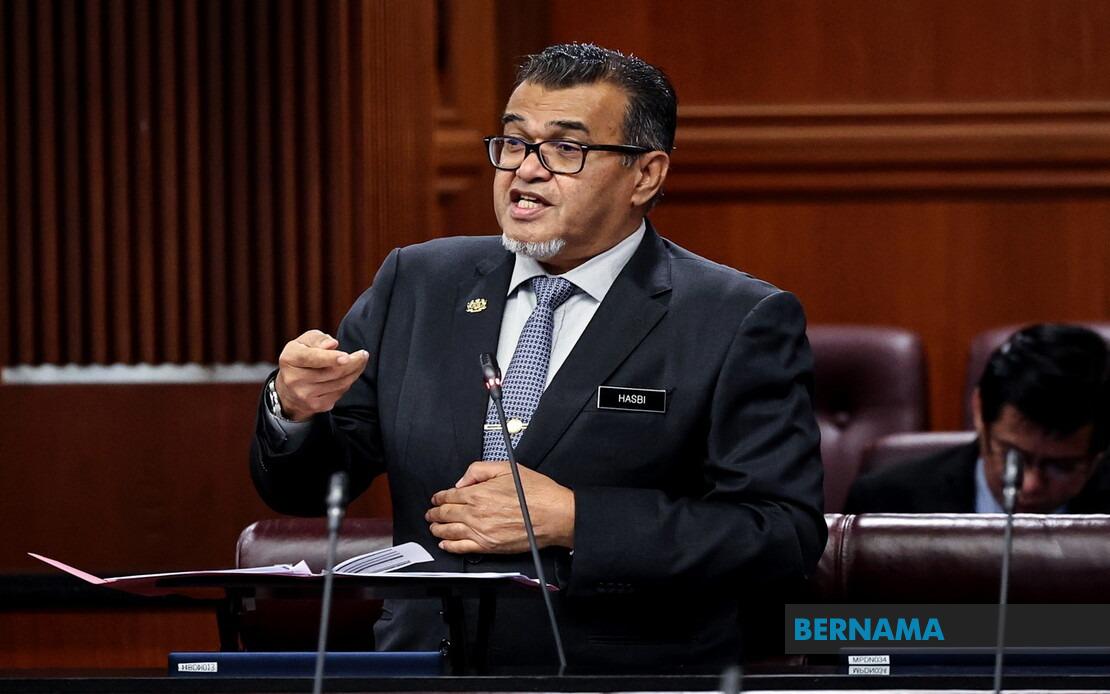
The Malaysian government is moving decisively to plug gaps in legislation protecting railway infrastructure, with Deputy Transport Minister Datuk Hasbi Habibollah announcing that comprehensive legal amendments will reach Parliament within months. Speaking during parliamentary question time, Hasbi acknowledged that existing laws governing trespassing, vandalism and theft on railway assets have become inadequate for modern security challenges, necessitating a legislative refresh that will introduce substantially harsher consequences for offenders.
The current legal framework reveals troubling leniency in deterring trespassing on railway property, with penalties capped at merely RM500 to RM1,000 — a sum that Hasbi suggested fails to discourage criminal activity given the valuable assets at stake. Cable theft, in particular, carries security implications extending well beyond simple property loss, and the forthcoming amendments will reflect this gravity through elevated penalties designed to make such crimes genuinely costly for perpetrators. This recognition that outdated statutes hamper enforcement efforts underscores a critical weakness in Malaysia's rail security posture that has evolved only slowly despite mounting losses.
The scale of the cable theft problem demands urgent attention. Parliamentary records reveal 393 separate incidents over the previous three years, representing a sustained campaign against railway infrastructure rather than isolated opportunistic crimes. These thefts extracted 19,756 metres of cable and inflicted direct financial losses exceeding RM16.3 million — a figure that excludes cascading operational disruptions, emergency repair costs, and service delays affecting commuters and freight operations across the Klang Valley and other corridors. For Southeast Asia's largest rail operator, these losses compound pressures on already-stretched maintenance budgets.
Addressing the problem requires dismantling the economic incentive structure that fuels cable theft. Hasbi emphasized strengthened collaboration with the Royal Malaysian Police to target scrap metal dealers and operators, recognizing that organised gangs rely on established networks to convert stolen materials into cash within hours of removal. By disrupting this supply chain — ensuring that legitimate dealers refuse suspicious consignments of copper and aluminium wire — authorities aim to sever the financial reward that motivates the thefts. This market-based approach, while administratively demanding, offers better long-term prospects than enforcement alone.
Technology investment represents a parallel pillar of the enhanced security strategy. The Railway Assets Corporation has deployed 1,146 units of artificial intelligence-enabled closed-circuit television systems strategically positioned across high-risk locations, representing a RM14 million capital commitment that reflects the severity of the threat. These systems move beyond passive recording to active detection, flagging suspicious activities in real-time and enabling rapid dispatch of security personnel. Coupled with drone surveillance programmes targeting terrain that conventional ground patrols struggle to cover effectively, the technological layer creates overlapping monitoring coverage that raises the operational difficulty and detection risk for potential thieves.
Ground-level enforcement capacity is also being strengthened through operational improvements. Keretapi Tanah Melayu Berhad has obtained approval to acquire 20 scrambler motorcycles for the Auxiliary Police force, a decision that addresses a critical gap in rapid-response capability. Traditional patrol vehicles prove unwieldy in accessing rail corridors and embankments where cables are vulnerable; motorcycles provide the manoeuvrability needed to reach remote hotspots quickly, increasing the likelihood of catching offenders during theft attempts. Enhanced presence in high-risk zones carries powerful deterrent value beyond the arrests it may yield.
The legislative amendments must navigate complex constitutional territory, as railway security intersects with state and federal jurisdiction in Malaysia's federal system. Ensuring that enhanced penalties survive constitutional scrutiny while remaining proportionate to offences will require careful drafting. The government's timeline for tabling these amendments before year's end signals political urgency, though Parliament's workload sometimes compresses policy space. If these amendments progress smoothly, they could serve as a template for addressing similar infrastructure-protection challenges affecting telecommunications networks, port facilities, and electrical grids.
Regional significance extends beyond Malaysia's borders. Cable theft plagues rail networks across Southeast Asia, with Indonesian and Thai operators reporting comparable losses. A successful Malaysian legislative and enforcement model demonstrating measurable impact could influence best-practice adoption across ASEAN, particularly given Malaysia's position as a transport logistics hub. Conversely, failure to arrest the problem could undermine investor confidence in rail infrastructure projects across the region.
The convergence of legal reform, technology deployment, and supply-chain disruption reflects sophisticated criminal-justice thinking. Single-dimension approaches — whether enforcement alone or technology without legal teeth — have repeatedly proven insufficient against organised theft. The government's multi-layered strategy acknowledges that sustainable security requires simultaneously raising the legal and operational cost of offending, reducing reward opportunities, and deploying detection assets. Success requires coordination across Transport Ministry, police, railway operators, and scrap-metal regulatory authorities — a horizontal governance challenge that remains difficult despite official recognition of its necessity.

