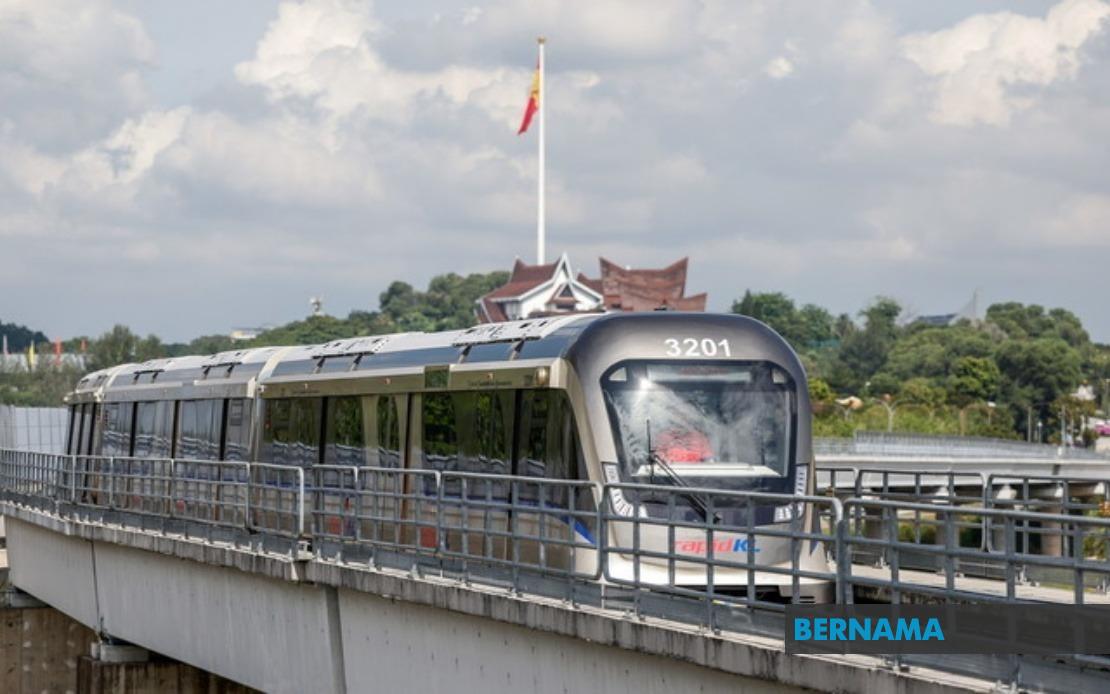
The federal government has pledged to meet with the Sultan of Selangor, Sultan Sharafuddin Idris Shah, to provide a detailed explanation concerning mounting difficulties with the LRT3 Shah Alam Line, following the Ruler's public expression of concern about the troubled rapid transit project. Transport Minister Anthony Loke disclosed the intention to seek a royal audience during remarks to journalists at a charitable function in Kuala Lumpur on July 2, confirming that the government takes seriously the Sultan's observations regarding both the rising financial burden and extended delays plaguing the infrastructure initiative.
The decision to approach the Sultan represents an acknowledgement by the MADANI administration that the LRT3 project has become a source of friction between the federal government and the Selangor palace, one of the nation's most influential royal institutions. Sultan Sharafuddin, whose state encompasses much of the project's scope, had previously aired frustration about how the rail scheme has evolved, suggesting a disconnect between original plans and current reality. Loke's commitment to provide clarification indicates the government recognises the political and constitutional importance of maintaining harmonious relations with the palace, particularly on infrastructure matters that directly affect Selangor residents.
The Ruler's criticism, articulated the day before Loke's remarks, centred on a cascade of complications that have befallen the project since 2018. Sultan Sharafuddin noted that the LRT3 underwent a suspension lasting over 18 months following the change in federal government administration that year, a period during which momentum and planning processes essentially froze. This hiatus was subsequently compounded by a further 19-month delay attributed to the COVID-19 pandemic, which disrupted construction schedules and supply chains across the economy until 2021. Together, these interruptions created a cumulative loss of more than three years, during which inflation and cost escalation would have inevitably pushed the project's budget upward.
The scope and ambitions of the LRT3 have undergone substantial retrenchment as a consequence of these delays and cost pressures. According to the Ruler's statement, the proposed dimensions of individual stations were reduced from original specifications, reflecting efforts to control spiralling expenditure. More significantly, planners cut the number of train carriages that would service the line, reducing passenger capacity and service frequency compared to what residents might have initially anticipated. The cancellation of five proposed stations along the alignment represents perhaps the most visible contraction, eliminating connectivity to communities and commercial zones that had been earmarked for development around these transit hubs.
Sultan Sharafuddin's emphasis that the LRT3 is fundamentally a project intended to serve public benefit rather than elevate government prestige suggests underlying anxiety that decisions made in recent years have prioritised cost containment over utility and accessibility. By reframing the initiative as a practical service for ordinary people, the Ruler implicitly critiqued the notion that reducing stations, carriages, and station sizes represents acceptable compromise. This framing carries particular weight in Malaysian governance, where royal institutions typically champion the interests of their subjects against bureaucratic or financial expediency. For the MADANI government, Loke's willingness to face the Sultan directly signals recognition that these concerns demand serious engagement rather than dismissal as routine project management.
Parallel to the LRT3 matter, the Transport Ministry has undertaken separate initiatives aimed at facilitating electoral participation in the 16th Johor State Election, scheduled for July 11. Loke announced that his ministry had coordinated with Keretapi Tanah Melayu Berhad (KTMB) to expand the frequency of Electric Train Service (ETS) operations between Kuala Lumpur and Johor Bahru, enabling voters residing outside the state to return home more conveniently for polling day. The expanded service includes additional stops at intermediate stations including Segamat and Labis, broadening accessibility across the southern region.
This public transport initiative targets the practical challenge that Malaysian electoral systems present to citizens working or studying outside their constituency of residence. By increasing ETS frequency, the government has removed a logistical barrier that might otherwise discourage voter turnout, particularly among young professionals and migrant workers from northern states who maintain electoral ties to Johor. The measure reflects an implicit recognition that voter participation strengthens democratic legitimacy and that government has a responsibility to facilitate rather than impede the exercise of voting rights, regardless of whether such facilitation benefits any particular political party.
The 16th Johor State Election will determine control of 56 state assembly seats contested by 172 candidates, making it a significant test of political support in one of Malaysia's most economically important states. The electoral calendar specifies early voting on July 7 and general polling on July 11, creating a compressed timeframe during which the expanded transport services will operate. For voters based in Kuala Lumpur, Selangor, and northern states, the improved rail connectivity directly addresses the practical friction that historically suppresses turnout among geographically dispersed electorates.
The conjunction of these two developments—the royal audience commitment and the transport facilitation initiative—illustrates how Malaysian governance operates at multiple institutional levels simultaneously. The LRT3 situation demonstrates the necessity of maintaining constructive dialogue between federal authorities and state-level royal institutions on infrastructure matters, particularly when implementation has encountered setbacks that affect public confidence. Conversely, the transport ministry's electoral support measures reveal how routine administrative functions can be deployed to strengthen democratic participation, assuming that expanded access inherently encourages civic engagement.
For Malaysian readers and regional observers, these developments underscore continuing tensions within the MADANI administration between ambitious infrastructure visions and the fiscal and operational realities that constrain their realisation. The LRT3 trajectory—from full-scale metro ambitions to a scaled-back rapid transit service—mirrors similar patterns across Southeast Asia, where transport megaprojects frequently encounter cost overruns, demand reassessments, and scope reductions. Sultan Sharafuddin's intervention signals that Malaysia's royal institutions remain actively engaged in scrutinising how public resources are deployed on initiatives affecting their subjects' daily lives, a characteristic feature of the constitutional monarchy system that distinguishes Malaysia's governance from purely parliamentary democracies.

