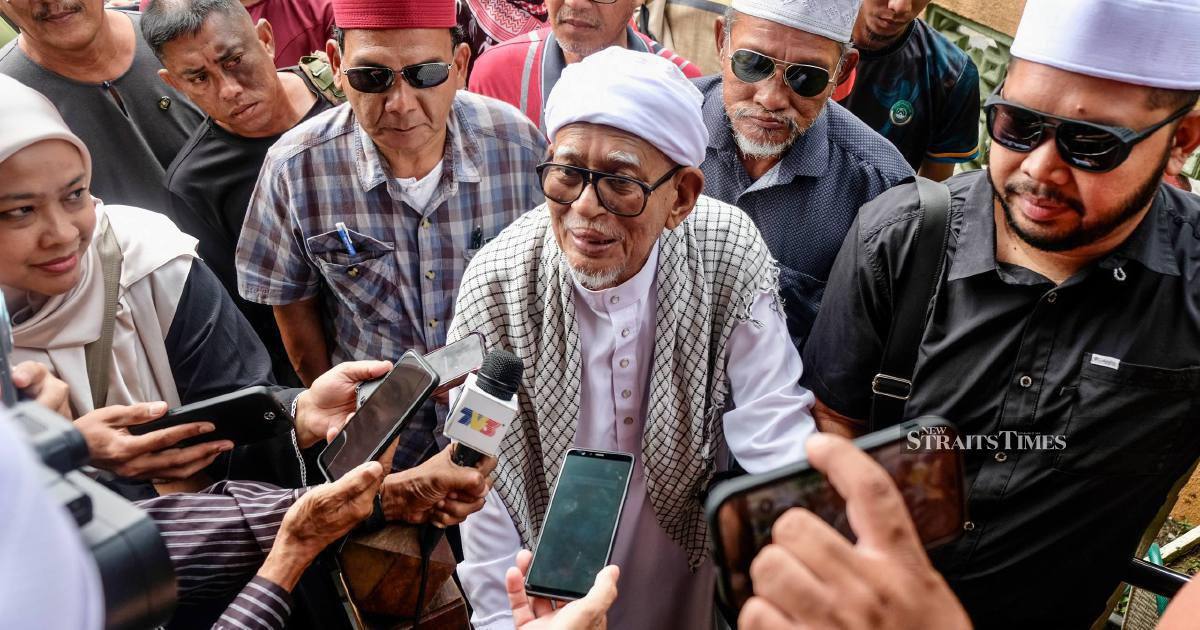
Tan Sri Abdul Hadi Awang, the president of PAS, has publicly questioned Prime Minister Datuk Seri Anwar Ibrahim's decision to skip a special parliamentary sitting convened to discuss findings from the Royal Commission of Inquiry into Lembaga Tabung Haji, according to remarks made in Marang.
The parliamentary session was called specifically to examine the RCI's comprehensive report on the troubled pilgrimage fund, which has faced persistent scrutiny over financial management and governance concerns in recent years. The absence of the Prime Minister from such a significant proceeding has drawn attention from opposition figures, who view ministerial attendance at key parliamentary debates as a matter of democratic accountability and leadership responsibility.
Hadi's criticism reflects broader tensions within Malaysia's political landscape regarding how government leadership engages with parliamentary oversight mechanisms. The Lembaga Tabung Haji issue remains particularly sensitive, given the fund's role as a custodian of savings for millions of Malaysian Muslims preparing for the Hajj pilgrimage. Any governance failures at the institution carry significant political and social implications, making parliamentary scrutiny both necessary and consequential.
The Royal Commission of Inquiry was established to investigate various irregularities and management failures at Tabung Haji, which has faced repeated allegations concerning investment decisions, financial transparency, and fiduciary responsibilities. The commission's report represents months of investigation into how the fund's leadership handled accumulated pilgrim savings. A parliamentary sitting dedicated to examining these findings provides lawmakers an opportunity to hold the government accountable for the institution's performance and to signal commitment to reform.
When senior parliamentarians, particularly opposition leaders, question executive attendance at such proceedings, they often position the matter as one of institutional respect and governance standards. In Malaysia's Westminster-derived system, prime ministerial presence at major parliamentary debates carries symbolic weight beyond mere procedure—it conveys executive engagement with legislative scrutiny and demonstrates the government's treating certain issues as matters of national importance requiring top-level attention.
Anwar's administration has faced various criticisms regarding its handling of institutional reforms and financial oversight bodies. The government's approach to addressing Tabung Haji's legacy issues will likely influence public confidence in both the fund itself and the government's broader reform agenda. A perceived lack of attention to the RCI report discussion could be interpreted as insufficient urgency around pilgrims' fund security, a perception that carries electoral and reputational risks.
The timing of Hadi's remarks, made from Marang in his home state of Terengganu, underscores how regional political figures continue monitoring federal government performance. PAS, which operates as an opposition force in the federal parliament despite holding state power in Terengganu and Kelantan, has positioned itself as a watchdog on matters affecting Muslim constituencies. The Tabung Haji issue allows the party to criticize government stewardship while maintaining relevance on issues of concern to its core voters.
Parliamentary attendance by chief executives during important sitting debates represents an area where democratic norms and executive discretion sometimes conflict. Prime ministers invariably face multiple competing demands on their schedules, and not every parliamentary sitting receives executive-level attendance. However, special sessions convened specifically to discuss significant investigative reports often carry an expectation of senior leadership presence, particularly when the matter involves public institutions managing collective resources.
The Tabung Haji situation involves more than routine parliamentary procedure. Millions of Malaysian Muslims have contributed to the fund with expectations of transparent, professional management. The RCI investigation presumably identified systemic problems requiring remedial action and policy direction. A parliamentary session examining those findings provides an essential opportunity for lawmakers to question ministers and demand concrete reform commitments.
Hadi's intervention suggests that the opposition intends to leverage the Tabung Haji issue for political purposes in coming months. By highlighting the Prime Minister's absence, PAS effectively frames the government as dismissive of parliamentary procedures or insufficiently concerned with pilgrim fund governance. This framing can resonate with voters, particularly those who have contributed personally to Tabung Haji and expect transparency regarding their savings.
For the government, the question becomes whether Anwar's absence represented a substantive oversight or merely a scheduling conflict delegated to other ministers. If the sitting proceeded without the Prime Minister but with relevant cabinet ministers—such as the Finance Minister or others overseeing institutional reforms—the absence might be defended as practical delegation. However, if the government maintained minimal representation at a sitting specifically convened for an important investigative report, Hadi's criticism gains traction.
The Tabung Haji controversy will likely remain contentious as Malaysia approaches future electoral contests. Both the government and opposition recognize the political sensitivity of a faith-based institution managing public savings. How leadership responds to parliamentary scrutiny of the fund's governance, and whether officials prioritize attendance at significant parliamentary sessions addressing the issue, will influence broader perceptions regarding government accountability and institutional reform commitment. The incident illustrates how parliamentary procedure intersects with political messaging in Malaysia's contemporary governance environment.

