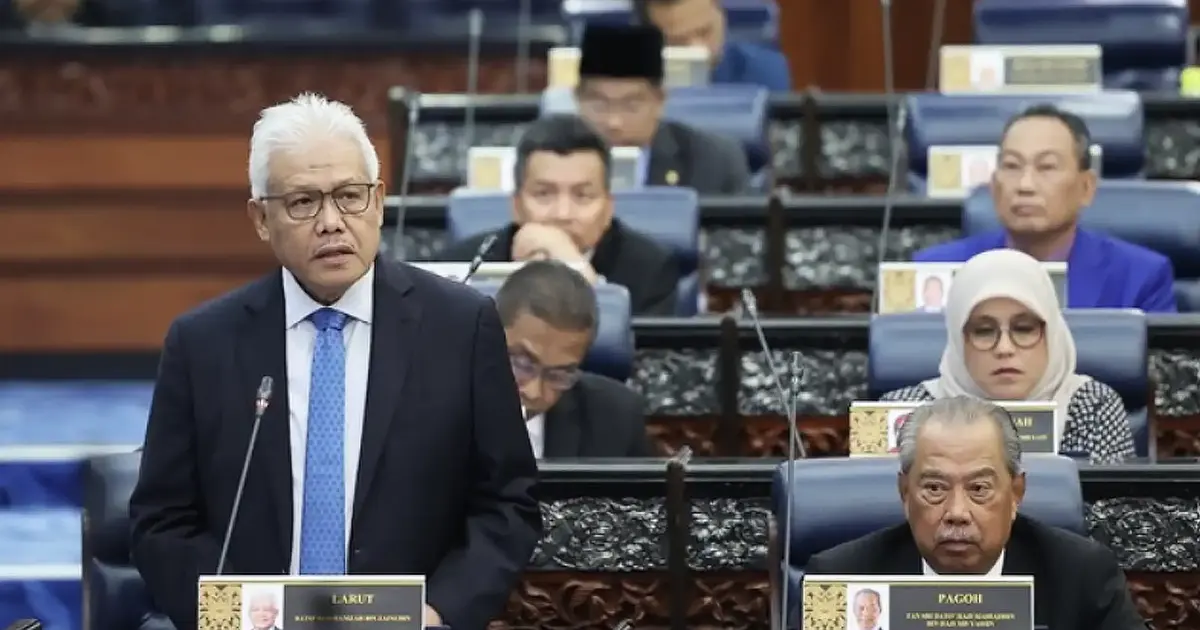
Hamzah Zainudin has reclaimed his place as opposition leader in the front row of the Dewan Rakyat, a symbolic shift that reflects changing political alignments within Malaysia's fractured opposition. The relocation of Bersatu president Muhyiddin Yassin, who previously occupied the seat adjacent to the opposition leader's position, represents a significant repositioning within the chamber. Muhyiddin has been moved eight seats back along the front row, a visible demotion that signals shifting dynamics among opposition parties.
The seating arrangement in parliament carries considerable symbolic weight in Malaysian politics, extending far beyond mere comfort or convenience. The position immediately next to the opposition leader denotes proximity to power, influence, and status within the alternative government bloc. That Hamzah has returned to this prime location underscores his reassertion of authority within opposition circles, whilst Muhyiddin's displacement suggests a recalibration of his standing among lawmakers aligned against the government.
Muhyiddin's Bersatu party has experienced considerable turbulence since the party's founding in 2019. Having served as Prime Minister for a tumultuous 17 months during the pandemic, Muhyiddin's political fortunes have shifted dramatically. The party, which initially positioned itself as an alternative force in Malaysian politics, has faced internal divisions, external pressures, and questions about its strategic direction. The seating adjustment reflects these broader struggles and the challenge Bersatu faces in asserting its relevance within an increasingly crowded opposition landscape.
Hamzah, as opposition leader, commands authority over the opposition bloc's coordination and parliamentary strategy. His restoration to the front-row seat nearest the government benches provides him with better visibility and positioning during parliamentary debates and proceedings. This physical placement facilitates more direct engagement with government ministers and allows for more effective interjections during question time and legislative discussions. The seat's prominence also carries weight in terms of media coverage and public perception of who holds genuine opposition leadership credentials.
The reshuffling occurs amid broader questions about opposition unity and effectiveness in Malaysian politics. The opposition has long struggled to present a coherent alternative to government, fractured as it is among Pakatan Harapan components, Bersatu, and various independent MPs. Hamzah's repositioning at the front row may be seen as an attempt to strengthen his profile and authority as someone capable of leading this disparate coalition. Whether this translates into meaningful parliamentary impact remains to be seen, particularly given the numerical challenges the opposition faces in a government-dominated chamber.
Muhyiddin's reduced prominence in the Dewan raises questions about Bersatu's future strategic positioning. The party entered government coalition arrangements following the 2022 general election but has maintained a somewhat independent profile. The seating change suggests that however Bersatu had negotiated its position previously, the current arrangement reflects a diminishment of its privilege or standing. This could indicate shifting negotiations around opposition-government cooperation or a reassessment of Bersatu's role within opposition structures.
For Malaysian observers of parliamentary politics, seating arrangements serve as important indicators of internal power dynamics. Unlike some democracies where opposition benches are assigned mechanically, the arrangements in the Dewan Rakyat often reflect conscious choices by parliamentary leadership. That Hamzah has moved forward whilst Muhyiddin has moved backward suggests deliberate decision-making about who should occupy positions of prominence. This kind of arrangement can influence parliamentary momentum and the perceived legitimacy of opposition claims to alternative leadership.
The timing of this repositioning may also signal reactions to recent political developments or negotiations within parliament. Opposition dynamics in Malaysia are fluid, with MPs occasionally shifting allegiances or with consensus building occurring around alternative arrangements. Hamzah's return to the front row could reflect successful coalition building or a broader realignment among opposition MPs regarding who should hold leadership positions. Conversely, Muhyiddin's move down could indicate that Bersatu has been relegated to a supporting rather than leading role within opposition coordination efforts.
For Southeast Asian politics more broadly, Malaysia's opposition dynamics matter given the region's democratic credentials and the precedents they set. An effective opposition provides crucial oversight, scrutiny, and alternative policy perspectives. The seating arrangement changes in the Dewan Rakyat, whilst seemingly procedural, speak to deeper questions about how opposition voices are organized and empowered. Clear opposition leadership and positioning can enhance parliamentary effectiveness, whilst fragmented or unclear opposition structures may diminish their ability to hold government accountable.
Moving forward, the practical implications of this seating adjustment will likely become apparent during upcoming parliamentary sessions. Hamzah's closer positioning to government benches may translate into more forceful questioning and engagement during parliamentary business. Meanwhile, Muhyiddin's repositioned seat does not necessarily diminish Bersatu's ability to participate in opposition activities, but it does signal a change in perceived status or ranking. For Malaysian political observers, this physical rearrangement of lawmakers serves as a visible reminder that parliamentary politics remain dynamic, and that influence and authority within the legislature can shift with changing circumstances and negotiations.

