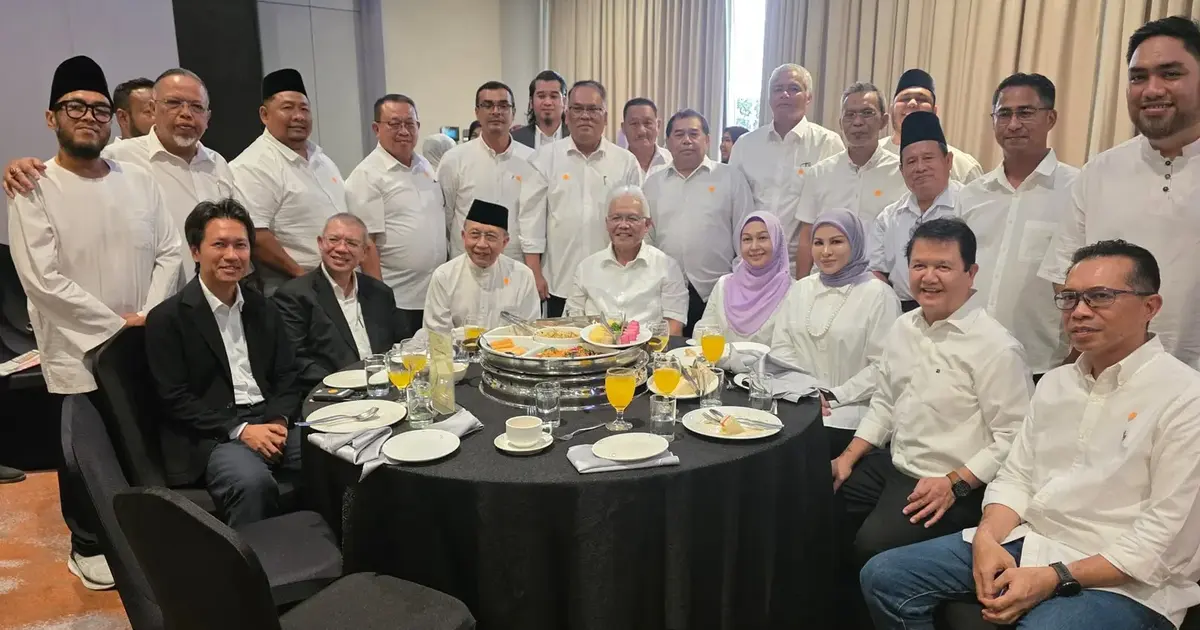
Hamzah has assumed the presidency of Wawasan, marking a significant leadership transition for the political party as it continues to establish its organisational framework. The appointment signals a consolidation of senior figures within the party's structure, bringing together individuals with substantial political experience and parliamentary representation to guide the organisation through its development phase.
Rais Yatim, a figure with deep roots in Malaysian politics spanning several decades, has been elevated to the position of chairman. His appointment reflects the party's strategy to anchor its leadership with individuals whose experience in government and policy formulation can provide stability and direction. Yatim's background as a former minister brings substantive knowledge of executive operations and legislative processes that could prove instrumental in shaping Wawasan's approach to governance and party management.
The secretary-general position has been conferred upon Saifuddin Abdullah, the member of parliament representing the Indera Mahkota constituency. This placement underscores the party's commitment to integrating its parliamentary representatives into core decision-making roles. Abdullah's position as a sitting MP means he will be uniquely positioned to bridge the gap between the party's central organisation and its presence in the national legislature, a critical function for any aspiring political force seeking to expand its influence.
The announcement represents a crucial phase in Wawasan's institutional development. The establishment of clear hierarchical roles and the strategic placement of experienced figures suggests the party is moving beyond its formative stages toward more structured operations. In the Malaysian political context, where party organisation and leadership stability often determine electoral viability, these appointments carry considerable weight for how the party will be perceived by potential members and voters alike.
For the broader Malaysian political landscape, the strengthening of Wawasan's leadership cadre indicates the party is preparing for greater engagement in future electoral cycles. The inclusion of a serving MP in the secretary-general role demonstrates confidence that the party has parliamentary footing and ambitions to expand that presence. This structural confidence may encourage other legislators or aspiring politicians to consider affiliation with the party, potentially accelerating its growth as a distinct political entity.
Rais Yatim's appointment as chairman is particularly noteworthy given his extensive track record in Malaysian governance. His experience spans multiple ministerial portfolios and senior government positions, providing Wawasan with a figurehead whose credibility extends beyond party circles. Such symbolic appointments often carry weight in Malaysian politics, where voters frequently assess party viability partly through the pedigree and experience of its leadership contingent.
The three-tier leadership structure—with Hamzah as president, Yatim as chairman, and Abdullah as secretary-general—reflects common practice in Malaysian political party organisation. This arrangement typically allows for differentiation between ceremonial and executive functions, with the president serving as the primary public face and strategic leader, the chairman providing governance oversight, and the secretary-general managing day-to-day operations and administration. How these roles will actually interact and divide responsibilities remains to be clarified in the coming months.
For Indera Mahkota voters, the elevation of their MP to the party's top administrative tier may be viewed as beneficial, suggesting direct influence over party direction. Conversely, it could create questions about whether Abdullah's capacity to serve his constituents might be strained by expanded national responsibilities. This dynamic is common when politicians assume dual senior roles and bears watching as the party's activities expand.
The broader implications for Malaysian politics relate to the ongoing fragmentation and reorganisation of the political landscape. Wawasan's moves to professionalise its leadership structure occur against a backdrop of shifting coalitions and voter realignment. The party's success will ultimately depend not merely on the calibre of its leadership appointments but on its ability to articulate a coherent political programme and translate administrative capability into electoral support.
Looking forward, these appointments will be tested by the party's capacity to build grassroots networks, develop policy positions that resonate with Malaysian voters, and navigate the complex coalition dynamics that characterise contemporary Malaysian politics. The inclusion of experienced figures like Rais Yatim provides institutional credibility, while the presence of serving parliamentarians like Saifuddin Abdullah ensures connection to electoral reality. Whether this leadership combination proves sufficient to establish Wawasan as a significant political force remains an open question that will be answered through subsequent electoral performance and party development initiatives.

