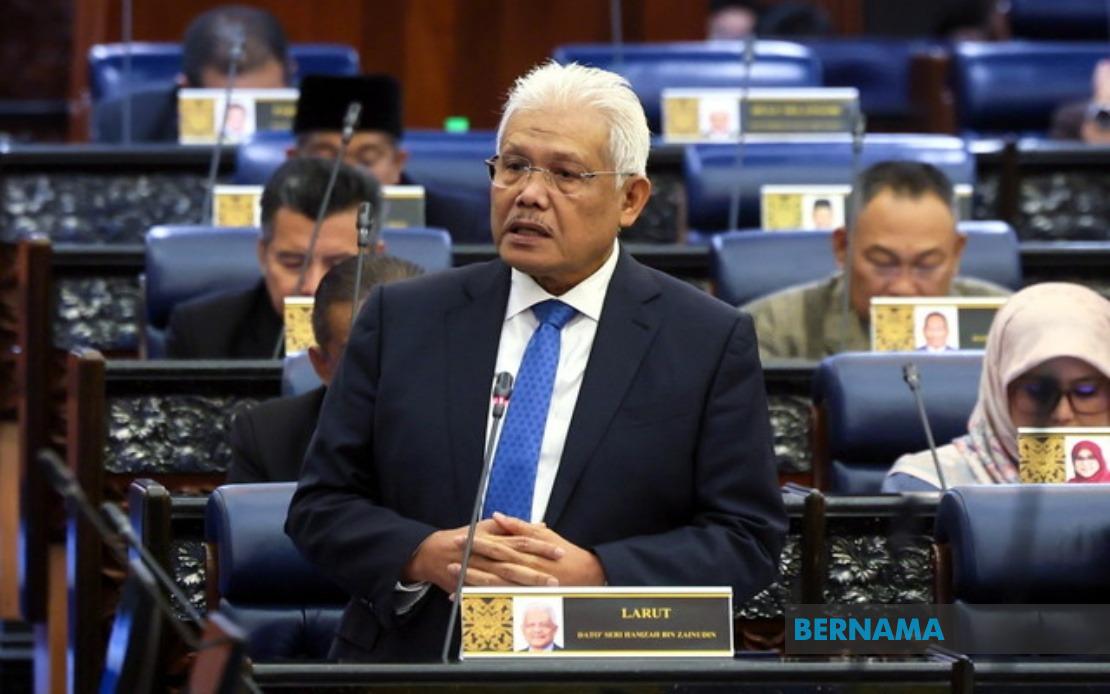
The Parliamentary leadership underwent a significant realignment this week as Dewan Rakyat Speaker Tan Sri Johari Abdul formally announced the restoration of Datuk Seri Hamzah Zainudin to the position of Opposition Leader, effective June 18. The confirmation came during the opening of Oral Question Time on June 22, signalling the conclusion of a brief transitional period that had seen the opposition's parliamentary representation shift hands twice within the span of a month.
According to Johari's statement, Hamzah originally held the Opposition Leader title until May 20, 2026, at which point the responsibility transferred to Kemaman MP Datuk Seri Dr Ahmad Samsuri Mokhtar. This interim arrangement lasted precisely three weeks, concluding on June 10 before Hamzah's reinstatement took effect eight days later. The sequence of changes reflects evolving political circumstances within the opposition bloc and suggests negotiations or arrangements among opposition parties regarding parliamentary representation and leadership roles.
The Speaker's formal announcement underscores the procedural importance of documenting such transitions within Parliament's official records. Johari's acknowledgement of the situation through a direct statement before Question Time demonstrates that the Speaker's office treats Opposition Leader appointments as matters of parliamentary significance requiring transparent communication to Members of Parliament. This procedural clarity helps maintain institutional continuity and ensures all stakeholders remain informed of parliamentary leadership arrangements.
In his remarks, Johari extended formal appreciation to Dr Ahmad Samsuri for his service during the interim period, acknowledging the administrative and representational responsibilities the Kemaman MP discharged during those three weeks. Such recognition reflects parliamentary courtesy and acknowledges that the Opposition Leader position, while temporary in this instance, carries substantial duties within the legislative framework. The Speaker's welcome of Hamzah's return similarly reinforces the institutional acceptance of the arrangement, treating it as a normal parliamentary adjustment rather than a matter of controversy.
The Opposition Leader role carries particular significance within Malaysia's parliamentary system, as the position holder serves as the official spokesperson for the opposition coalition and leads parliamentary scrutiny of government policies and expenditure. The holder conducts Question Time exchanges with the ruling coalition and coordinates opposition legislative strategies. Hamzah's resumption of these responsibilities therefore represents a concrete shift in how opposition oversight of government will be directed and articulated within the Dewan Rakyat.
Beyond the Opposition Leader transition, Johari also addressed parliamentary vacancies that have emerged following the departure of two prominent opposition Members of Parliament. Both Datuk Seri Rafizi Ramli, the Pandan MP, and Nik Nazmi Nik Ahmad, the Setiawangsa MP, submitted formal letters relinquishing their parliamentary memberships on May 18. These resignations, effective from that date, created casual vacancies in both constituencies that now require attention under electoral procedures.
The Speaker confirmed that he had formally notified the Election Commission of these two parliamentary vacancies in compliance with Article 54(1) of the Federal Constitution. This notification triggers the constitutional machinery for conducting by-elections in both Pandan and Setiawangsa, though the timing of those elections remains subject to Election Commission determination and potentially other constitutional considerations. The departure of both MPs simultaneously represents a notable loss of parliamentary representation for the opposition and raises questions about the political circumstances prompting their resignations.
For Malaysian observers, these developments illustrate the fluid nature of parliamentary politics within the current political configuration. The rapid transitions in the Opposition Leader position, coupled with the departure of two sitting MPs, suggest ongoing realignments within the opposition coalition. Such movements often reflect negotiations between component parties of opposition alliances regarding portfolio allocation, policy direction, or leadership positioning ahead of potential electoral developments.
Regionally, Malaysia's parliamentary arrangements merit attention given Southeast Asia's varied approaches to opposition representation and legislative oversight mechanisms. The formal recognition of an Opposition Leader position and the procedural mechanisms for managing parliamentary vacancies reflect Westminster conventions adapted to Malaysia's constitutional framework. These institutional mechanisms help ensure that opposition voices maintain structured access to parliamentary procedures even amid political transitions.
The implications for Malaysian political dynamics extend beyond parliamentary procedure. Hamzah's restored leadership of the opposition signals organisational continuity for forces opposing the current government, potentially steadying opposition messaging and strategy after a period of apparent internal adjustment. Conversely, the departure of Rafizi and Nik Nazmi removes two opposition voices from daily parliamentary engagement, at least temporarily, until by-elections restore representation in those constituencies.
Moving forward, the scheduled by-elections in Pandan and Setiawangsa will present opportunities for opposition parties to regain these seats or for the ruling coalition to expand its parliamentary majority. Both constituencies carry political significance within the broader opposition coalition, and the conduct and outcomes of these by-elections will provide important indicators of voter sentiment and opposition consolidation efforts. The timing of these elections will likely be strategically considered by both government and opposition actors.

