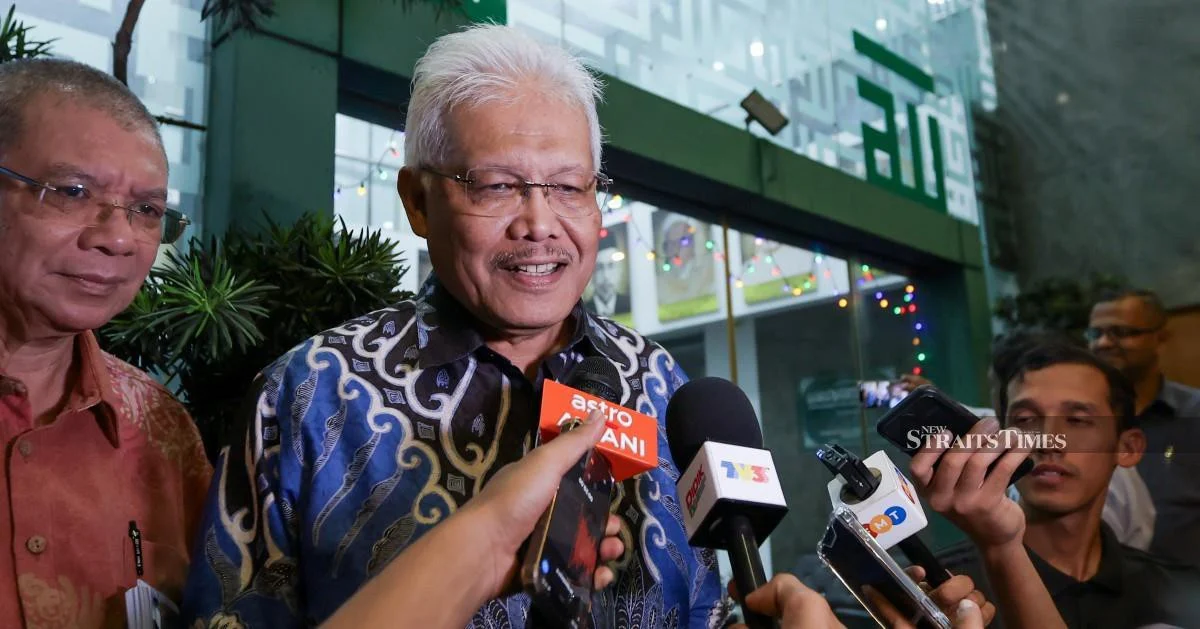
Datuk Seri Hamzah Zainudin is poised to reclaim the opposition leader's seat in the Dewan Rakyat this coming Monday, marking a significant realignment in Parliament's physical and symbolic landscape. The change, confirmed through updated seating arrangements for the legislative chamber, will result in Bersatu president Tan Sri Muhyiddin Yassin being repositioned several seats further down the opposition bench. This seating rearrangement carries implications not merely for comfort or protocol but signals a substantive shift in how opposition dynamics will be structured within Malaysia's Parliament.
The decision to restore Hamzah to the front-row opposition leader position reflects evolving political calculations within the opposition coalition. Hamzah's tenure as opposition leader has been marked by attempts to consolidate various opposition factions under a unified banner, a task complicated by the fractious nature of Malaysian opposition politics. His return to the prominent seat suggests confidence from his party and supporting opposition members in his capacity to represent their collective interests during parliamentary proceedings. The symbolism of the front-row position extends beyond mere seating protocol; it determines sight lines during debates, priority in question-and-answer sessions, and visibility during media coverage of parliamentary proceedings.
Muhyiddin's repositioning, meanwhile, reflects the evolving status of Bersatu within the broader opposition framework. The party, which has experienced significant political fluctuations since its formation, has seen its influence and parliamentary standing subject to constant recalibration. By moving several seats down the opposition bench, Muhyiddin will occupy a position further from the government frontbenchers and speakers' podium, a subtle but meaningful demotion in parliamentary visibility. This change may indicate negotiations within opposition leadership structures regarding representation, strategic direction, and the hierarchy of influence among opposition blocs.
Political observers note that seating arrangements in the Dewan Rakyat often mirror the actual power dynamics and alliance structures among opposition members. When changes occur, they typically reflect behind-the-scenes agreements about which faction or leader should hold primacy in opposition strategy and messaging. The timing of this Monday's implementation suggests recent consensus-building among opposition figures regarding leadership parameters for the coming parliamentary term or session. Such arrangements are seldom arbitrary; they emerge from negotiations between senior opposition figures, discussions within party whips' offices, and broader agreement on parliamentary decorum and protocol.
The implication for Malaysian Parliament's functioning is noteworthy. The opposition leader, by virtue of holding the front-row seat, becomes the de facto spokesperson for opposition perspectives during government policy announcements and legislative debates. This individual typically leads questioning during question time, initiates opposition responses to major government initiatives, and holds sway over opposition scheduling and priorities. Hamzah's position in this role means he will bear primary responsibility for articulating opposition concerns, whether regarding economic policy, governance, corruption, or specific regional and national issues affecting Malaysian voters.
For Malaysian political analysts, the seating change provides a window into current opposition coalition stability. Opposition movements in Malaysia have historically struggled with unity, fragmentation being endemic to their organisational cultures. Any realignment that sees leadership positions shifting typically indicates either consolidation toward greater coherence or, conversely, potential underlying tensions requiring accommodation through modified arrangements. In this instance, the move appears to reflect deliberate repositioning rather than crisis management, suggesting operational stability within opposition structures despite the party's well-documented heterogeneity.
The practical consequences for parliamentary procedures merit attention. Opposition leaders typically coordinate with speakers, whips, and government officials on procedural matters. The transition from Muhyiddin to Hamzah in this coordinating capacity may alter how parliamentary business unfolds during question periods, emergency adjournments, and special sittings. Hamzah's negotiating approach and strategic priorities may differ from his predecessor's methods, potentially influencing the tenor and focus of parliamentary scrutiny applied to government activities.
Beyond Parliament House, this seating adjustment carries significance for messaging and media relations. Opposition statements, whether issued in Parliament or through media channels, carry greater weight and attract more coverage when delivered by the formally designated opposition leader. Hamzah's restoration to this position may enable more coordinated and amplified communication of opposition viewpoints to the Malaysian electorate, particularly important given how closely parliamentary proceedings are watched by domestic and international media observers.
The transition also reflects broader regional political contexts. Southeast Asian democracies place considerable weight on opposition functionality as a check on executive power and government accountability. Malaysia's parliamentary tradition, while tested in recent years by political instability and shifting coalitions, maintains the convention of according opposition leaders significant institutional space and prominence. By formalising Hamzah's return through seating arrangements, Parliament acknowledges the importance of vigorous opposition representation within its chambers, reinforcing democratic practice even amid Malaysia's complex and sometimes turbulent political landscape.

