Johor is set to become a hub for international educational innovation as the state government moves forward with a strategic partnership bringing Harvard University's flagship leadership programme to local secondary schools. Beginning in January 2027, the Program for Scientifically-Inspired Leadership, or PSIL, will be implemented at Sekolah Menengah Kebangsaan Tasek Utara and SMK Seri Kota Puteri 2, two schools operating under Sekolah Rintis Bangsa Johor, with an initial cohort of 100 carefully selected students.
The collaboration represents a significant step in elevating Johor's educational standing on the regional and global stage. According to Aznan Tamin, chairman of the State Education and Information Committee, the partnership underscores the state's commitment to exposing young learners to world-class teaching methodologies and intellectual rigour. The initiative comes at a time when Southeast Asian nations are increasingly seeking ways to develop homegrown talent equipped with international competency standards, making Johor's move particularly strategic in the broader context of Malaysia's educational ambitions.
Harvard's PSIL programme, established in 2019, distinguishes itself through its focus on fostering active learning rather than passive information absorption. The curriculum emphasises developing critical thinking skills, enabling students to analyse complex problems and synthesise information from multiple disciplines. Equally important is the programme's emphasis on cultivating effective communication abilities and nurturing leadership qualities that extend beyond academic excellence. These competencies align closely with the evolving demands of the global workforce, where employers increasingly prioritise adaptability and collaborative problem-solving over rote knowledge.
The commitment to teacher development reveals a sophisticated understanding of educational transformation. Forty educators from SRBJ will participate in intensive active learning pedagogy workshops designed to fundamentally reshape classroom practice. This investment in professional development is crucial because sustainable educational improvement hinges not merely on introducing new curricula but on equipping teachers with the pedagogical tools and confidence to deliver instruction in more interactive and creative ways. By strengthening teaching methodology, the programme creates the foundation for students to thrive within the new learning environment.
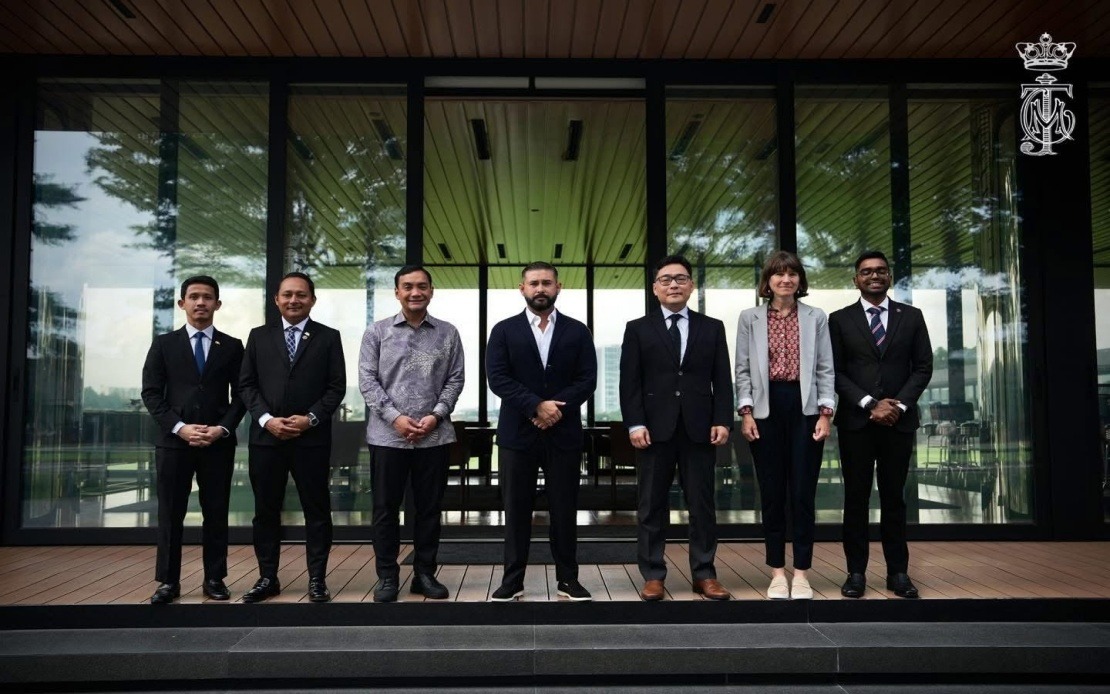
A high-level visit to Johor recently showcased the seriousness with which Harvard approaches this partnership. Dr Dominic Mao, assistant director of Undergraduate Studies and lecturer in Molecular and Cellular Biology, and Dr Andrea Wright, assistant dean of Harvard College, led the delegation received by Tunku Mahkota Ismail, the Regent of Johor. This engagement at the highest levels of state leadership demonstrates that the collaboration is not a peripheral initiative but rather a central pillar of Johor's educational strategy. The Regent's personal involvement signals political commitment that should facilitate smooth implementation and sustained support.
The philosophical alignment between PSIL and SRBJ's educational mission further strengthens the partnership's prospects. SRBJ emphasises bilingual proficiency, deliberately developing English competency while preserving the primacy of Malay language instruction. This balanced approach recognises that global engagement need not come at the expense of cultural and linguistic identity, a particularly important consideration in the Malaysian context. Simultaneously, the school prioritises science, technology, engineering and mathematics skills—domains critical for Malaysia's economic future and technological competitiveness.
The programme's emphasis on competency-based assessment calibrated to international standards addresses a longstanding challenge in Malaysian education. While Malaysia has consistently produced students with strong examination results, international assessments often reveal gaps in applied problem-solving and cross-disciplinary thinking. By adopting Harvard's assessment frameworks, participating students will develop demonstrable proficiency in genuinely valuable skills while gaining exposure to how global institutions measure and validate knowledge. This external validation carries weight in international university admissions and global scholarship competitions.
For the 100 participating students, selection into the programme will likely become a watershed moment in their educational trajectories. Beyond classroom learning, exposure to Harvard's intellectual culture—conveyed through faculty-led instruction or materials designed at the university—will broaden their perception of what intellectual engagement can entail. Many may subsequently pursue tertiary education internationally, potentially returning to Malaysia as globally trained professionals. This brain gain dimension could prove as significant as the immediate academic benefits.
The broader implications for Johor and Malaysia warrant consideration. Educational partnerships with elite international institutions can catalyse systemic improvements by demonstrating feasible models of excellence. Other Malaysian schools observing PSIL's implementation will gain insights into effective teaching practices and curriculum design. Furthermore, the partnership positions Johor as a destination for educational excellence within Southeast Asia, potentially attracting international educators and researchers while raising the state's profile in global higher education networks.
However, sustainability remains a critical question. International partnerships often falter once initial enthusiasm wanes or external support diminishes. Johor's government must ensure that the financial and administrative structures supporting PSIL remain robust beyond the initial implementation phase. Additionally, scaling the programme from 100 students to reach broader populations will require careful planning to maintain quality while expanding access.
The timing of this partnership also reflects Harvard's growing engagement with Asia-Pacific education. As institutions worldwide recognise the region's educational dynamism and the talent emerging from Southeast Asian schools, partnerships like PSIL represent mutually beneficial arrangements where Harvard contributes pedagogical expertise while gaining insights into different educational contexts.
Ultimately, this Harvard-Johor collaboration exemplifies a modern approach to educational development—one that respects local values and language while deliberately importing global best practices in teaching and learning. If effectively implemented, the programme could position Johor at the forefront of Malaysia's educational innovation, creating a model that other states might emulate and demonstrating that excellence in secondary education need not be confined to elite international schools but can flourish within the government system.