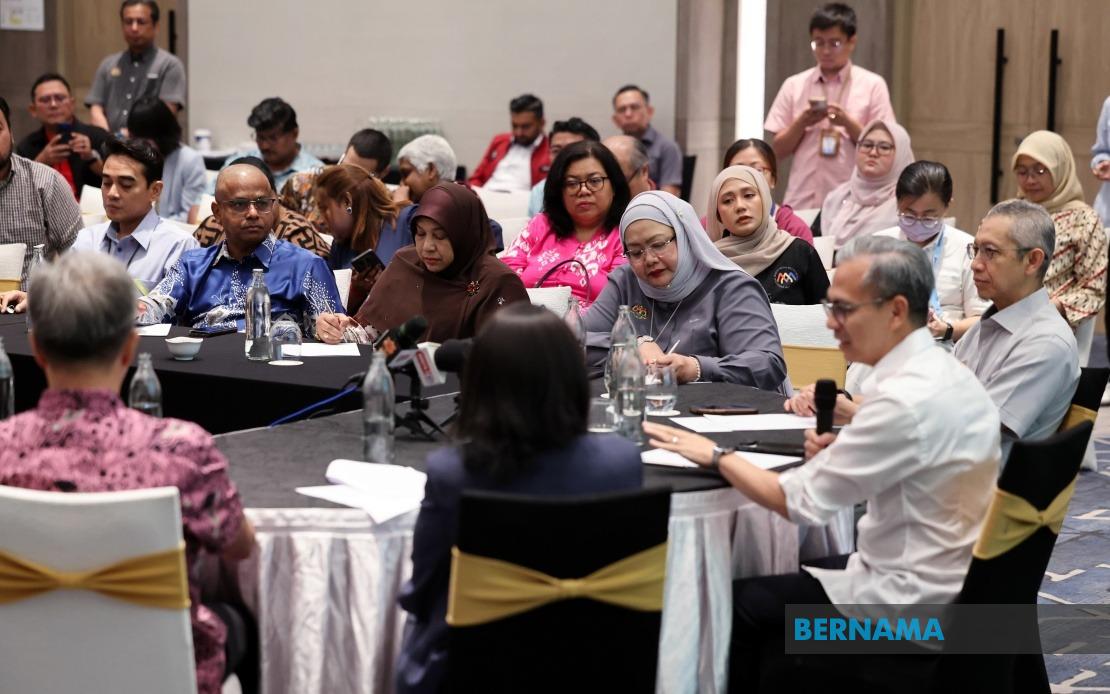
The HAWANA 2026 Summit formally commenced at the PICCA@Arena Butterworth Convention Centre on June 20, drawing media practitioners, distinguished guests and strategic collaborators from across Malaysia and the wider ASEAN community. The gathering underscores a significant milestone for the journalism profession in Southeast Asia, reflecting growing momentum toward strengthening professional standards across national and regional borders. Delegates have begun arriving to participate in what promises to be a landmark convening for the media industry.
Attendees have been making use of the convention centre's facilities to engage in substantive networking opportunities. The foyer exhibition space showcases diverse media initiatives and innovations, while a dedicated photo gallery provides visual context for the industry's evolving landscape. Many journalists have seized the chance to reconnect with peers from competing newsrooms and publications, creating informal forums for professional dialogue despite demanding editorial schedules. These interactions represent the informal but vital dimension of such summits, where relationships between practitioners often prove as valuable as formal sessions.
The international dimension of HAWANA 2026 carries particular significance for Southeast Asian journalism. The presence of media representatives from ASEAN member states signals a maturation in regional thinking about professional standards and cross-border collaboration. Rather than operating in isolation, news organisations across the region are increasingly recognising shared challenges—from combating disinformation to maintaining editorial independence—that demand coordinated responses. This conference provides structured space to articulate those common interests and explore practical cooperation mechanisms that transcend national media markets.
The summit's central theme, 'Media Integrity Strengthens Credibility', reflects contemporary challenges facing journalism globally and in the region. News consumption patterns have shifted dramatically over the past decade, with social media fragmenting traditional audience bases and algorithmic distribution systems reshaping information flows. In this environment, legacy media organisations must continually demonstrate why professional journalism—underpinned by verification, ethical standards, and transparency—remains indispensable. The theme acknowledges that credibility itself has become a competitive advantage that only careful adherence to professional norms can sustain.
Prime Minister Datuk Seri Anwar Ibrahim's presence as the officiating dignitary elevates HAWANA 2026's political profile and signals government endorsement of journalism as a cornerstone institution. Malaysian policymakers have increasingly recognised that media development contributes to broader national objectives including economic transparency, public discourse quality, and institutional accountability. The PM's attendance suggests the government views this summit not merely as a professional gathering but as an opportunity to reinforce the social contract between press and state—one in which the media's watchdog function is respected within frameworks of responsible reporting.
Organisation of HAWANA 2026 through the Ministry of Communications, with Bernama (Malaysian National News Agency) as the implementing body, reflects the institutional architecture supporting Malaysian journalism. Bernama's dual role as both a state news agency and professional coordinator grants it positioning to convene practitioners across the commercial, public service, and independent media sectors. This comprehensive approach ensures that the summit addresses concerns spanning the entire media ecosystem, from national broadcasters to community publications and digital-native outlets.
The expectation of approximately 1,000 attendees positions HAWANA 2026 as one of Southeast Asia's largest annual media conferences. This scale allows organisers to programme diverse sessions addressing technical skills, business models, editorial ethics, audience engagement, and regulatory frameworks. With participants from multiple countries, sessions can also compare and contrast how different nations approach similar journalistic challenges, offering practical lessons adaptable across borders. The size of the gathering also provides critical mass for networking that can generate ongoing professional relationships and collaborative projects extending well beyond the event itself.
HAWANA itself functions as Malaysia's primary platform for recognising journalistic achievement and honouring professional contributions to public information. By anchoring this recognition within a larger summit context, the observance becomes less a ceremonial moment and more an intensive engagement with the profession's future. The summit structure allows award presentations to be contextualised within broader discussions about where journalism is heading, what new skills practitioners must develop, and how the profession can adapt while maintaining core ethical commitments.
For Malaysian newsrooms, HAWANA 2026 represents an opportunity to benchmark their operations and editorial practices against regional counterparts facing comparable digital transformation challenges. Media organisations across ASEAN confront similar pressures: declining traditional advertising revenue, competition for audience attention from entertainment and social media content, workforce skill gaps in data journalism and multimedia storytelling, and navigating political environments where editorial independence faces varying degrees of pressure. By exchanging experiences and solutions, Malaysian practitioners can accelerate their own institutional evolution while contributing Malaysian insights to regional discourse.
The emphasis on accurate, verified and credible information delivery resonates particularly strongly in the contemporary Southeast Asian context, where rapid digitalisation has coincided with the proliferation of false and misleading content. Journalists across the region work within information ecosystems increasingly polluted by deliberate disinformation campaigns, unverified rumours amplified by social networks, and deepfake technologies that undermine visual evidence's reliability. HAWANA 2026's focus on credibility thus addresses not merely professional aspirations but urgent public need for trustworthy reporting that can cut through noise and orient citizens toward factual reality.
The timing of this summit also reflects broader reckoning within Asian journalism about sustainable business models. Traditional revenue streams have evaporated while audience expectations for free content have become entrenched. Media organisations must simultaneously invest in quality journalism that justifies subscription models or premium access, while managing the operational costs of maintaining newsrooms, training staff, and investing in technology infrastructure. HAWANA 2026 provides venue for exploring how different organisations across ASEAN are experimenting with membership models, paywall strategies, philanthropic support, and diversified revenue approaches that allow them to continue serving public information needs.
The summit's regional character also acknowledges that journalism in ASEAN operates within a distinctive geopolitical context. The region's media landscapes reflect diverse governance systems, regulatory frameworks, and political cultures. Malaysian journalism navigates particular complexities including plural ownership structures, regulatory oversight through communications ministries, and audiences spanning multiple linguistic and ethnic communities. HAWANA 2026's ASEAN participation ensures that Malaysian practitioners engage with peers operating under different constraints and opportunities, enriching their understanding of possible approaches and reinforcing professional solidarity across borders.

